
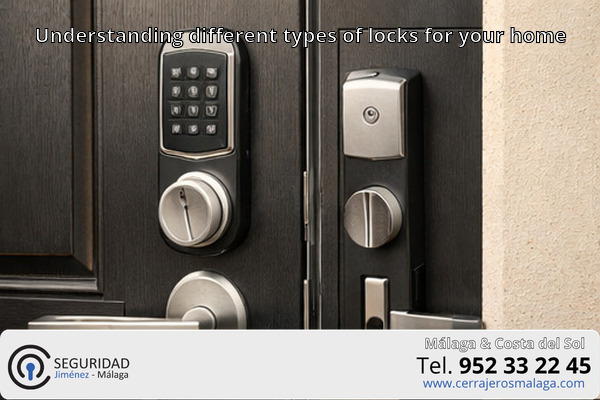
Have you ever wondered how secure your home really is? In homes across Málaga, understanding the different types of locks is crucial for keeping your family safe. Whether you’re considering a simple upgrade or a complete overhaul, knowing your options can make all the difference.
What Are the Different Types of Home Locks and What Are They Used For?
Home locks are mechanical or electronic systems designed to control access through a door. Understanding the differences between lock types helps homeowners in Málaga choose a solution that matches the door construction, level of use, security requirements and existing hardware.
A lock should not be assessed as an isolated component. Its performance depends on the door, frame, hinges, cylinder, escutcheon, alignment and installation quality. A technically suitable lock may still work poorly if the door is warped, the frame is weak or the mechanism is incorrectly adjusted.
The most common residential options include cylinder locks, mortise locks, rim locks, multipoint locks, electronic locks and smart locks. Each system has different operating principles, advantages and limitations.
When May It Be Necessary to Review or Change a Home Lock?
A lock review may be appropriate when the mechanism shows signs of wear, the key no longer turns smoothly or the door does not close and lock correctly. It may also be considered after a change of occupants, the loss of keys, a break-in attempt or an upgrade to the door’s overall security.
- Difficulty turning the key: this may indicate wear, dirt, misalignment or internal damage.
- Door misalignment: pressure on the locking points can make operation difficult and accelerate wear.
- Loose or damaged hardware: movement around the lock or cylinder can reduce reliability.
- Uncontrolled key copies: replacing the cylinder may help restore control over who has access.
- Outdated locking system: older mechanisms may not provide the same level of resistance or functionality as more recent alternatives.
- Change of security requirements: a property may need a different solution after renovation, a change in use or the installation of access control equipment.
A replacement is not always necessary. If the lock is structurally sound, the problem may be resolved through adjustment, lubrication suitable for the mechanism or correction of the door and frame alignment. An evaluation should be carried out before replacing components.
What Problems Can the Right Lock Help Prevent?
Selecting and maintaining an appropriate lock can reduce the likelihood of access failures and improve control over entry to the property. It does not make a door completely immune to every risk, because the level of protection depends on the entire door assembly.
- Unauthorised access: a suitable lock and correctly protected cylinder can reduce certain weaknesses in the access point.
- Unexpected blockages: a worn or damaged mechanism can leave occupants unable to enter or secure the property.
- Loss of functionality: repeated friction, poor alignment or incorrect fitting may prevent the door from locking properly.
- Premature wear: selecting a lock that matches the door and frequency of use helps reduce unnecessary stress on the mechanism.
- Uncontrolled access: replacing a cylinder after keys are lost or ownership changes can restore better control over active keys.
- Compatibility problems: technical assessment helps prevent the installation of a lock that does not match the door, frame or existing multipoint system.
Main Types of Locks for Residential Doors
Cylinder Locks
A cylinder lock uses a replaceable cylinder, commonly called a lock barrel or euro cylinder, to operate the locking mechanism. The cylinder can often be changed without replacing the complete lock case, provided the dimensions and system are compatible.
This solution is common in residential doors because it allows the access component to be renewed when keys are lost, the cylinder is worn or a different security configuration is required. The cylinder should be assessed together with the escutcheon or protective fitting and the rest of the door hardware.
Mortise Locks
A mortise lock is installed inside a recess in the door. The lock case contains the latch and, depending on the model, one or more deadbolts operated by a handle, key or cylinder.
Mortise systems provide a neat installation and can be combined with different cylinders and handles. Their compatibility depends on the dimensions of the existing recess, the backset, the position of the follower and the configuration of the door.
Rim Locks
A rim lock is mounted on the interior surface of the door rather than being fully housed inside it. Some traditional versions use a visible body and a separate external cylinder or key-operated component.
These locks may be suitable for certain doors or replacement situations where altering the door structure is undesirable. Their limitations depend on the design of the door, the condition of the frame and the physical protection provided to the external operating elements.
Multipoint Locks
A multipoint lock secures the door at several points along its height. When the handle or cylinder is operated, hooks, rollers, bolts or other locking elements engage with corresponding receivers in the frame.
This configuration is common in many modern entrance doors and can improve the distribution of closing forces. A fault in one component may affect the complete mechanism, so diagnosis should include the cylinder, central case, rods, locking points and frame alignment.
Electronic and Smart Locks
Electronic and smart locks use an electronic release or motorised mechanism controlled by a keypad, card, credential, mobile application, biometric system or another authorised method. Some retain a conventional mechanical cylinder as an alternative access method.
These systems require attention to power supply, emergency access, software or credential management, installation compatibility and privacy considerations. Their operation may vary significantly between models, so the specific system must be identified before any intervention.
Deadbolts and Additional Security Locks
A deadbolt is a locking element that extends into the frame and is not normally spring-operated like a standard latch. It may be incorporated into a mortise lock, a surface-mounted lock or another residential security system.
Additional locks can provide a supplementary locking point, but adding a component without checking the door structure may create alignment problems or weaken the installation. The complete assembly should be evaluated before installation.
How Is a Residential Lock Intervention Carried Out?
A professional intervention begins with diagnosis rather than immediate replacement. The objective is to identify the actual cause of the problem and select a compatible solution while avoiding unnecessary damage to the door or surrounding hardware.
- Initial assessment: the condition of the door, frame, handles, cylinder and visible operating elements is checked.
- Diagnosis of the existing system: the lock type, dimensions, locking points, operating method and signs of wear are identified.
- Selection of the solution: the appropriate repair, adjustment, cylinder change, lock replacement or electronic alternative is considered according to the door and the user’s needs.
- Intervention: the selected work is carried out using a procedure appropriate to the mechanism and the condition of the installation.
- Final checks: key operation, handle movement, latch engagement, locking points, door alignment and closing from both sides are verified.
In the case of electronic systems, the assessment may also include the power supply, authorised credentials, emergency opening method and communication between the lock and its control components.
Residential Lock Alternatives and Related Systems
| Solution | When It Is Used | Advantages | Limitations |
|---|---|---|---|
| Cylinder replacement | Lost keys, worn cylinder or need to control existing key copies | Can renew the access component without replacing the entire lock in compatible installations | Does not correct faults in the lock case, door or frame |
| Mortise lock | Doors prepared for an internal lock case | Neat installation and compatibility with different handle and cylinder configurations | Requires accurate dimensional compatibility |
| Multipoint lock | Entrance doors with several locking points | Secures different areas of the door and distributes closing forces | More components mean that diagnosis and adjustment can be more complex |
| Additional deadbolt | Doors requiring an extra independent locking point | Can provide supplementary mechanical security | May cause alignment or structural problems if poorly selected or installed |
| Electronic or smart lock | Properties requiring credential-based or keyless access | May simplify access management and reduce reliance on physical keys | Depends on power, electronic components, configuration and an emergency access plan |
Common Situations in Residential Lock Interventions
Worn Cylinder with Increasingly Difficult Key Operation
Situation: A key turns with increasing resistance, particularly when the door is closed.
Problem detected: The cylinder may be worn, but door pressure or frame misalignment can produce similar symptoms.
Technical assessment: Operation is checked with the door open and closed, while the cylinder, latch and locking points are examined.
Usual solution: Adjustment may be sufficient if the issue is alignment. If the cylinder is damaged or excessively worn, a compatible replacement may be considered.
Expected result: Smoother operation and reliable locking, provided that the door and frame are correctly aligned.
Lost Keys After a Change of Occupants
Situation: A new occupant cannot confirm how many copies of the previous keys remain in circulation.
Problem detected: The physical lock may still work, but control over access has been lost.
Technical assessment: The cylinder type, dimensions and compatibility with the existing lock are identified.
Usual solution: Changing the cylinder can invalidate the old keys while preserving the rest of the compatible installation.
Expected result: Access is managed with a new set of keys or authorised credentials, subject to correct installation.
Multipoint Door That Does Not Lock Correctly
Situation: The handle is difficult to lift or one or more locking points do not engage fully.
Problem detected: Possible causes include frame movement, wear in the central mechanism, damaged rods or excessive pressure on the door.
Technical assessment: The complete multipoint system is examined instead of replacing only the cylinder without confirmation.
Usual solution: Depending on the diagnosis, the door may require adjustment, repair of a component or replacement of part or all of the mechanism.
Expected result: Correct engagement of the locking points and reduced stress during everyday operation.
Frequent Errors and How to Avoid Them
| Error | Consequence | Technical Recommendation |
|---|---|---|
| Choosing a lock only by appearance | The dimensions or operating system may not match the door | Verify measurements, fixing points, door thickness and lock configuration before purchase |
| Replacing the cylinder without checking alignment | The new component may suffer the same operating problem | Check the door and frame with the door both open and closed |
| Installing an electronic lock without an emergency access plan | A power or system failure may affect authorised entry | Confirm the backup method, power requirements and credential management procedure |
| Ignoring signs of wear | A minor fault may develop into a blockage or complete loss of operation | Request an assessment when key movement, handle operation or closing becomes irregular |
| Using excessive force on the key or handle | The key, cylinder or internal mechanism may be damaged | Stop the operation and check for misalignment or mechanical failure |
| Protecting only one part of the door | The cylinder may be upgraded while the frame, lock case or escutcheon remains vulnerable | Assess the complete access point rather than a single component |
Aspects to Consider in Málaga
For a home in Málaga, the appropriate lock depends on the type of property, the entrance door, the age of the installation and the level of use. The same recommendation cannot automatically be applied to an apartment, detached house, holiday property or rental accommodation.
Availability and travel requirements may also depend on the exact location within Málaga and the nature of the assistance requested. A professional assessment helps determine whether the work involves a simple cylinder change, a complete lock repair, an opening service or a broader security review.
Cerrajerosmalaga provides locksmith information and assistance in the local context through its website, https://blog.cerrajerosmalaga.com. For urgent situations involving blocked access, damaged locks or lost keys, the necessary service depends on the specific condition of the door and locking system.
Frequently Asked Questions About Different Types of Home Locks
Which type of lock is most suitable for a home?
There is no single suitable lock for every property. The choice depends on the door construction, frame, existing mechanism, frequency of use, desired access method and maintenance requirements. A technical assessment is advisable before replacing the system.
Is changing the cylinder the same as changing the complete lock?
No. The cylinder is the part operated by the key in compatible systems, while the lock case contains the latch or bolts. Changing the cylinder may be sufficient when access control is the main issue, but it will not resolve a damaged or misaligned lock case.
Are multipoint locks suitable for every door?
No. A multipoint mechanism requires a compatible door preparation, dimensions and frame configuration. Replacing a standard lock with a multipoint system may require structural modifications and must be assessed beforehand.
Are electronic locks more secure than mechanical locks?
Security depends on the specific product, installation and complete door assembly. Electronic locks can offer credential management and other functions, but they also introduce requirements related to power, configuration and emergency access.
When should a worn lock be repaired rather than replaced?
Repair may be appropriate when the main components are serviceable and the issue is caused by adjustment, alignment or a replaceable part. Replacement becomes more relevant when the mechanism is damaged, obsolete, incompatible or no longer appropriate for the property.
Can a lock be changed if the door is old?
In many cases, an older door can be adapted, but compatibility must be verified. Door thickness, existing recesses, frame condition and available fixing points may limit the available alternatives.
What should be checked after a lock has been installed?
The key or credential should operate smoothly, the latch and bolts should engage correctly, the door should close without excessive pressure and the system should work from every authorised side. Electronic systems also require verification of power, credentials and backup access.
When is professional evaluation particularly important?
Evaluation is especially important when the door is blocked, the key is stuck, the lock forms part of a multipoint system, the property has an electronic lock or there are signs of damage following an attempted forced entry.
Technical Summary
Home locks include several different technologies, such as cylinder locks, mortise locks, rim locks, multipoint systems, deadbolts and electronic or smart locks. Their suitability depends on the door, frame, dimensions, operating method and intended level of access control.
A lock review may be required because of wear, lost keys, difficult operation, alignment problems, a change of occupants or a need to improve access management. Alternatives range from adjustment and cylinder replacement to repair or replacement of a complete mechanism.
Every intervention has limitations. Upgrading one component does not automatically resolve weaknesses in the rest of the door, and electronic systems require suitable power and emergency access arrangements. In Málaga, an evaluation based on the actual property and locking system is the appropriate starting point for choosing a compatible and maintainable solution.