Categoría: Málaga EN

  • Benefits of 24-hour locksmith assistance

    Benefits of 24-hour locksmith assistance

    Have you ever found yourself locked out of your home late at night, feeling anxious and unsure of what to do next? In homes across Málaga, such situations can arise unexpectedly. That’s where 24-hour locksmith assistance comes into play, offering peace of mind and immediate solutions at any hour of the day or night.

    What 24-hour locksmith assistance is and what it is used for

    24-hour locksmith assistance is an emergency service that provides technical support for residential access problems at any time of day or night. It may be required when a door cannot be opened, a key has been lost, a lock has failed or an immediate security measure is needed.

    In practical terms, continuous availability helps address incidents that cannot reasonably be postponed until normal business hours. Typical services may include professional door opening, lock or cylinder replacement, repair of damaged mechanisms and temporary or permanent security measures, depending on the condition of the installation.

    The appropriate intervention depends on the type of door, the locking mechanism, the cause of the incident and whether the priority is restoring access, securing the property or both. A technical assessment should take place before selecting a solution, particularly when the lock is damaged or the door forms part of a wider access system.

    When 24-hour locksmith assistance may be necessary

    Round-the-clock assistance can be useful when an access problem occurs outside ordinary working hours or when leaving the property unsecured could create an avoidable risk. The service is not limited to lockouts; it can also cover situations in which a damaged or worn mechanism no longer provides reliable protection.

    • Lost or stolen keys: changing the cylinder may be advisable when the keys could be used by an unauthorised person.
    • Blocked access: a key may not turn, the latch may remain engaged or an internal component may have failed.
    • Broken or worn locks: continued use can increase damage and make a later intervention more complex.
    • Damaged keys: a bent, cracked or partially broken key can affect the mechanism and should be assessed before it causes a complete blockage.
    • Urgent change of access: a lock may need to be replaced after a change in occupants, a security incident or the loss of control over copies.
    • Security concerns after an incident: a professional can evaluate whether the door, cylinder, escutcheon and frame remain correctly protected.

    Emergency assistance may not be necessary when the problem is limited to a misplaced key that is safely recovered and the lock functions normally. Even in that situation, a cylinder should be assessed if there is a possibility that the key has been stolen or copied.

    Problems and risks that the service can help prevent

    Prompt technical attention can reduce the consequences of a malfunction, although it cannot eliminate every security risk. The main benefit is the possibility of diagnosing the problem before a temporary fault develops into a complete failure or leaves the property exposed.

    • Unauthorised access: replacing a cylinder after keys are lost can reduce the risk associated with uncontrolled copies.
    • Repeated lockouts: identifying wear, alignment problems or internal damage may prevent recurring access failures.
    • Further mechanical deterioration: forcing a stiff key or repeatedly operating a defective lock can worsen the fault.
    • Loss of door functionality: a lock that does not close or latch correctly may affect both access and basic property security.
    • Unprotected temporary access: a technical assessment can determine whether an interim measure is appropriate until a permanent repair is possible.
    • Compatibility problems: selecting a component without checking the door and existing mechanism can create new operating or security issues.

    Emergency work should remain proportionate to the problem. If the installation is functional and there is no immediate risk, a planned repair or replacement may allow more time to compare suitable components.

    How a 24-hour locksmith intervention is carried out

    A professional intervention should follow a structured process. The exact procedure varies according to the type of door, the lock installed and the reason for requesting assistance.

    1. Initial assessment: the technician identifies the access problem, confirms the location and gathers relevant information about the door and locking system.
    2. Diagnosis of the existing system: the condition of the cylinder, lock case, handles, hinges, frame and closing points is considered where they affect the incident.
    3. Selection of the appropriate solution: the decision may involve restoring operation, replacing a component, changing the cylinder or applying a temporary security measure.
    4. Technical intervention: work is carried out using a method consistent with the installation and the objective of the service, while avoiding unnecessary damage.
    5. Final checks: the door should be tested from the relevant sides, and the correct operation of the key, latch, deadbolt and closing points should be verified where applicable.

    Before work begins, it is also reasonable to verify that the person requesting access is authorised to enter the property. This protects the occupant, the owner and the technician, especially when the request concerns a home, rented property or shared building.

    Related solutions and access systems

    Solution When it is used Advantages Limitations
    Professional door opening When the occupant cannot enter and the mechanism or key is preventing access Focuses on restoring access while assessing the cause of the blockage It may not resolve underlying wear or damage if the lock requires replacement
    Cylinder replacement After lost keys, suspected unauthorised copies or a defective cylinder Changes the key-operated part without necessarily replacing the entire lock case Compatibility with the door, escutcheon and lock must be verified
    Lock repair When the mechanism is damaged but suitable for repair May preserve the existing installation and address a specific fault Repair may not be appropriate when wear is extensive or components are unavailable
    Complete lock replacement When the internal mechanism is severely damaged or unsuitable for continued use Allows the locking assembly to be renewed as a whole Requires checking dimensions, door preparation and compatibility with existing fittings
    Electronic or smart access system When residential access requirements justify a change from a conventional key system May provide alternative authentication and reduce dependence on physical keys Requires power, configuration, maintenance and compatibility assessment

    Common situations in residential interventions

    Lost keys outside normal working hours

    Situation: An occupant cannot locate the keys and is unsure whether they were lost or taken.

    Problem detected: Access is unavailable and the existing cylinder may no longer offer adequate control over who can use the key.

    Technical assessment: The professional considers the condition of the cylinder, the type of door and whether the priority is entry, replacement or both.

    Usual solution: Access is restored through an appropriate professional intervention, followed by cylinder replacement when the loss creates a security concern.

    Expected result: The occupant regains access and, where replacement is necessary, the previous keys no longer operate the new cylinder.

    A lock that suddenly becomes difficult to operate

    Situation: The key has been increasingly difficult to turn and eventually stops operating the lock correctly.

    Problem detected: The cause may involve internal wear, a misaligned door, pressure on the locking points or damage to the key.

    Technical assessment: The technician distinguishes between a problem in the key, the cylinder, the lock case or the door alignment before recommending a replacement.

    Usual solution: The affected component is repaired or replaced according to its condition, and the closing geometry is checked.

    Expected result: The door operates more reliably, provided that the frame and other associated components are also in suitable condition.

    A door that does not close correctly after an incident

    Situation: A resident notices that the door no longer latches or that the key does not complete its normal movement.

    Problem detected: The locking mechanism, strike area, hinges or frame may have been affected.

    Technical assessment: The complete closing assembly is examined rather than replacing only the visible component.

    Usual solution: The necessary repair or replacement is selected after determining whether the fault is mechanical, structural or related to alignment.

    Expected result: The door should close and lock correctly after the relevant components have been adjusted or renewed.

    Frequent mistakes and how to avoid them

    Mistake Consequence Technical recommendation
    Continuing to use a key that is bent or difficult to turn Additional wear, key breakage or complete blockage Stop repeated attempts and request an assessment of the key and cylinder
    Replacing only the visible part without diagnosing the system The underlying fault may remain and the new component may not operate correctly Check the cylinder, lock case, door alignment and closing points together
    Choosing a component solely by appearance Incorrect dimensions or incompatibility with the existing installation Verify measurements, fixing points, door type and relationship with the lock
    Using excessive force on the door or key Damage to the mechanism, frame or key Request professional assistance when normal operation is no longer possible
    Ignoring security implications after losing keys Uncontrolled copies may continue to operate the property Assess whether a cylinder change is appropriate for the circumstances

    Factors to consider when requesting assistance in Málaga

    For a property in Málaga, the relevant service conditions depend on the exact location, the type of building, access to the property and the nature of the fault. The distance between the service base and the property may affect coordination and availability, so the address and access details should be communicated accurately.

    The type of property also matters. A detached home, an apartment, a rented dwelling and a residential building may require different checks, particularly when the incident involves shared entrances, restricted areas or several locking points. In a community building, access to common areas may require coordination with an authorised representative.

    Cerrajerosmalaga provides locksmith assistance in Málaga and other locations on the Costa del Sol, including door opening, cylinder replacement and 24-hour locksmith support for homes, businesses and communities. The specific intervention remains subject to an on-site assessment of the existing installation and the incident reported. Information about the company is also available through its website, blog.cerrajerosmalaga.com.

    Frequently asked questions about 24-hour locksmith assistance

    What is the main benefit of a 24-hour locksmith service?

    The main benefit is access to technical assistance outside standard working hours when a lockout, failure or urgent security concern cannot reasonably be postponed. The appropriate response still depends on the diagnosis and the condition of the installation.

    Does 24-hour assistance only apply to emergency door opening?

    No. Depending on the service required, it may include diagnosing a defective lock, replacing a cylinder, repairing a locking mechanism or securing a property after keys have been lost. The available intervention should be confirmed according to the specific situation.

    Should a cylinder be changed after losing a key?

    It may be advisable when the lost key could be linked to the property or when there is a risk that another person could use it. The decision depends on the circumstances, the type of cylinder and the level of control over existing copies.

    Can a difficult lock be repaired instead of replaced?

    Sometimes. Repair may be suitable when the affected mechanism is serviceable and compatible components are available. Replacement may be more appropriate when there is extensive wear, repeated failure or damage that affects reliable operation.

    How long does an emergency locksmith intervention take?

    The time varies according to the location, access conditions, door type, cause of the fault and whether replacement components are needed. A straightforward issue and a damaged multi-point installation do not require the same work.

    What information should be provided when requesting assistance?

    Useful information includes the location, the type of property, whether the door is closed or locked, what happened before the failure and whether a key is available. Photographs may help with initial orientation, although an on-site assessment may still be necessary.

    Is it possible to prevent repeated lockouts?

    Preventive measures include replacing worn keys, addressing stiffness early, checking door alignment and reviewing the condition of the cylinder and lock. The most suitable measure depends on the cause of the previous incident.

    Can a locksmith work on an electronic residential lock?

    That depends on the system installed, its power supply, its access method and the availability of compatible components. Electronic locks require a specific compatibility assessment rather than the same procedure used for a conventional cylinder.

    Technical summary

    24-hour locksmith assistance provides a way to address residential access failures and urgent security concerns beyond normal working hours. It may be relevant to lost keys, blocked doors, worn cylinders, damaged locks and doors that no longer close correctly.

    The appropriate solution can range from professional access restoration to cylinder replacement, lock repair or complete replacement. Electronic access systems may also be considered when their compatibility and maintenance requirements are suitable.

    Availability outside standard hours does not remove the need for diagnosis. The door, frame, cylinder, lock case, keys and closing points should be considered together to avoid unsuitable replacements or recurring faults. In Málaga, the service should be coordinated according to the property location, access conditions and technical characteristics of the installation.

  • Tips for choosing the right locksmith service

    Tips for choosing the right locksmith service

    Have you ever found yourself locked out of your home in the beautiful city of Málaga? It’s a frustrating situation that many homeowners face. Choosing the right locksmith service is crucial to ensure your safety and peace of mind. In Málaga, knowing how to select a trustworthy locksmith can make all the difference when dealing with unexpected access issues.

    What Choosing the Right Locksmith Service Means and Why It Matters

    Choosing the right locksmith service means selecting a qualified professional who can identify the actual access or security problem, recommend a compatible solution and carry out the work without causing unnecessary damage. In Málaga, this decision is relevant for homeowners, landlords, tenants and property managers dealing with blocked doors, damaged locks, lost keys or planned security improvements.

    A suitable locksmith service should be assessed according to the type of intervention required, the condition of the existing door and lock, the urgency of the situation and the technical scope of the work. Opening a door, replacing a cylinder and improving the security of an entrance are different services that may require different tools, experience and procedures.

    The company name Cerrajerosmalaga is associated with the website provided for this information, but the specific suitability of any intervention should always be confirmed through a prior assessment of the property and the access system.

    When It May Be Necessary to Choose a Locksmith Service

    A locksmith may be required when a door cannot be opened normally, when a key no longer operates the lock correctly or when the security of an entrance needs to be reviewed. The appropriate service depends on whether the problem is accidental, mechanical, related to wear or connected with a broader security concern.

    • Locked or blocked access: the key may be lost, broken, left inside the property or unable to operate the cylinder.
    • Difficulty turning the key: resistance, grinding or intermittent operation may indicate wear, misalignment or an internal fault.
    • Damaged or outdated components: a cylinder, lock or escutcheon may require replacement after prolonged use or visible deterioration.
    • Change of occupancy: replacing the cylinder can be considered when control over existing keys is uncertain.
    • Security improvement: an assessment may identify weaknesses in the lock, door alignment or protection around the cylinder.
    • Urgent assistance: a rapid response may be needed when residents cannot access or secure their property.

    Professional assistance may not be necessary for every minor inconvenience. For example, a key that is slightly bent or a loose screw may have a simple cause, but repeated attempts to operate a defective lock can worsen the failure. Before deciding, it is advisable to consider the symptoms, the age of the installation, whether the door closes correctly and whether there are signs of forced manipulation.

    What Problems the Right Service Helps Prevent

    Selecting an appropriate locksmith service helps reduce the risk of applying an unsuitable solution to an access system. A correct diagnosis is relevant because replacing only one component may not resolve a problem caused by the door, frame or internal mechanism.

    • Unauthorised access: compromised or poorly protected components can weaken the security of a property.
    • Unexpected lockouts: worn keys and cylinders may fail without sufficient warning.
    • Further mechanical damage: excessive force can damage the key, cylinder, lock case or door hardware.
    • Loss of functionality: an incompatible replacement may make the lock difficult to operate or prevent other users from entering.
    • Uncontrolled key circulation: when the whereabouts of existing keys are unknown, changing the cylinder may be considered.
    • Partial security improvements: upgrading one component without checking the complete door assembly may leave other weaknesses unresolved.

    The purpose of a professional intervention is not simply to restore movement to a lock. It is to determine whether the access system is mechanically sound, compatible with the door and suitable for the required level of use.

    How to Assess and Select the Service

    A reliable selection process should begin before the technician arrives. The property owner or responsible person should describe the symptoms accurately, identify whether the door is open or closed and explain whether the request concerns an emergency opening, a replacement or a security assessment.

    1. Initial assessment: establish what has happened, whether access is possible and whether there are visible signs of damage.
    2. Diagnosis of the existing system: identify the type of door, lock, cylinder, escutcheon and operating mechanism involved.
    3. Selection of the appropriate solution: determine whether adjustment, repair, opening, cylinder replacement or a wider security improvement is justified.
    4. Intervention: carry out the necessary work using a method proportionate to the problem and the condition of the installation.
    5. Final checks: verify key operation, locking, alignment, door closure and the correct functioning of any replaced component.

    Before accepting the work, it is reasonable to ask what service is being proposed, which component requires attention and whether the intervention may reveal additional faults. The technician should also verify that the person requesting access is authorised to use or manage the property.

    Questions to Ask Before Hiring a Locksmith

    • What type of service is required? Clarify whether the request concerns emergency access, a cylinder change, lock repair, door alignment or a security review.
    • Will the technician inspect the complete installation? A proper assessment should consider the door, frame, lock and cylinder rather than focusing on one visible component.
    • Is the proposed replacement compatible? The dimensions, fixing method, cam or mechanism and door configuration must be checked before installation.
    • What may change if the cylinder is replaced? Existing keys may no longer operate the lock, so the number of users and required copies should be considered.
    • Are there limitations to the intervention? Severe damage, concealed faults or an incompatible door configuration may require additional work.
    • What checks will be completed afterwards? The door should be tested from the appropriate sides, with attention to alignment, smooth operation and secure closure.

    Alternatives and Related Residential Services

    Solution When it is used Advantages Limitations
    Emergency door opening When authorised users cannot enter or secure a property Addresses an immediate access problem without automatically replacing the entire system The underlying cause may remain if the lock or door is worn
    Cylinder replacement When keys are lost, control over copies is uncertain or the cylinder is damaged Can restore reliable operation and allow a new set of keys to be used Requires compatibility with the lock, door and protective hardware
    Lock repair or adjustment When the mechanism is serviceable but affected by alignment, wear or a minor fault May preserve the existing installation and avoid unnecessary replacement Not suitable when the component is severely damaged or technically outdated
    Security assessment When the owner wants to review the condition of the entrance Considers the door, frame, lock, cylinder and escutcheon as a complete system Recommendations depend on the property and may require more than one improvement
    Residential electronic lock When a property requires an alternative access method compatible with its use May provide access management features beyond a conventional key Requires checking power, installation conditions, maintenance and user management

    How to Compare Locksmith Services in Practical Terms

    Price should not be the only comparison criterion. The service must be evaluated according to the type of work, the technician’s ability to diagnose the fault, the compatibility of the proposed components and the clarity of the information provided before the intervention.

    Criterion What to verify Why it matters
    Technical scope Whether the service covers opening, repair, replacement or security assessment Prevents hiring a service that does not match the actual problem
    Diagnosis Whether the cause is assessed before components are changed Reduces the risk of replacing a part that is not responsible for the fault
    Compatibility Whether the new component suits the door and existing mechanism Supports reliable operation and avoids installation problems
    Communication Whether the proposed work and possible limitations are explained clearly Allows the property owner to make an informed decision
    Final verification Whether the door and lock are tested after the intervention Confirms that the original problem has been addressed as far as possible

    Common Situations in Residential Locksmith Interventions

    Lost keys and a locked entrance

    Situation: A resident cannot enter because the available keys are lost or unavailable.

    Problem detected: There may be an immediate access issue and uncertainty about who could possess the missing keys.

    Technical assessment: The professional should verify the authorisation of the person requesting access, identify the lock and assess whether the cylinder can be operated normally.

    Usual solution: An authorised opening may be followed by cylinder replacement if control over the lost keys cannot be recovered.

    Expected result: Access is restored and, where replacement is appropriate, the old keys no longer operate the new cylinder.

    A key turns with resistance

    Situation: The door still opens, but the key requires force or movement from a particular angle.

    Problem detected: The cause may be cylinder wear, misalignment between the door and frame, a damaged key or a lock mechanism under stress.

    Technical assessment: The locksmith should distinguish between a problem in the key, the cylinder, the lock case and the door alignment.

    Usual solution: Adjustment or repair may be sufficient, although a worn component may need replacement.

    Expected result: The lock operates more consistently, subject to the condition of the complete door assembly.

    Reviewing the security of a recently occupied property

    Situation: A new occupant or owner does not know how many copies of the existing keys are in circulation.

    Problem detected: The lock may function correctly, but control over previous keys is uncertain.

    Technical assessment: The condition of the cylinder, escutcheon, lock and door should be reviewed before deciding whether to replace one or more components.

    Usual solution: A cylinder change may be considered, together with checks of alignment and the operation of all access points.

    Expected result: The property uses a known set of keys, provided the replacement is compatible with the existing installation.

    Common Mistakes and How to Avoid Them

    Mistake Consequence Technical recommendation
    Choosing a service based only on a low advertised price The quoted work may not include diagnosis, compatible parts or final checks Ask what the service includes and whether the price can change if additional faults are found
    Replacing the cylinder without checking the door Alignment or frame problems may continue to damage the new component Assess the complete access assembly before installation
    Continuing to force a stiff key The key may break or the internal mechanism may suffer further damage Stop repeated attempts and request a technical assessment
    Installing an incompatible component The key may not work correctly or the door may not lock reliably Verify dimensions, mechanism, fixing points and door configuration
    Ignoring key control after a change of occupancy Unknown copies may continue to provide access Consider whether changing the cylinder is appropriate for the circumstances
    Failing to test the door after the intervention A remaining alignment or closure fault may go unnoticed Check operation, closure and locking before completing the service

    Aspects to Consider When Requesting a Locksmith in Málaga

    When requesting a locksmith service in Málaga, the location of the property, the type of building and the urgency of the situation can affect coordination and the technical assessment. The person requesting assistance should provide a clear description of the entrance, including whether it is a flat, house, commercial-residential building or another type of property.

    It is also useful to indicate whether the door is open or closed, whether the key is broken, whether the lock is visibly damaged and whether other residents or authorised users need access. These details help determine which technician and equipment may be appropriate, although the final decision should be made after examining the installation.

    For services coordinated through Cerrajerosmalaga, the website provided is https://blog.cerrajerosmalaga.com. Availability, travel conditions, intervention scope and any applicable charge should be confirmed directly for the specific property and service requested.

    Frequently Asked Questions About Choosing the Right Locksmith Service

    How do I know whether I need a locksmith or a simple adjustment?

    If the key works smoothly and the issue is clearly limited to a loose visible fitting, an adjustment may be sufficient. Persistent resistance, repeated jamming, unusual sounds or a door that does not align correctly require a professional assessment.

    Should I request an emergency service for every blocked door?

    Not necessarily. The urgency depends on whether the property is inaccessible, cannot be secured or presents an immediate risk. Even in an urgent situation, the service should remain proportionate to the problem and include a basic diagnosis.

    Is replacing the cylinder always necessary after losing a key?

    No. The decision depends on whether the key can be recovered, who may have access to it and the importance of controlling the entrance. When the whereabouts of the key are unknown, cylinder replacement may be considered.

    Can any cylinder be installed in any door?

    No. Compatibility depends on the lock, door thickness, cylinder dimensions, cam or mechanism, protective hardware and installation configuration. These factors should be checked before a replacement is selected.

    What information should I provide when requesting a locksmith?

    Describe the type of door, the current symptoms, whether the door is open or closed, whether the key is available and whether the request concerns opening, repair, replacement or security improvement.

    How long does a locksmith intervention take?

    The time varies according to the access system, the condition of the components, the need for replacement and the location of the property. An exact duration cannot be established responsibly without assessing the situation.

    Should the complete door be inspected when changing a lock?

    Yes. The door, frame, hinges, lock, cylinder and protective elements can affect one another. Inspecting only the component being replaced may leave a mechanical or security problem unresolved.

    Technical Summary

    Choosing the right locksmith service in Málaga requires more than selecting a provider for a door opening or lock replacement. The correct decision depends on the real symptom, the condition of the existing installation, the required level of access control and the compatibility of any proposed component.

    • Function: identify and resolve access, lock or residential security problems through a proportionate intervention.
    • Applicable situations: lost keys, blocked doors, worn cylinders, damaged locks, change of occupancy and security assessments.
    • Available alternatives: opening, adjustment, repair, cylinder replacement, security review and compatible electronic access solutions.
    • Limitations: the final solution may vary according to the door, frame, lock, cylinder, damage and installation conditions.
    • Essential criterion: a technical evaluation should precede component replacement whenever the cause of the problem is not evident.
  • Understanding different types of locks for your home

    Understanding different types of locks for your home

    Have you ever wondered how secure your home really is? In homes across Málaga, understanding the different types of locks is crucial for keeping your family safe. Whether you’re considering a simple upgrade or a complete overhaul, knowing your options can make all the difference.

    What Are the Different Types of Home Locks and What Are They Used For?

    Home locks are mechanical or electronic systems designed to control access through a door. Understanding the differences between lock types helps homeowners in Málaga choose a solution that matches the door construction, level of use, security requirements and existing hardware.

    A lock should not be assessed as an isolated component. Its performance depends on the door, frame, hinges, cylinder, escutcheon, alignment and installation quality. A technically suitable lock may still work poorly if the door is warped, the frame is weak or the mechanism is incorrectly adjusted.

    The most common residential options include cylinder locks, mortise locks, rim locks, multipoint locks, electronic locks and smart locks. Each system has different operating principles, advantages and limitations.

    When May It Be Necessary to Review or Change a Home Lock?

    A lock review may be appropriate when the mechanism shows signs of wear, the key no longer turns smoothly or the door does not close and lock correctly. It may also be considered after a change of occupants, the loss of keys, a break-in attempt or an upgrade to the door’s overall security.

    • Difficulty turning the key: this may indicate wear, dirt, misalignment or internal damage.
    • Door misalignment: pressure on the locking points can make operation difficult and accelerate wear.
    • Loose or damaged hardware: movement around the lock or cylinder can reduce reliability.
    • Uncontrolled key copies: replacing the cylinder may help restore control over who has access.
    • Outdated locking system: older mechanisms may not provide the same level of resistance or functionality as more recent alternatives.
    • Change of security requirements: a property may need a different solution after renovation, a change in use or the installation of access control equipment.

    A replacement is not always necessary. If the lock is structurally sound, the problem may be resolved through adjustment, lubrication suitable for the mechanism or correction of the door and frame alignment. An evaluation should be carried out before replacing components.

    What Problems Can the Right Lock Help Prevent?

    Selecting and maintaining an appropriate lock can reduce the likelihood of access failures and improve control over entry to the property. It does not make a door completely immune to every risk, because the level of protection depends on the entire door assembly.

    • Unauthorised access: a suitable lock and correctly protected cylinder can reduce certain weaknesses in the access point.
    • Unexpected blockages: a worn or damaged mechanism can leave occupants unable to enter or secure the property.
    • Loss of functionality: repeated friction, poor alignment or incorrect fitting may prevent the door from locking properly.
    • Premature wear: selecting a lock that matches the door and frequency of use helps reduce unnecessary stress on the mechanism.
    • Uncontrolled access: replacing a cylinder after keys are lost or ownership changes can restore better control over active keys.
    • Compatibility problems: technical assessment helps prevent the installation of a lock that does not match the door, frame or existing multipoint system.

    Main Types of Locks for Residential Doors

    Cylinder Locks

    A cylinder lock uses a replaceable cylinder, commonly called a lock barrel or euro cylinder, to operate the locking mechanism. The cylinder can often be changed without replacing the complete lock case, provided the dimensions and system are compatible.

    This solution is common in residential doors because it allows the access component to be renewed when keys are lost, the cylinder is worn or a different security configuration is required. The cylinder should be assessed together with the escutcheon or protective fitting and the rest of the door hardware.

    Mortise Locks

    A mortise lock is installed inside a recess in the door. The lock case contains the latch and, depending on the model, one or more deadbolts operated by a handle, key or cylinder.

    Mortise systems provide a neat installation and can be combined with different cylinders and handles. Their compatibility depends on the dimensions of the existing recess, the backset, the position of the follower and the configuration of the door.

    Rim Locks

    A rim lock is mounted on the interior surface of the door rather than being fully housed inside it. Some traditional versions use a visible body and a separate external cylinder or key-operated component.

    These locks may be suitable for certain doors or replacement situations where altering the door structure is undesirable. Their limitations depend on the design of the door, the condition of the frame and the physical protection provided to the external operating elements.

    Multipoint Locks

    A multipoint lock secures the door at several points along its height. When the handle or cylinder is operated, hooks, rollers, bolts or other locking elements engage with corresponding receivers in the frame.

    This configuration is common in many modern entrance doors and can improve the distribution of closing forces. A fault in one component may affect the complete mechanism, so diagnosis should include the cylinder, central case, rods, locking points and frame alignment.

    Electronic and Smart Locks

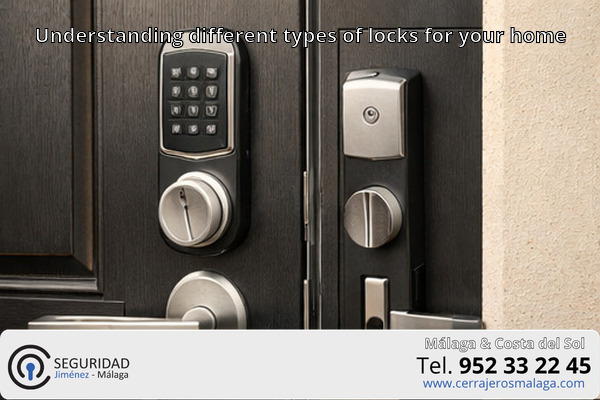
    Electronic and smart locks use an electronic release or motorised mechanism controlled by a keypad, card, credential, mobile application, biometric system or another authorised method. Some retain a conventional mechanical cylinder as an alternative access method.

    These systems require attention to power supply, emergency access, software or credential management, installation compatibility and privacy considerations. Their operation may vary significantly between models, so the specific system must be identified before any intervention.

    Deadbolts and Additional Security Locks

    A deadbolt is a locking element that extends into the frame and is not normally spring-operated like a standard latch. It may be incorporated into a mortise lock, a surface-mounted lock or another residential security system.

    Additional locks can provide a supplementary locking point, but adding a component without checking the door structure may create alignment problems or weaken the installation. The complete assembly should be evaluated before installation.

    How Is a Residential Lock Intervention Carried Out?

    A professional intervention begins with diagnosis rather than immediate replacement. The objective is to identify the actual cause of the problem and select a compatible solution while avoiding unnecessary damage to the door or surrounding hardware.

    1. Initial assessment: the condition of the door, frame, handles, cylinder and visible operating elements is checked.
    2. Diagnosis of the existing system: the lock type, dimensions, locking points, operating method and signs of wear are identified.
    3. Selection of the solution: the appropriate repair, adjustment, cylinder change, lock replacement or electronic alternative is considered according to the door and the user’s needs.
    4. Intervention: the selected work is carried out using a procedure appropriate to the mechanism and the condition of the installation.
    5. Final checks: key operation, handle movement, latch engagement, locking points, door alignment and closing from both sides are verified.

    In the case of electronic systems, the assessment may also include the power supply, authorised credentials, emergency opening method and communication between the lock and its control components.

    Residential Lock Alternatives and Related Systems

    Solution When It Is Used Advantages Limitations
    Cylinder replacement Lost keys, worn cylinder or need to control existing key copies Can renew the access component without replacing the entire lock in compatible installations Does not correct faults in the lock case, door or frame
    Mortise lock Doors prepared for an internal lock case Neat installation and compatibility with different handle and cylinder configurations Requires accurate dimensional compatibility
    Multipoint lock Entrance doors with several locking points Secures different areas of the door and distributes closing forces More components mean that diagnosis and adjustment can be more complex
    Additional deadbolt Doors requiring an extra independent locking point Can provide supplementary mechanical security May cause alignment or structural problems if poorly selected or installed
    Electronic or smart lock Properties requiring credential-based or keyless access May simplify access management and reduce reliance on physical keys Depends on power, electronic components, configuration and an emergency access plan

    Common Situations in Residential Lock Interventions

    Worn Cylinder with Increasingly Difficult Key Operation

    Situation: A key turns with increasing resistance, particularly when the door is closed.

    Problem detected: The cylinder may be worn, but door pressure or frame misalignment can produce similar symptoms.

    Technical assessment: Operation is checked with the door open and closed, while the cylinder, latch and locking points are examined.

    Usual solution: Adjustment may be sufficient if the issue is alignment. If the cylinder is damaged or excessively worn, a compatible replacement may be considered.

    Expected result: Smoother operation and reliable locking, provided that the door and frame are correctly aligned.

    Lost Keys After a Change of Occupants

    Situation: A new occupant cannot confirm how many copies of the previous keys remain in circulation.

    Problem detected: The physical lock may still work, but control over access has been lost.

    Technical assessment: The cylinder type, dimensions and compatibility with the existing lock are identified.

    Usual solution: Changing the cylinder can invalidate the old keys while preserving the rest of the compatible installation.

    Expected result: Access is managed with a new set of keys or authorised credentials, subject to correct installation.

    Multipoint Door That Does Not Lock Correctly

    Situation: The handle is difficult to lift or one or more locking points do not engage fully.

    Problem detected: Possible causes include frame movement, wear in the central mechanism, damaged rods or excessive pressure on the door.

    Technical assessment: The complete multipoint system is examined instead of replacing only the cylinder without confirmation.

    Usual solution: Depending on the diagnosis, the door may require adjustment, repair of a component or replacement of part or all of the mechanism.

    Expected result: Correct engagement of the locking points and reduced stress during everyday operation.

    Frequent Errors and How to Avoid Them

    Error Consequence Technical Recommendation
    Choosing a lock only by appearance The dimensions or operating system may not match the door Verify measurements, fixing points, door thickness and lock configuration before purchase
    Replacing the cylinder without checking alignment The new component may suffer the same operating problem Check the door and frame with the door both open and closed
    Installing an electronic lock without an emergency access plan A power or system failure may affect authorised entry Confirm the backup method, power requirements and credential management procedure
    Ignoring signs of wear A minor fault may develop into a blockage or complete loss of operation Request an assessment when key movement, handle operation or closing becomes irregular
    Using excessive force on the key or handle The key, cylinder or internal mechanism may be damaged Stop the operation and check for misalignment or mechanical failure
    Protecting only one part of the door The cylinder may be upgraded while the frame, lock case or escutcheon remains vulnerable Assess the complete access point rather than a single component

    Aspects to Consider in Málaga

    For a home in Málaga, the appropriate lock depends on the type of property, the entrance door, the age of the installation and the level of use. The same recommendation cannot automatically be applied to an apartment, detached house, holiday property or rental accommodation.

    Availability and travel requirements may also depend on the exact location within Málaga and the nature of the assistance requested. A professional assessment helps determine whether the work involves a simple cylinder change, a complete lock repair, an opening service or a broader security review.

    Cerrajerosmalaga provides locksmith information and assistance in the local context through its website, https://blog.cerrajerosmalaga.com. For urgent situations involving blocked access, damaged locks or lost keys, the necessary service depends on the specific condition of the door and locking system.

    Frequently Asked Questions About Different Types of Home Locks

    Which type of lock is most suitable for a home?

    There is no single suitable lock for every property. The choice depends on the door construction, frame, existing mechanism, frequency of use, desired access method and maintenance requirements. A technical assessment is advisable before replacing the system.

    Is changing the cylinder the same as changing the complete lock?

    No. The cylinder is the part operated by the key in compatible systems, while the lock case contains the latch or bolts. Changing the cylinder may be sufficient when access control is the main issue, but it will not resolve a damaged or misaligned lock case.

    Are multipoint locks suitable for every door?

    No. A multipoint mechanism requires a compatible door preparation, dimensions and frame configuration. Replacing a standard lock with a multipoint system may require structural modifications and must be assessed beforehand.

    Are electronic locks more secure than mechanical locks?

    Security depends on the specific product, installation and complete door assembly. Electronic locks can offer credential management and other functions, but they also introduce requirements related to power, configuration and emergency access.

    When should a worn lock be repaired rather than replaced?

    Repair may be appropriate when the main components are serviceable and the issue is caused by adjustment, alignment or a replaceable part. Replacement becomes more relevant when the mechanism is damaged, obsolete, incompatible or no longer appropriate for the property.

    Can a lock be changed if the door is old?

    In many cases, an older door can be adapted, but compatibility must be verified. Door thickness, existing recesses, frame condition and available fixing points may limit the available alternatives.

    What should be checked after a lock has been installed?

    The key or credential should operate smoothly, the latch and bolts should engage correctly, the door should close without excessive pressure and the system should work from every authorised side. Electronic systems also require verification of power, credentials and backup access.

    When is professional evaluation particularly important?

    Evaluation is especially important when the door is blocked, the key is stuck, the lock forms part of a multipoint system, the property has an electronic lock or there are signs of damage following an attempted forced entry.

    Technical Summary

    Home locks include several different technologies, such as cylinder locks, mortise locks, rim locks, multipoint systems, deadbolts and electronic or smart locks. Their suitability depends on the door, frame, dimensions, operating method and intended level of access control.

    A lock review may be required because of wear, lost keys, difficult operation, alignment problems, a change of occupants or a need to improve access management. Alternatives range from adjustment and cylinder replacement to repair or replacement of a complete mechanism.

    Every intervention has limitations. Upgrading one component does not automatically resolve weaknesses in the rest of the door, and electronic systems require suitable power and emergency access arrangements. In Málaga, an evaluation based on the actual property and locking system is the appropriate starting point for choosing a compatible and maintainable solution.