
Categoría: Alhaurín de la Torre EN

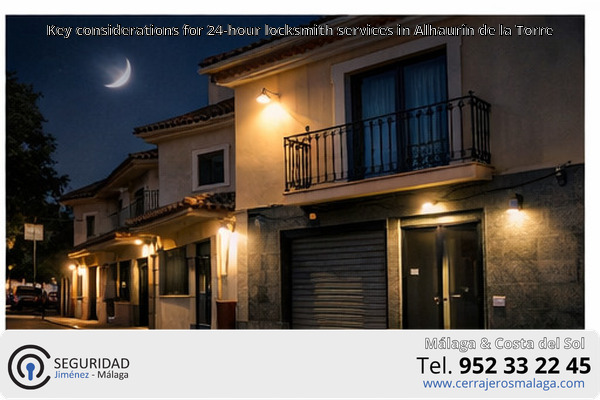
  • Key considerations for 24-hour locksmith services in Alhaurín de la Torre

    Key considerations for 24-hour locksmith services in Alhaurín de la Torre

    Have you ever found yourself locked out of your home in the middle of the night? In Málaga, such situations can be stressful, especially when you need immediate help. Knowing the key considerations for 24-hour locksmith services in Alhaurín de la Torre can make all the difference in restoring your peace of mind. Read on to discover what you need to know!

    What 24-hour locksmith services in Alhaurín de la Torre involve

    A 24-hour locksmith service in Alhaurín de la Torre is intended to provide technical assistance when a residential access problem occurs outside normal working hours. Typical situations include a locked door, a lost key, a damaged cylinder, a malfunctioning lock or an entrance that cannot be secured correctly.

    The purpose of an emergency intervention is not simply to open a door. A professional assessment should identify the origin of the problem, protect the property from unnecessary damage and determine whether the existing lock can be repaired, adjusted or replaced. The appropriate procedure depends on the door type, the lock mechanism, the condition of the installation and the circumstances of the incident.

    Cerrajerosmalaga publishes information about locksmith services and residential security through its website, https://blog.cerrajerosmalaga.com. In every case, the availability, travel time and technical solution should be confirmed according to the location and the specific service required.

    When a 24-hour locksmith may be necessary

    Emergency assistance may be appropriate when access to a home is blocked or when a door cannot provide reliable protection. Common warning signs include a key that turns with difficulty, a cylinder that rotates without operating the lock, a handle that remains loose, a door that does not close properly or a key that has broken inside the mechanism.

    • Loss or theft of keys: replacing the cylinder may be advisable when unauthorised access is a concern.
    • Accidental lockout: the locksmith should first assess whether non-destructive access is technically possible and authorised.
    • Mechanical failure: internal wear, misalignment or a damaged latch may prevent normal operation.
    • Door that will not lock: this can leave the property exposed even if the door appears closed.
    • Broken key: the condition of the cylinder should be checked after the key is removed.
    • Urgent security change: a replacement cylinder may be considered after a tenancy change, lost keys or suspected unauthorised duplication.

    An emergency service may not be necessary when the problem is limited to a stiff handle or minor misalignment that does not prevent access or security. However, forcing the key, applying unsuitable lubricants or repeatedly operating a faulty lock can increase the damage and make a later repair more complex.

    What should be checked before requesting assistance

    Before contacting a locksmith, it is useful to establish whether the problem affects the key, the cylinder, the lock body, the handle or the door alignment. This information does not replace a professional diagnosis, but it can help describe the incident accurately.

    • Whether the door is open, closed or locked.
    • Whether the key enters the cylinder fully.
    • Whether the key turns partially or does not turn at all.
    • Whether other authorised keys show the same problem.
    • Whether the door has suffered impact, swelling, movement or visible damage.
    • Whether access is required to a private home, a rented property or a shared building.

    The person requesting the intervention should also be able to demonstrate authorisation to access the property. A responsible professional service may need to verify this before carrying out work.

    Risks and problems that emergency locksmith assistance can help prevent

    A prompt technical assessment can reduce several risks associated with damaged or unreliable residential access systems. It does not eliminate every security concern, and the result depends on the condition of the installation and the solution selected.

    • Unauthorised access: a lost or unaccounted-for key may compromise the cylinder even when the door remains functional.
    • Progressive mechanical failure: continued use of a worn mechanism can lead to a complete lockout.
    • Damage to the door: unsuitable force or improvised tools may affect the cylinder, escutcheon, lock body or frame.
    • Loss of closing functionality: a door that does not latch or deadlock correctly may remain vulnerable.
    • Repeated emergency call-outs: repairing the underlying fault can be more appropriate than repeatedly addressing the symptom.

    Emergency assistance should be understood as a technical intervention rather than an automatic replacement of every component. A replacement is justified when repair, adjustment or maintenance cannot restore an adequate level of functionality.

    How a 24-hour residential locksmith intervention is carried out

    The exact sequence varies according to the incident, but a professional intervention normally follows a structured process.

    1. Initial assessment: the technician confirms the location, access problem, door condition and level of urgency.
    2. Diagnosis of the existing system: the cylinder, lock body, handle, hinges, frame and alignment are examined without assuming that the visible symptom identifies the real fault.
    3. Selection of the appropriate solution: possible options may include adjustment, repair, cylinder replacement, lock replacement or controlled access to the property.
    4. Intervention: the selected work is carried out using a method proportionate to the problem and designed to avoid unnecessary damage.
    5. Final checks: the key operation, latch, deadbolt, handle, closing pressure and interaction between the door and frame are tested several times.

    When a cylinder is changed, compatibility with the existing lock, door thickness, escutcheon and key operation should be verified. When the problem is caused by alignment, replacing the cylinder alone may not correct the fault.

    Alternatives and related residential systems

    Solution When it is used Advantages Limitations
    Lock adjustment When misalignment or fixing problems affect operation Can restore functionality without replacing the complete lock Not suitable when internal components are damaged or worn
    Cylinder replacement When keys are lost, the cylinder is worn or access control must be changed Changes the key-operated part while retaining compatible components Does not solve faults in the lock body, frame or door alignment
    Lock replacement When the mechanism is damaged, obsolete or no longer reliable Addresses failures affecting the internal locking system Compatibility and installation dimensions must be checked
    Electronic or smart lock When the property requires a different access method May provide access through electronic credentials instead of a traditional key Requires compatibility, power management and appropriate maintenance
    Additional door reinforcement When the door, frame or cylinder protection requires improvement Can strengthen the overall access assembly Protection depends on the complete installation, not one added component

    Common situations during residential interventions

    Lost keys and immediate access concerns

    Situation: An occupant loses a set of keys and is concerned that the keys could be identified or used by another person.

    Problem detected: The door and lock may still operate normally, but control over the keys has been lost.

    Technical assessment: The decision depends on the level of risk, the type of cylinder and whether the keys are linked to the property.

    Usual solution: A cylinder change may be considered, followed by testing of the new keys and locking points.

    Expected result: Previous keys should no longer operate the replaced cylinder, subject to the scope of the work performed.

    A key turns with difficulty

    Situation: The key has progressively become harder to insert or turn.

    Problem detected: The cause may be wear, contamination, misalignment, a damaged key or pressure from the door.

    Technical assessment: The technician should distinguish between a cylinder fault and a door or frame problem before recommending replacement.

    Usual solution: Adjustment or repair may be appropriate in some cases; cylinder replacement may be required when the mechanism is damaged.

    Expected result: The lock should operate smoothly and the door should close without excessive force, provided the surrounding installation is in suitable condition.

    The door is closed but cannot be secured

    Situation: The door closes physically, but the latch or deadbolt does not engage correctly.

    Problem detected: The fault may involve the lock body, strike plate, hinges, frame or door alignment.

    Technical assessment: Replacing only the visible cylinder may leave the actual security problem unresolved.

    Usual solution: Adjustment, repair or replacement of the affected component after checking the complete closing assembly.

    Expected result: The door should close and lock consistently without forcing the key or handle.

    Frequent mistakes and how to avoid them

    Error Possible consequence Technical recommendation
    Forcing a key that is already difficult to turn The key may break and the cylinder may be damaged Stop operating the mechanism and request an assessment
    Replacing the cylinder without checking alignment The new component may suffer the same operating stress Inspect the door, frame, hinges and strike plate as a complete assembly
    Using unsuitable lubricants or objects Internal contamination or additional obstruction Use only products and procedures appropriate for the specific lock
    Choosing a component based only on appearance Incompatibility with the lock body or door thickness Verify dimensions, profile, fixing points and security requirements
    Ignoring intermittent faults A minor failure may become a complete lockout Arrange a technical check when the problem first appears
    Assuming that every 24-hour service has identical availability Unclear expectations about attendance or scope Confirm service coverage, estimated attendance and the work required

    Aspects to consider in Málaga and Alhaurín de la Torre

    For an emergency locksmith service in Alhaurín de la Torre, the exact location and accessibility of the property can affect coordination and attendance. The type of building, the distance from the operating base, the condition of the entrance and the nature of the incident should be communicated as accurately as possible.

    Residential properties may have different requirements depending on whether the access is a flat entrance, a detached home, a gated property or part of a shared building. The technician may also need to consider a communal entrance before reaching the private door.

    As part of the Málaga area, Alhaurín de la Torre requires the same basic technical precautions as any other location: verify authorisation, identify the locking system, assess the complete door assembly and confirm the final operation. Availability outside standard hours can depend on the service schedule and the characteristics of the request, so it should be confirmed in advance whenever possible.

    Frequently asked questions about 24-hour locksmith services in Alhaurín de la Torre

    What does a 24-hour locksmith service include?

    It generally refers to assistance available for urgent access and lock-related incidents outside standard working hours. The exact scope may include opening assistance, cylinder replacement, lock repair or security assessment, depending on the provider and the technical circumstances.

    Does a 24-hour service always mean immediate attendance?

    No. Twenty-four-hour availability does not necessarily mean that attendance is instantaneous. Location, current workload, access conditions and the type of incident can affect coordination and arrival time.

    Should the cylinder always be replaced after losing a key?

    Not necessarily. The decision depends on whether the key can be linked to the property, the perceived risk and the type and condition of the cylinder. Replacement is one possible measure when control over access credentials has been lost.

    Can a lock be repaired instead of replaced?

    In some cases, yes. Repair or adjustment may be appropriate when the components are serviceable and the problem is caused by alignment, fixing or limited wear. Replacement may be more suitable when internal damage or advanced wear is present.

    What information should be provided when requesting assistance?

    Describe the municipality, the type of property, whether the door is open or closed, what happens when the key is used and whether there is visible damage. This helps the service prepare for a more accurate initial assessment.

    Can a locksmith work on a rented property?

    Access and intervention should be authorised by the tenant, owner or another person with the appropriate right to request the work. The professional may need to verify authorisation before proceeding.

    Is an electronic lock suitable for every home?

    No. Suitability depends on the door, lock body, power requirements, connectivity, user preferences and maintenance conditions. A technical compatibility check is necessary before installation.

    What should be tested after the intervention?

    The key or access method, latch, deadbolt, handle, door alignment and closing operation should be checked repeatedly. The door should lock and unlock without excessive force or unusual resistance.

    Technical summary

    A 24-hour locksmith service in Alhaurín de la Torre is designed to address urgent residential access and security problems, including lockouts, lost keys, damaged cylinders and doors that cannot be secured correctly. The appropriate response depends on a diagnosis of the entire door assembly rather than on the most visible symptom.

    • Function: restore controlled access and reliable locking after an urgent incident.
    • Typical applications: lost keys, mechanical failures, broken keys, blocked doors and immediate cylinder changes.
    • Available alternatives: adjustment, repair, cylinder replacement, lock replacement or a compatible electronic system.
    • Main limitations: attendance, compatibility and final costs depend on location, access conditions and the components involved.
    • Essential criterion: a professional evaluation should precede any intervention that could affect the door, lock or security level.
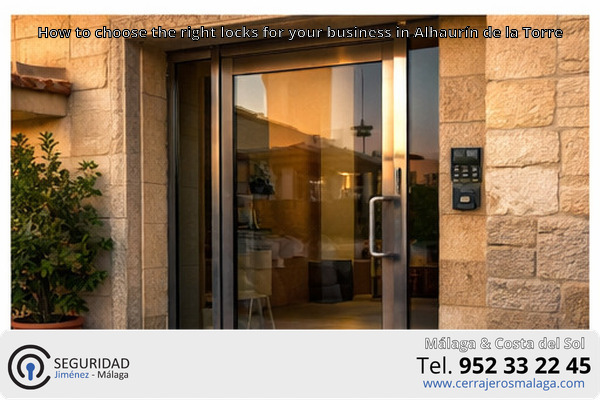
  • How to choose the right locks for your business in Alhaurín de la Torre

    How to choose the right locks for your business in Alhaurín de la Torre

    Have you ever wondered how to ensure the safety of your business in Alhaurín de la Torre? Choosing the right locks is crucial in protecting your assets and maintaining peace of mind. In Málaga, where security concerns are on the rise, understanding the best access solutions can make all the difference.

    What does choosing the right business lock involve?

    Choosing the right locks for a business in Alhaurín de la Torre means selecting an access system that matches the type of premises, the number of users, the level of control required and the characteristics of the doors. The appropriate solution is not determined by the lock alone. The door, frame, cylinder, access procedures and maintenance requirements must be assessed as a complete system.

    Commercial premises may include offices, shops, warehouses, workshops and other work areas with different security needs. A lock suitable for a low-traffic internal office may not be appropriate for a main entrance, a storage area or a door used by several employees throughout the day. Technical evaluation helps avoid compatibility problems and unnecessary replacements.

    For businesses in Alhaurín de la Torre and other areas of Málaga, the decision should also take into account the existing installation and the type of assistance required if a failure occurs. Cerrajerosmalaga provides informative content about locks, access security and professional locksmith services through its website.

    When may a business need a new locking solution?

    A change or upgrade may be considered when the existing lock no longer provides adequate control, has suffered mechanical wear or does not reflect the way the business currently operates. A premises may also need a different system after changes in staff, internal distribution or access permissions.

    • Changes in personnel: former employees may still have keys, or the business may need to reorganise who can access specific areas.
    • Loss of keys: lost keys can make it necessary to replace a cylinder or review the entire access plan, particularly when it is not possible to identify how many copies exist.
    • Restricted areas: offices, archives, server rooms, stockrooms and equipment areas may require access control different from that used at the main entrance.
    • High frequency of use: doors used repeatedly during the working day require components that can operate reliably under regular use and that can be maintained correctly.
    • Protection of goods or documentation: business assets may require stronger mechanical protection or a system that records authorised access.
    • Recurring faults: stiffness, incomplete locking, misalignment or keys that no longer operate smoothly may indicate wear or an underlying installation problem.
    • Expansion of the premises: new doors or work areas may require a structured key plan rather than isolated locks installed without coordination.

    A new lock may not be necessary if the problem is limited to adjustment, lubrication compatible with the mechanism or repair of an isolated component. Before replacing anything, the condition of the door, frame, hinges and locking points should be checked.

    Technical options for commercial premises

    Different systems solve different access-management problems. The following alternatives should be understood as general categories; actual suitability depends on the door, usage, users and existing installation.

    Solution When it is used Advantages Limitations
    Mechanical cylinder lock Standard entrances, offices and areas with a limited number of authorised users Simple operation, broad compatibility and no electronic power supply Key control can become difficult when many copies circulate
    Master key system Businesses with several doors and different levels of access Allows defined access hierarchies with fewer keys for authorised personnel Requires careful planning, controlled duplication and appropriate maintenance
    Electronic access lock Premises that need user credentials, controlled permissions or changes without replacing every cylinder Access rights may be managed according to the installed system Depends on electrical, electronic and software compatibility
    Code-operated lock Areas where users need entry without carrying a physical key Can simplify access for authorised users and reduce key circulation Codes must be managed securely and the system requires suitable maintenance
    Access-control system Businesses that need centralised management or a record of entries Can support user management, permissions and access records, depending on the system Installation is more complex and may require integration with other equipment
    Additional security lock Doors requiring an extra locking point or reinforcement of the existing closure May increase resistance and provide an additional physical barrier It does not correct a weak door, frame or poorly aligned installation

    Criteria for choosing the right locks for a business

    Number of users and key management

    The number of employees is only one factor. It is also necessary to determine whether users need access to all areas, whether access changes frequently and whether external personnel, suppliers or cleaning staff require entry. A mechanical system may be suitable for a small and stable group, while a master key or electronic system may be more practical when permissions are differentiated.

    Number and type of areas

    The main entrance, internal offices, stockrooms, restricted technical rooms and emergency exits do not necessarily require the same lock. A door-by-door assessment helps prevent the common mistake of installing identical components throughout the premises without considering their function.

    Frequency of use

    A lock on a door used occasionally is exposed to different conditions from one used continuously by employees, customers or delivery personnel. High-use doors should be checked for alignment, closing force, handle condition and the compatibility between the lock and the door closer, if present.

    Need for access records

    Some businesses only need to prevent unauthorised entry. Others may need to know which credentials were used and when. A mechanical lock generally does not provide an electronic record, while an access-control system may offer this function if the installation supports it. The need for a record should be defined before choosing an electronic product.

    Compatibility with the existing installation

    Compatibility includes the dimensions of the lock, the type of door, available space, power requirements, wiring, the frame and the relationship with other hardware. An electronic lock cannot be selected solely because of its features; it must be compatible with the door and with any access-control equipment already installed.

    Maintenance and continuity of operation

    Businesses should consider what happens if a battery, reader, keypad or electronic component fails. A suitable system must include a practical management procedure for faults, lost credentials and authorised emergency access. Mechanical systems also require maintenance, particularly where there is frequent use or exposure to dust and moisture.

    Scalability and available budget

    The initial budget is relevant, but it should be assessed together with future changes, maintenance and possible extensions. A low-complexity solution may be adequate for a small premises, whereas a growing business may benefit from a system that can incorporate new doors and users without replacing the complete installation.

    Practical comparison between mechanical, master key and electronic systems

    Mechanical, master key and electronic systems can all be suitable, but they respond to different management needs. A mechanical cylinder is usually easier to operate and does not depend on a power source. Its main management challenge is controlling copies and recovering keys when users leave the organisation.

    A master key system can organise access to several doors through defined hierarchies. It requires precise planning because an incorrect structure may give users more access than intended. It is also important to maintain control over authorised duplication and future modifications.

    Electronic access systems may be more flexible when permissions change frequently or when the business needs access records. However, they require a technical assessment of power supply, communication, credentials, emergency operation and maintenance. Electronic technology does not compensate for a weak door or an unsuitable frame.

    How a professional assessment is carried out

    1. Inspection of the premises: the main entrance, internal doors, restricted areas and any doors with recurring problems are identified.
    2. Assessment of the physical installation: the door, frame, hinges, locking points, handles and existing cylinder or lock are checked.
    3. Analysis of users and permissions: the business determines who needs access, which areas should be restricted and whether permissions change regularly.
    4. Definition of operating requirements: the frequency of use, need for records, management of lost keys or credentials and continuity requirements are considered.
    5. Selection of the system: the appropriate mechanical, master key, electronic or access-control solution is selected according to compatibility and the intended use.
    6. Installation or adjustment: the chosen component is fitted or the existing mechanism is adjusted, avoiding modifications that could weaken the door or frame.
    7. Final verification: locking, unlocking, alignment, authorised access and the correct operation of all relevant doors are checked before the system is put into regular use.

    Common situations in businesses and commercial premises

    Several employees use the main entrance, but internal areas must remain restricted

    Need: The business requires general access to the entrance while limiting entry to an office, stockroom or technical area.

    Risk: Using the same key for every door may provide wider access than necessary.

    Technical criterion: The access hierarchy, number of users and possibility of future staff changes should be analysed.

    Usual solution: A properly planned master key system or differentiated access-control solution may be considered, depending on the installation.

    Expected result: Users receive access according to their role, subject to correct administration and maintenance of the system.

    An employee leaves the business and the key inventory is uncertain

    Need: The business needs to reduce uncertainty about who can still enter.

    Risk: Unknown copies may remain in circulation.

    Technical criterion: It is necessary to determine whether the affected key opens one door or several and whether the cylinder can be replaced without changing the complete lock.

    Usual solution: Replacement or reconfiguration of the relevant cylinder, together with a review of key custody procedures.

    Expected result: The business regains control over the active keys, within the limits of the selected system.

    A main door becomes difficult to lock during frequent use

    Need: The door must close and lock consistently during normal business operations.

    Risk: Repeated forcing of the handle or key may increase wear and cause a sudden failure.

    Technical criterion: The lock should not be replaced before checking alignment, hinges, frame deformation, closing pressure and internal wear.

    Usual solution: Adjustment or repair where appropriate, or replacement with a compatible component if the existing mechanism is worn or unsuitable.

    Expected result: More reliable operation under the expected conditions of use, provided the complete door assembly is correctly adjusted.

    Frequent mistakes when selecting or managing business locks

    Error Consequence Preventive technical criterion
    Choosing a lock only by appearance or price The component may be incompatible with the door or unsuitable for the level of use Assess the complete installation and intended operating conditions
    Giving the same key to every employee Users may gain access to areas unrelated to their duties Define access hierarchies and separate general and restricted areas
    Ignoring lost or unreturned keys Unauthorised copies may remain active Maintain a key register and review the cylinder or access permissions when necessary
    Installing electronic equipment without checking power or compatibility Access failures, connection problems or dependence on unsuitable equipment Verify wiring, power, credentials, emergency operation and integration requirements
    Replacing the lock without checking the door and frame The new component may continue to operate poorly or become damaged Inspect alignment, hinges, frame and closing points before intervention
    Failing to plan future changes Additional doors or users may require an expensive redesign Consider scalability and the likely evolution of the business

    Service considerations in Málaga and Alhaurín de la Torre

    When a business in Alhaurín de la Torre needs to change or assess its locks, the intervention should be based on the actual premises rather than on the location alone. The type of building, door construction, access layout, distance between work areas and existing hardware can affect the technical decision.

    An on-site assessment may be necessary when the business needs a master key structure, several coordinated locks, an electronic system or a solution for a door that does not close correctly. In urgent situations, the immediate priority may be to restore controlled access safely; a more complete review can then determine whether additional changes are required.

    For businesses located in Málaga and nearby areas, it is advisable to provide information about the type of premises, the number of affected doors, the symptoms of the problem and whether keys or access credentials have been lost. This information helps establish the scope of the evaluation without replacing an inspection of the installation.

    Frequently asked questions about choosing business locks in Alhaurín de la Torre

    Should every door in a business have the same type of lock?

    No. The appropriate system depends on the function of each door, the level of restriction, the frequency of use and the users who require access. A main entrance, a stockroom and an internal office may need different solutions.

    Is a master key system suitable for every company?

    Not necessarily. It can be useful where several doors and access levels must be organised, but it requires careful planning and controlled key duplication. A detailed assessment is needed to avoid granting excessive access.

    When is an electronic lock preferable to a mechanical lock?

    An electronic system may be preferable when the business needs to change permissions regularly, manage credentials or record entries. A mechanical system may be more appropriate when simplicity, independence from power and straightforward operation are the main requirements.

    Can a lock be replaced without changing the whole door?

    In many installations, only the cylinder or a compatible lock component may need to be replaced. This depends on the door design, measurements, existing mechanism and the condition of the frame. Compatibility must be verified before ordering components.

    What should be done after losing a business key?

    The business should assess which doors the key could open and whether other copies exist. Depending on the risk and the type of lock, replacing the cylinder, changing the locking system or reviewing access permissions may be appropriate.

    How can frequent locking problems be diagnosed?

    The lock should not be considered in isolation. The door alignment, hinges, frame, closing pressure, handle and locking points should also be checked. Difficulty turning a key may be caused by wear, but it may also result from movement or deformation of the door.

    Do electronic access systems eliminate the need for maintenance?

    No. Electronic systems require checks of batteries or power supply, readers, credentials, connections and emergency procedures. Mechanical components such as locks, handles and hinges also need inspection where they are used frequently.

    Can a business combine mechanical and electronic access?

    It may be possible, but the combination must be designed around the door and the existing access system. Different technologies should not be mixed without checking physical compatibility, emergency operation and the way permissions will be managed.

    Technical summary for making a decision

    Choosing the right locks for a business in Alhaurín de la Torre requires more than selecting a product. The decision should consider the type of premises, number of users, areas to be protected, frequency of use, access hierarchy, need for records, maintenance and future changes.

    • Mechanical locks may be suitable where simple and independent operation is required.
    • Master key systems can organise several doors and access levels, provided the hierarchy is planned correctly.
    • Electronic locks and access-control systems may help manage changing permissions and records, but they require compatibility checks and maintenance.
    • Additional locking components can support a door, but they do not correct weaknesses in the frame, hinges or general installation.
    • Professional evaluation is advisable when the business has several access points, uncertain key control, repeated faults or plans to expand.

    The most appropriate solution is the one that fits the real operating conditions of the business and can be managed correctly over time. A technical assessment in the premises helps determine whether repair, adjustment, cylinder replacement, a master key arrangement or a more structured access system is justified.

  • Emergency locksmith services for homes in Costa del Sol Alhaurín de la Torre

    Emergency locksmith services for homes in Costa del Sol Alhaurín de la Torre

    Have you ever found yourself locked out of your home in the beautiful Costa del Sol or Alhaurín de la Torre? In homes across Málaga, such emergencies can happen unexpectedly and create a sense of urgency. Understanding the importance of emergency locksmith services is crucial for ensuring your safety and peace of mind.

    What emergency locksmith services for homes in Costa del Sol and Alhaurín de la Torre involve

    Emergency locksmith services for homes provide professional assistance when a residential door, lock or access system prevents safe entry, exit or normal use. In Alhaurín de la Torre and other areas of the Costa del Sol, these interventions may involve opening a locked door, replacing a damaged cylinder, repairing a malfunctioning lock or assessing an urgent security problem.

    The appropriate response depends on the type of door, the lock installed, the condition of the mechanism and the circumstances of the incident. A technical assessment should take place before any intervention so that the locksmith can distinguish between a simple access problem, a mechanical failure and a situation that requires replacing part of the locking system.

    Cerrajerosmalaga provides information and assistance related to residential locksmith services in Málaga. Further company information is available through the website https://blog.cerrajerosmalaga.com.

    When emergency residential locksmith assistance may be necessary

    Emergency assistance may be appropriate when a homeowner cannot access or secure the property because of a lost key, a broken key, a jammed lock or a door that no longer closes correctly. It may also be required when a lock shows signs of damage after an attempted intrusion or when a malfunction prevents occupants from leaving safely.

    • Lost or misplaced keys: Access may need to be restored and the cylinder may require replacement if the keys could be used by an unauthorised person.
    • Broken or damaged key: A damaged key can prevent normal operation and may indicate wear in the keyway or internal mechanism.
    • Lock failure: Difficulty turning the key, intermittent operation or a latch that does not retract can indicate mechanical deterioration.
    • Door alignment problems: A door that rubs against the frame or requires excessive force may be suffering from hinge, frame or alignment issues rather than a lock defect.
    • Security concern: Visible damage, unusual marks or a lock that no longer functions as expected should be assessed before the property is left unattended.

    An emergency service may not be necessary if the problem is caused only by an incorrectly positioned door, a temporary obstruction or a key that has been inserted improperly. Even in these cases, repeated difficulty should not be ignored because continued force can increase the damage.

    What problems emergency locksmith services can help prevent

    Prompt technical attention can reduce the risk of a minor defect becoming a complete access failure. It may also help restore the protective function of the entrance when the lock has become unreliable or when the security of the keys is uncertain.

    • Unauthorised access: Replacing a cylinder may be considered when keys have been lost, stolen or made available to unknown persons.
    • Unexpected lockouts: A worn mechanism can fail without warning, especially when it already requires excessive force.
    • Progressive wear: Early diagnosis can identify internal friction, misalignment or deterioration before the mechanism becomes unusable.
    • Loss of door functionality: A door that does not latch or lock correctly can leave the home exposed or create difficulties in an emergency evacuation.
    • Security weaknesses: A professional assessment can determine whether the existing cylinder, escutcheon, lock case and door are compatible and correctly adjusted.

    How an emergency residential locksmith intervention is carried out

    A professional intervention should be adapted to the actual fault and carried out only with appropriate authorisation from the property owner, occupant or responsible person.

    1. Initial assessment: The locksmith establishes the nature of the incident, the type of property access involved and whether anyone is at immediate risk.
    2. Diagnosis of the existing system: The door, frame, cylinder, lock case, handle and visible operating points are assessed to identify whether the fault is mechanical, structural or related to alignment.
    3. Selection of the appropriate solution: Depending on the diagnosis, the intervention may involve restoring operation, repairing an adjustable component, replacing a cylinder or changing another damaged part.
    4. Intervention: The work is performed using a method appropriate to the door and locking system, with the aim of limiting unnecessary damage to the property.
    5. Final checks: The door should be tested from the relevant sides, including locking, unlocking, latching, handle operation and contact with the frame.

    The choice between repair and replacement depends on the condition of the mechanism, the availability of compatible components, the security requirements of the property and the likely reliability of the existing installation.

    Related solutions and residential access systems

    Solution When it is used Advantages Limitations
    Residential door opening When an authorised occupant cannot enter or exit because the door is locked or the mechanism is malfunctioning Restores access without automatically requiring a complete lock replacement The underlying fault may remain if the mechanism is worn or damaged
    Cylinder replacement When keys are lost, security is uncertain or the cylinder no longer operates reliably Can restore controlled key access while retaining compatible parts of the door Compatibility with the lock case, door and protective hardware must be verified
    Lock repair or adjustment When the mechanism is serviceable but affected by alignment, wear or adjustment problems May avoid replacing components that are still suitable for use It may not be appropriate when internal damage or advanced deterioration is present
    Security upgrade When the existing access system presents weaknesses or no longer meets the household’s needs Can address the cylinder, protective hardware or control of keys as part of a broader assessment The result depends on the door, frame, installation quality and compatibility of the selected components
    Electronic or smart residential lock When the property requires an alternative access method and the door supports the system May provide access through electronic credentials instead of a traditional key Requires suitable installation, maintenance and management of batteries or electronic components

    Common situations during residential interventions

    Lost keys after leaving the property

    Situation: An occupant discovers that the house keys are missing and cannot enter the property.

    Problem detected: The immediate issue is loss of access, but there may also be a security concern if the keys can be associated with the address.

    Technical assessment: The professional evaluates the door and cylinder and considers whether access can be restored without replacement or whether the cylinder should be changed.

    Usual solution: Residential door opening followed, where appropriate, by cylinder replacement or another access-control measure.

    Expected result: The occupant can regain access and the property can be secured with a locking arrangement whose keys are controlled again.

    A key turns with difficulty

    Situation: A resident notices increasing resistance when locking or unlocking the front door.

    Problem detected: The issue may be caused by cylinder wear, a misaligned door, pressure on the latch or a problem inside the lock case.

    Technical assessment: The locksmith checks whether the resistance changes when pressure on the door is relieved and examines the relationship between the door, frame and mechanism.

    Usual solution: Adjustment or repair may be suitable when the components remain serviceable. Replacement may be considered if the cylinder or lock is significantly worn.

    Expected result: Smoother operation and a clearer understanding of any remaining limitation in the installation.

    The door does not close or lock correctly

    Situation: The door appears to close but the latch or locking bolts do not engage consistently.

    Problem detected: The cause may be alignment, movement of the frame, worn hinges, a damaged strike plate or a defective lock.

    Technical assessment: The complete closing system is inspected rather than replacing the cylinder automatically.

    Usual solution: Adjustment, repair or replacement of the affected component, depending on the source of the problem.

    Expected result: The door should close and lock consistently, subject to the condition of the surrounding installation.

    Frequent mistakes and how to avoid them

    Mistake Consequence Technical recommendation
    Forcing the key or handle The key, cylinder, handle or internal lock mechanism may break completely Stop applying force when resistance is abnormal and request an assessment of the door and mechanism
    Replacing only the visible component The underlying alignment or lock-case problem may continue Assess the complete access assembly, including the door, frame and locking points
    Ignoring intermittent failures A temporary defect can become a complete lockout Arrange a diagnosis when the problem appears repeatedly or worsens over time
    Choosing an incompatible cylinder The new component may not operate correctly or may not fit the protective hardware Check dimensions, type, fixing method and compatibility with the existing installation
    Leaving a damaged door unsecured The property may remain vulnerable to unauthorised access Confirm that the door closes, latches and locks correctly before considering the intervention complete

    Aspects to consider in Málaga and Alhaurín de la Torre

    Emergency locksmith assistance in Alhaurín de la Torre forms part of a wider service requirement in Málaga and the Costa del Sol. Availability and travel conditions may depend on the location of the property, the nature of the incident and the service requested.

    The type of dwelling should also be considered. A detached house, apartment, gated residential property and ground-floor home may have different entrance configurations, secondary access points and security requirements. The professional may need to evaluate the main door, frame, communal access arrangements and any additional locking points that affect the intervention.

    Each case requires an individual assessment. The presence of a security door, multi-point lock, electronic access system or damaged frame can alter the procedure and the components required. A precise solution should therefore be determined after confirming the installation in person or through reliable technical information.

    Frequently asked questions about emergency locksmith services for homes in Costa del Sol and Alhaurín de la Torre

    What situations are considered residential locksmith emergencies?

    Typical emergencies include being unable to enter or leave a home, a broken key, a failed lock, a door that cannot be secured or visible damage affecting the entrance. The urgency depends on the risk to people, the security of the property and the time-sensitive nature of the problem.

    Does an emergency service always require replacing the lock?

    No. Some incidents can be resolved through adjustment, repair or restoration of the existing mechanism. Replacement is considered when the component is damaged, excessively worn, incompatible with the door or associated with lost keys and security concerns.

    What should be checked before requesting assistance?

    The occupant should confirm that the correct key is being used, avoid forcing the mechanism and note whether the problem affects locking, unlocking, latching or the alignment of the door. If there is immediate danger, the relevant emergency services should be contacted first.

    Can a locksmith assess whether the problem is caused by the door or the lock?

    Yes. A technical assessment compares the operation of the door, frame, hinges, strike points, cylinder and lock case. This helps determine whether replacing the cylinder would solve the problem or whether adjustment or repair of another component is necessary.

    Are all residential locks compatible with the same replacement cylinder?

    No. Compatibility depends on the cylinder type, dimensions, fixing arrangement, lock case and protective hardware. The door configuration and the required level of control over keys must also be considered before selecting a replacement.

    How long does an emergency locksmith intervention take?

    The duration varies according to the location, access conditions, type of door, fault and availability of compatible components. A simple adjustment may require less work than a damaged multi-point mechanism or a door with structural alignment issues.

    Should a cylinder be changed after losing house keys?

    It may be advisable when the lost keys could be linked to the property or when control over them cannot be recovered. The decision depends on the circumstances, the type of cylinder and the security assessment of the entrance.

    What maintenance can reduce the likelihood of a lockout?

    Residents should avoid forcing keys, address repeated stiffness promptly, check that the door closes without excessive pressure and arrange an inspection when the lock becomes intermittent. Maintenance must be compatible with the manufacturer’s recommendations and the installed mechanism.

    Technical summary

    Emergency locksmith services for homes in Alhaurín de la Torre and the Costa del Sol are intended to restore residential access or security when a door, cylinder or lock has failed, become damaged or no longer provides reliable operation.

    • The main applications include lockouts, lost keys, broken keys, malfunctioning locks and doors that cannot be secured correctly.
    • The intervention should begin with an assessment of the complete door and locking assembly rather than an automatic replacement of one component.
    • Possible solutions include opening an authorised residential entrance, adjusting or repairing the mechanism, replacing the cylinder or considering a broader security upgrade.
    • Compatibility between the door, frame, lock case, cylinder and protective hardware is essential.
    • The final result depends on the condition of the installation, the type of access system and the components available for the specific door.
    • A professional evaluation is necessary when the fault is recurrent, the property has suffered damage or the security of the keys is uncertain.