Autor: CerrajerosMálaga

  • Vorteile eines 24-Stunden-Cerrajería-Services für Wohnhäuser in der Costa del Sol Estepona

    Vorteile eines 24-Stunden-Cerrajería-Services für Wohnhäuser in der Costa del Sol Estepona

    Haben Sie sich jemals ausgesperrt oder den Schlüssel verloren, während Sie nach Hause zurückkehren? In Wohnhäusern in Málaga ist dies ein häufiges Problem. Ein 24-Stunden-Schlüsseldienst in Estepona kann Ihnen in solch dringenden Situationen schnell helfen und bietet wichtige Sicherheitslösungen.

    Was ist ein 24-Stunden-Schlüsseldienst für Wohnhäuser und wozu dient er?

    Ein 24-Stunden-Schlüsseldienst für Wohnhäuser unterstützt Bewohner bei dringenden Problemen mit Türen, Schlössern und Schließzylindern – unabhängig davon, ob die Störung am Tag, in der Nacht, an Wochenenden oder an Feiertagen auftritt. Für Wohnhäuser in Estepona und anderen Orten der Costa del Sol kann ein solcher Dienst insbesondere dann relevant sein, wenn der Zugang zur Wohnung blockiert ist oder die Sicherheit nach einem Defekt, Schlüsselverlust oder Einbruchsversuch überprüft werden muss.

    Der technische Nutzen besteht nicht nur im Öffnen einer Tür. Vor jeder Maßnahme sollte festgestellt werden, ob die Ursache im Schlüssel, im Zylinder, im Schloss, in der Türmechanik oder in einer fehlerhaften Ausrichtung liegt. Erst danach lässt sich entscheiden, ob eine zerstörungsarme Türöffnung, ein Austausch des Schließzylinders, eine Reparatur oder eine weitergehende Sicherungsmaßnahme angemessen ist.

    Ein 24-Stunden-Service kann die Zeit verkürzen, in der Bewohner vor verschlossener Tür stehen oder ein beschädigter Zugang ungesichert bleibt. Die konkrete Verfügbarkeit, Anfahrt und Vorgehensweise hängen jedoch vom Einsatzort, der Uhrzeit und den Bedingungen des jeweiligen Auftrags ab.

    In welchen Situationen kann ein 24-Stunden-Schlüsseldienst erforderlich sein?

    Eine dringende Intervention wird vor allem dann sinnvoll, wenn der Zugang nicht mehr zuverlässig funktioniert oder ein Sicherheitsrisiko besteht. Häufige Auslöser sind:

    • Verlust oder Diebstahl eines Wohnungsschlüssels
    • Ein im Zylinder abgebrochener oder feststeckender Schlüssel
    • Ein Schloss, das sich trotz passendem Schlüssel nicht mehr betätigen lässt
    • Eine zugefallene Tür, wenn keine autorisierte Zugangsmöglichkeit vorhanden ist
    • Ein defekter Schließzylinder nach einem Einbruchsversuch
    • Eine Tür, die wegen einer abgesenkten oder verspannten Konstruktion nicht korrekt schließt
    • Der notwendige Austausch eines Zylinders nach einem Schlüsselverlust

    Nicht jede schwergängige Tür erfordert sofort einen Notdienst. Wenn die Tür noch sicher geschlossen werden kann und keine akute Gefahr besteht, kann eine planbare technische Prüfung ausreichen. Vor einer Intervention sollte außerdem geklärt werden, wer zur Nutzung oder Beauftragung der Wohnung berechtigt ist und ob weitere Bewohner, eine Hausverwaltung oder ein Versicherer einbezogen werden müssen.

    Welche Risiken oder Probleme kann der Service vermeiden?

    Eine fachgerechte Intervention kann verhindern, dass sich ein zunächst kleiner Defekt zu einer vollständigen Blockade entwickelt. Besonders relevant sind folgende Risiken:

    • Unbefugter Zugang: Nach einem verlorenen oder gestohlenen Schlüssel kann der Austausch des Schließzylinders erforderlich sein, damit die bisherige Schließberechtigung nicht weiter besteht.
    • Vollständige Funktionsstörung: Ein verschlissener Zylinder oder ein defektes Schloss kann den Zugang plötzlich verhindern oder das sichere Abschließen unmöglich machen.
    • Folgeschäden: Unsachgemäße Versuche mit ungeeigneten Werkzeugen können Tür, Beschlag, Zylinder oder Rahmen beschädigen.
    • Verlust der Schutzfunktion: Eine Tür, die nur angelehnt oder nicht vollständig verriegelt ist, bietet deutlich weniger Schutz als ein korrekt eingerichteter Zugang.
    • Wiederkehrende Blockaden: Wird nur das unmittelbare Symptom beseitigt, kann die eigentliche Ursache – etwa eine Fehlstellung oder ein mechanischer Verschleiß – bestehen bleiben.

    Bei Sicherheitsproblemen sollte nicht automatisch der gesamte Beschlag ausgetauscht werden. Die geeignete Maßnahme hängt vom Zustand der vorhandenen Installation, der Türart und dem gewünschten Sicherheitsniveau ab.

    Wie wird eine Intervention durchgeführt?

    Ein professioneller Ablauf beginnt mit einer technischen Einschätzung und endet mit einer Funktionsprüfung. Die einzelnen Schritte können je nach Situation abweichen.

    1. Erste Bewertung: Es wird geklärt, ob die Tür offen, zugefallen, abgeschlossen oder mechanisch blockiert ist. Zusätzlich werden sichtbare Schäden und die Dringlichkeit erfasst.
    2. Diagnose des vorhandenen Systems: Fachkräfte prüfen Türblatt, Rahmen, Beschlag, Zylinder, Schlosskasten und die Ausrichtung der Tür. Bei elektronischen Wohnsystemen sind außerdem Stromversorgung und Bedienkomponenten zu berücksichtigen.
    3. Auswahl der Lösung: Abhängig von Ursache und Zustand kommen eine fachgerechte Türöffnung, eine Reparatur, ein Zylindertausch oder eine Anpassung der Türmechanik infrage.
    4. Durchführung der Maßnahme: Die Arbeiten werden so ausgeführt, dass unnötige Beschädigungen vermieden werden. Ein Austausch sollte nur erfolgen, wenn Reparatur oder Weiterverwendung technisch nicht sinnvoll sind.
    5. Abschließende Prüfungen: Nach der Arbeit werden Schlüsselbetätigung, Verriegelung, Öffnung, Anschlag und korrekter Sitz der Bauteile geprüft. Bei einem Zylindertausch sollte außerdem kontrolliert werden, dass keine alten Schlüssel mehr funktionieren.

    Bei einem Notfallservice in Estepona ist es sinnvoll, bereits bei der Kontaktaufnahme Angaben zur Tür, zum Schloss, zum Problem und zum Zugangstyp bereitzustellen. Das ersetzt keine Vor-Ort-Diagnose, kann aber die technische Vorbereitung erleichtern.

    Alternativen und verwandte Systeme

    Lösung Wann sie eingesetzt wird Vorteile Grenzen
    Türöffnung durch einen Schlüsseldienst Wenn der Zugang blockiert ist und die berechtigte Person nicht in die Wohnung gelangt Schnelle Wiederherstellung des Zugangs; eine Reparatur kann anschließend gezielt geplant werden Die Ursache der Störung muss zusätzlich geprüft werden
    Austausch des Schließzylinders Bei Schlüsselverlust, Beschädigung oder nicht mehr ausreichender Funktion Neue Schlüssel und eine erneuerte zentrale Schließkomponente Nur passend zu Tür, Schloss und Beschlag; nicht jede Tür benötigt einen vollständigen Austausch
    Reparatur oder Austausch des Schlosses Wenn der Schlossmechanismus selbst schwergängig, gebrochen oder verschlissen ist Behebung der eigentlichen mechanischen Störung Kann eine Prüfung der Türgeometrie und des Rahmenbereichs erforderlich machen
    Elektronisches oder intelligentes Wohnschloss Wenn ein elektronischer Zugang technisch und organisatorisch zur Immobilie passt Mögliche Verwaltung digitaler Berechtigungen und unterschiedliche Bedienoptionen Abhängigkeit von Stromversorgung, Kompatibilität, Konfiguration und Wartung
    Nachjustierung der Tür Wenn eine abgesenkte, verspannte oder schlecht ausgerichtete Tür das Schließen beeinträchtigt Kann eine unnötige Erneuerung von Schloss oder Zylinder vermeiden Nur sinnvoll, wenn Bauteile nicht bereits dauerhaft beschädigt sind

    Häufige Situationen bei Einsätzen in Wohnhäusern

    Verlorener Schlüssel nach Rückkehr in die Wohnung

    Situation: Eine Bewohnerin oder ein Bewohner stellt fest, dass der Wohnungsschlüssel nicht mehr vorhanden ist.

    Festgestelltes Problem: Der Zugang kann fehlen und gleichzeitig besteht die Unsicherheit, ob eine fremde Person den Schlüssel finden könnte.

    Technische Bewertung: Neben der Öffnung muss geprüft werden, ob der vorhandene Schließzylinder weiter verwendet werden sollte. Maßgeblich sind die Umstände des Verlusts und die Bauart der vorhandenen Tür.

    Übliche Lösung: Nach einer berechtigten Türöffnung kann der Schließzylinder ausgetauscht und die Funktion der Verriegelung überprüft werden.

    Erwartetes Ergebnis: Der Zugang ist wieder möglich und die bisherige Schlüsselberechtigung kann – sofern ein Zylindertausch erforderlich ist – beendet werden.

    Schlüssel lässt sich im Schloss nicht mehr drehen

    Situation: Der Schlüssel passt zwar in den Zylinder, lässt sich aber nur schwer oder gar nicht drehen.

    Festgestelltes Problem: Ursache können Verschleiß, ein beschädigter Schlüssel, eine Fehlstellung der Tür oder ein Defekt im Schlossmechanismus sein.

    Technische Bewertung: Es sollte unterschieden werden, ob der Widerstand vom Zylinder, vom Schloss oder vom Druck auf die Tür herrührt. Ein vorschnelles Weiterdrehen kann den Schlüssel beschädigen.

    Übliche Lösung: Je nach Diagnose erfolgt eine Justierung, Reparatur oder der Austausch des betroffenen Bauteils.

    Erwartetes Ergebnis: Die Tür soll sich wieder kontrolliert öffnen und schließen lassen, ohne dass der Fehler unmittelbar erneut auftritt.

    Tür nach einem Einbruchsversuch beschädigt

    Situation: An Tür, Beschlag oder Zylinder sind sichtbare Beschädigungen erkennbar.

    Festgestelltes Problem: Der Zugang kann noch funktionieren, während die Schutzwirkung einzelner Komponenten bereits beeinträchtigt ist.

    Technische Bewertung: Türblatt, Rahmen, Schloss, Schließzylinder und Schutzbeschlag müssen gemeinsam betrachtet werden. Eine einzelne neue Komponente löst nicht immer das gesamte Problem.

    Übliche Lösung: Beschädigte Teile werden abhängig vom Zustand repariert oder ersetzt; anschließend wird die Verriegelung vollständig geprüft.

    Erwartetes Ergebnis: Die Tür soll wieder ordnungsgemäß schließen und verriegeln. Eine weitergehende Sicherheitsbewertung kann erforderlich sein.

    Häufige Fehler und wie sie vermieden werden können

    Fehler Mögliche Folge Technische Empfehlung
    Eine schwergängige Tür wiederholt mit Kraft betätigen Abgebrochener Schlüssel, beschädigter Zylinder oder zusätzlicher Schlossdefekt Die Betätigung stoppen und die Ursache fachlich prüfen lassen
    Nur den Schließzylinder wechseln, obwohl die Tür falsch ausgerichtet ist Der neue Zylinder wird erneut belastet oder die Tür bleibt schwergängig Tür, Rahmen, Schloss und Verriegelung gemeinsam kontrollieren
    Ungeeignete Ersatzteile ohne Kompatibilitätsprüfung einsetzen Fehlende Passgenauigkeit, eingeschränkte Funktion oder Probleme mit dem Beschlag Abmessungen, Befestigung, Schlossart und Türsystem vor dem Austausch prüfen
    Nach einem Schlüsselverlust keinen Sicherheitscheck durchführen Eine frühere Schließberechtigung bleibt möglicherweise bestehen Bewerten, ob ein Zylindertausch oder eine andere Maßnahme erforderlich ist
    Die Tür nach einer Reparatur nicht vollständig testen Verdeckte Funktionsfehler bleiben bestehen und können später zu einer Blockade führen Öffnen, Schließen, Verriegeln und die korrekte Ausrichtung mehrfach kontrollieren

    Welche Aspekte sollten in Málaga und Estepona berücksichtigt werden?

    Bei einer Anfrage in Estepona ist zunächst der genaue Einsatzort zu bestätigen. Die Costa del Sol umfasst unterschiedliche Gemeinden und Entfernungen; deshalb können Anfahrt, Verfügbarkeit und Reaktionszeit vom konkreten Standort und vom Zeitpunkt der Anfrage abhängen.

    Für die technische Vorbereitung sind außerdem Angaben zur Immobilie wichtig. Dazu gehören die Art der Tür, der Zustand des Schlosses, die Frage, ob die Tür offen oder geschlossen ist, sowie sichtbare Schäden. Bei Ferienwohnungen, vermieteten Objekten oder Wohnungen in Gemeinschaftsanlagen sollte die Berechtigung zur Beauftragung eindeutig sein.

    Die lokalen Gegebenheiten allein bestimmen nicht die passende Lösung. Entscheidend sind der vorhandene Einbau, die Tür- und Schlosskonstruktion, der Verschleiß und das gewünschte Sicherheitsniveau. Eine Vor-Ort-Bewertung kann notwendig sein, bevor über einen Austausch oder eine Reparatur entschieden wird.

    Der Dienstleister Cerrajerosmalaga stellt über seine Website https://blog.cerrajerosmalaga.com Informationen zu Schlössern, Sicherheit und Schlüsseldienstleistungen bereit. Für dringende Anfragen ist eine direkte Abstimmung über die verfügbaren Leistungen und die konkrete Einsatzmöglichkeit erforderlich.

    Häufige Fragen zum 24-Stunden-Schlüsseldienst für Wohnhäuser

    Was ist der wichtigste Vorteil eines 24-Stunden-Schlüsseldienstes?

    Der wichtigste Vorteil ist die Möglichkeit, auch außerhalb gewöhnlicher Geschäftszeiten auf eine blockierte Tür, einen Defekt oder ein akutes Sicherheitsproblem zu reagieren. Die tatsächliche Verfügbarkeit hängt vom Einsatzort und den Bedingungen des Auftrags ab.

    Ist ein Austausch des Schließzylinders nach einem Schlüsselverlust immer notwendig?

    Nicht in jedem Fall. Die Entscheidung hängt davon ab, ob der Schlüssel einer Wohnung eindeutig zugeordnet werden kann, ob ein Diebstahl vermutet wird und welche Sicherheitsanforderungen bestehen. Eine technische Bewertung ist sinnvoll.

    Kann ein Schloss repariert werden, ohne es auszutauschen?

    Das ist möglich, wenn der Defekt begrenzt ist und die vorhandenen Bauteile noch zuverlässig verwendet werden können. Bei starkem Verschleiß, gebrochenen Komponenten oder wiederkehrenden Blockaden kann ein Austausch zweckmäßiger sein.

    Wie lässt sich eine unnötige Beschädigung der Tür vermeiden?

    Eine Beschädigung lässt sich durch eine vorherige Diagnose, geeignetes Fachwerkzeug und die Auswahl einer zur Konstruktion passenden Vorgehensweise reduzieren. Eigenständige Versuche mit ungeeigneten Gegenständen können den Schaden vergrößern.

    Wie lange dauert ein Einsatz in Estepona?

    Eine pauschale Zeitangabe ist nicht möglich. Dauer und Anfahrt hängen unter anderem von Entfernung, Tageszeit, Zugänglichkeit, Türsystem und Art des Defekts ab.

    Was sollte bei einem elektronischen Wohnschloss geprüft werden?

    Neben der mechanischen Verriegelung müssen Stromversorgung, Batterien, Bediengerät, Konfiguration und Kompatibilität beurteilt werden. Ein elektronischer Fehler bedeutet nicht automatisch, dass das gesamte Schloss ersetzt werden muss.

    Ist eine Vor-Ort-Bewertung immer erforderlich?

    Bei einer einfachen Anfrage können erste Angaben telefonisch hilfreich sein. Für die Auswahl eines Ersatzteils, die Ursachenanalyse oder eine Sicherheitsbewertung ist eine Vor-Ort-Prüfung jedoch häufig erforderlich.

    Technische Zusammenfassung

    Ein 24-Stunden-Schlüsseldienst für Wohnhäuser in Estepona und an der Costa del Sol dient dazu, den Zugang bei Schlüsselverlust, Blockaden, Defekten oder akuten Sicherheitsproblemen fachgerecht wiederherzustellen. Der Service kann außerdem die Grundlage für einen Zylindertausch, eine Schlossreparatur oder eine technische Nachjustierung bilden.

    • Die passende Maßnahme hängt von Tür, Schloss, Zylinder, Beschlag und Ursache der Störung ab.
    • Eine Türöffnung allein beseitigt nicht zwingend den technischen Defekt.
    • Nach Schlüsselverlust oder Beschädigung muss das Sicherheitsrisiko separat bewertet werden.
    • Reparatur, Zylindertausch, Schlosswechsel und elektronische Lösungen haben jeweils unterschiedliche Vorteile und Grenzen.
    • Verfügbarkeit, Anfahrt und Dauer können je nach Standort in Málaga, Estepona, Uhrzeit und Auftragsart variieren.
    • Eine fachliche Prüfung vor und nach der Intervention ist entscheidend, damit der Zugang wieder zuverlässig und kontrolliert funktioniert.
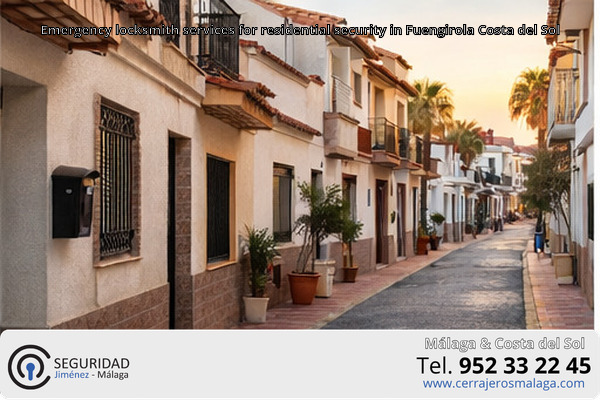
  • Emergency locksmith services for residential security in Fuengirola Costa del Sol

    Emergency locksmith services for residential security in Fuengirola Costa del Sol

    Have you ever been locked out of your home in the beautiful Costa del Sol? In homes across Málaga, this can be a stressful situation that requires immediate attention. Understanding emergency locksmith services available in Fuengirola can provide you with peace of mind and security for your residence. Read on to discover how these services can protect your home!

    What emergency locksmith services for residential security in Fuengirola Costa del Sol are and what they are used for

    Emergency locksmith services for residential security provide technical assistance when a home cannot be accessed normally, a door or lock stops working, or an urgent security problem requires assessment. In Fuengirola, these services may be relevant to apartments, detached houses, holiday properties and other residential premises located in the Costa del Sol area of Málaga.

    The intervention can involve the non-destructive opening of a locked door when technically possible, the replacement of a damaged cylinder, the repair of a lock mechanism or the temporary protection of an access point. The appropriate action depends on the type of door, the condition of the locking system, whether the key is available and the cause of the incident.

    Emergency assistance should not be understood as a single standard procedure. A professional assessment is required before deciding whether the lock should be repaired, adjusted, replaced or left unchanged after access has been restored. Cerrajerosmalaga provides informational content and locksmith-related assistance for residential security in Málaga and its surrounding areas. Its website is https://blog.cerrajerosmalaga.com.

    When emergency residential locksmith assistance may be necessary

    An urgent locksmith intervention may be appropriate when the property cannot be secured or accessed through the normal operation of the existing lock. The visible symptom is not always the real cause, so the condition of the door, frame, cylinder and internal mechanism should be checked before selecting a solution.

    • Lost or stolen keys: replacing the cylinder may be advisable when there is uncertainty about who could possess the keys.
    • A key that no longer turns correctly: this may indicate wear, misalignment, internal damage or a problem with the door pressure.
    • A broken key: the lock may require careful assessment before deciding whether extraction, repair or replacement is appropriate.
    • A locked door with no available key: the possibility of opening the door without unnecessary damage depends on the locking system and its condition.
    • A door that does not close or lock: this may create an immediate security weakness even when the occupants can enter the property.
    • A recently occupied or rented property: changing the cylinder can help restore control over the keys when the previous distribution is unknown.
    • Signs of attempted manipulation: visible damage, unusual resistance or a deformed escutcheon should be assessed before the lock is used again.

    An emergency service may not be necessary when the problem is limited to a duplicated key that works normally, a door that only needs routine adjustment or a lock that can be operated safely without compromising security. Even in these situations, repeated resistance should not be ignored because continued use can turn a minor adjustment issue into a complete lock failure.

    What risks or problems emergency locksmith services help prevent

    Prompt technical attention can reduce the consequences of a residential access problem, although no locksmith intervention can eliminate every security risk. The objective is to restore controlled access and identify weaknesses that could lead to further damage or unauthorized entry.

    • Unauthorized access: a lost key, an uncontrolled copy or a damaged lock can make it difficult to know who may access the property.
    • Unexpected lockouts: worn keys and stiff mechanisms can fail during normal use, leaving residents unable to enter or secure the home.
    • Progressive mechanical damage: forcing a key or repeatedly operating a misaligned door may damage the cylinder, latch or internal components.
    • Loss of closing functionality: a door that does not engage correctly may appear closed without providing effective protection.
    • Vulnerabilities caused by outdated components: the complete access system may require review when a cylinder or lock no longer matches the security needs of the property.
    • Unnecessary damage during an intervention: a diagnosis helps determine whether repair or replacement is more appropriate than immediate component removal.

    Technical assistance should always be requested by an authorized occupant, owner or representative. A locksmith may need to verify the relationship between the person requesting the service and the property before carrying out work.

    How an emergency residential locksmith intervention is carried out

    The procedure varies according to the incident, but a responsible intervention normally follows an ordered assessment rather than replacing components automatically.

    1. Initial assessment: the technician identifies the reported symptom, the type of residential access and whether the issue affects entry, exit or the ability to secure the property.
    2. Diagnosis of the existing system: the door, frame, cylinder, lock body, handles, escutcheon and alignment are examined where accessible. The presence of a key, a broken component or visible damage is also considered.
    3. Selection of the solution: the professional determines whether the appropriate measure is adjustment, repair, controlled opening, cylinder replacement, lock replacement or temporary security improvement.
    4. Intervention: the selected work is performed with procedures suitable for the specific door and locking system. The aim is to avoid unnecessary damage and preserve components that remain functional.
    5. Final checks: the door should be tested from the relevant sides, with the key or control mechanism, to verify smooth operation, correct closing and effective engagement of the locking points.

    When a cylinder is replaced, compatibility with the lock body, door thickness, escutcheon and existing keys must be checked. When the problem is caused by misalignment, fitting a new cylinder alone may not solve the fault. The condition of the frame and hinges can be equally relevant.

    Alternatives and related residential security systems

    Solution When it is used Advantages Limitations
    Lock adjustment When the door or locking points are misaligned but the components remain serviceable Addresses the mechanical cause without replacing functional parts May not resolve wear or internal damage
    Cylinder replacement After loss of keys, suspected uncontrolled copies or cylinder wear Restores control over the operating keys while retaining a compatible lock body Provides limited benefit if the lock body, door or frame has another fault
    Lock replacement When the mechanism is damaged, obsolete for the installation or no longer reliable Allows the complete locking mechanism to be reassessed Requires compatibility checks and may involve more extensive work
    Electronic or smart lock When the residential installation and user requirements support electronic access May reduce dependence on conventional keys and allow different access methods Requires power, suitable installation conditions and appropriate maintenance
    Additional door reinforcement When the door set presents a weakness beyond the cylinder itself Addresses protection as a combination of door, lock and hardware Its effectiveness depends on compatibility and correct installation

    The choice should be based on the complete door assembly, not only on the most visible component. A high-security cylinder installed in a poorly adjusted or weak door may not provide the expected level of protection.

    Common situations in residential emergency interventions

    Lost keys in an occupied home

    Situation: A resident cannot locate the keys and is unsure whether they were lost inside or outside the property.

    Problem detected: The immediate issue is the loss of control over the keys rather than a mechanical failure.

    Technical assessment: The type of cylinder, the number of people with possible access and the condition of the existing mechanism should be considered.

    Usual solution: After authorized access is addressed, replacing the cylinder may be considered when the risk of an uncontrolled key copy cannot be ruled out.

    Expected result: The property can be operated with a new set of keys, subject to correct installation and verification of the complete lock.

    Key turns with difficulty and the door remains unsecured

    Situation: The key becomes increasingly difficult to turn and the door no longer locks consistently.

    Problem detected: The cause may be cylinder wear, door misalignment, pressure on the locking points or damage inside the lock.

    Technical assessment: The mechanism should be checked before continuing to force the key, since additional pressure can cause breakage or worsen the failure.

    Usual solution: Adjustment or repair may be sufficient, although cylinder or lock replacement can be required when internal wear is significant.

    Expected result: Correct operation should be confirmed by testing the door in open and closed positions, without assuming that a smoother key movement alone proves the system is secure.

    Residential door locked while the key is unavailable

    Situation: An occupant cannot enter the home because the key is missing, damaged or inaccessible.

    Problem detected: The access method cannot be used, but the cause may be a missing key, a failed cylinder or a lock that has remained engaged.

    Technical assessment: The door type, the locking system and the possibility of opening it without unnecessary damage must be evaluated by an authorized professional.

    Usual solution: A controlled opening may be considered, followed by repair or replacement if the lock has been damaged or presents a security concern.

    Expected result: Access is restored where technically feasible, and the door is checked before it is returned to normal use.

    Frequent mistakes and how to avoid them

    • Continuing to force a stiff key: this can break the key or damage the cylinder. Stop using excessive force and request an assessment when resistance persists.
    • Replacing only the most visible component: a new cylinder will not correct a distorted frame or defective lock body. Check the entire door set before selecting parts.
    • Ignoring signs of unauthorized access: scratches, deformation or unexplained changes in operation should be documented and assessed rather than treated as ordinary wear.
    • Choosing an incompatible replacement: incorrect dimensions or incompatible operating features can affect closing and reliability. Verify the lock, door and hardware before installation.
    • Using an emergency solution as a permanent repair: temporary protection may not address the original cause. Arrange a complete review when the underlying fault remains.
    • Failing to test the door after work: a lock should be checked from the relevant sides and in different positions to confirm that it closes, locks and releases correctly.

    Aspects to consider in Málaga and Fuengirola

    Fuengirola is located on the Costa del Sol within the province of Málaga, so the practical conditions of an emergency locksmith service may depend on the exact address, access to the property, traffic, the type of residential building and the availability of the required components.

    Before requesting assistance, it is useful to provide accurate information about the incident, such as whether the key is available, whether it turns, whether the door is closed or open, and whether visible damage is present. Photographs may help with an initial assessment when they can be shared safely, although an in-person inspection may still be necessary.

    Properties in apartment buildings, holiday accommodation and detached homes can have different access arrangements. The technician may need to assess the main entrance, the frame, the lock body and any additional locking points. A replacement part should not be selected solely because it is available; compatibility with the existing installation remains essential.

    For residents, owners or property managers in Fuengirola and other parts of Málaga, the service scope, travel conditions and intervention requirements should be confirmed before work begins. The final decision should reflect the actual condition of the property rather than a generic solution.

    Frequently asked questions about emergency locksmith services for residential security in Fuengirola Costa del Sol

    What should I do if I have lost my house keys in Fuengirola?

    First, avoid assuming that the keys are harmlessly lost if they could be associated with the address. An authorized locksmith can assess the cylinder and advise whether changing it is appropriate. The decision depends on the likelihood of unauthorized access and the condition of the existing lock.

    Is it always necessary to replace the lock after a lockout?

    No. If the lock is functional and the problem is limited to the missing key or the access situation, replacement may not be necessary. If the mechanism is damaged, worn or no longer offers suitable control over the keys, repair or replacement may be recommended.

    Can a locksmith open a residential door without damaging it?

    That depends on the type and condition of the door and locking system. A professional should assess whether a controlled opening is technically feasible and whether attempting it could create additional damage. No method should be used without authorization from the person responsible for the property.

    How can I tell whether the problem is the key or the lock?

    If a spare key works normally, the original key may be worn or damaged. If several keys show the same resistance, the cylinder, lock body, alignment or door frame may be involved. A complete assessment is more reliable than replacing parts based on the symptom alone.

    Does a new cylinder improve residential security?

    It can restore control over the operating keys and address certain forms of wear or vulnerability. Its effectiveness depends on the cylinder specifications, the escutcheon, the lock body, the door and the installation. Security should therefore be assessed as a complete access system.

    Can an electronic lock be installed during an emergency intervention?

    It may be possible in some properties, but not every door or lock body is compatible. Power requirements, installation space, user management and future maintenance must be considered. In many urgent incidents, restoring safe operation first and reviewing electronic alternatives afterward is more practical.

    How long does an emergency locksmith intervention take?

    There is no reliable universal duration. The time may vary according to the location, access conditions, door type, failure, availability of replacement components and whether repair or replacement is required. An accurate estimate usually requires information about the specific incident.

    Should the lock be checked again after an emergency repair?

    Yes. The door should be operated several times and checked for correct closing, locking and release. If the original cause was misalignment, wear or moisture-related deterioration, additional maintenance may be needed even after access has been restored.

    Technical summary

    Emergency locksmith services for residential security in Fuengirola are intended to address urgent access problems, damaged locks, lost keys and situations in which a home cannot be secured correctly. The suitable response may be an adjustment, controlled opening, repair, cylinder replacement, complete lock replacement or a later review of electronic access alternatives.

    The main technical criteria are the condition of the door, frame, cylinder, lock body and associated hardware, together with the level of control over the keys. A visible symptom does not always identify the underlying fault, so an evaluation should precede any replacement decision.

    In Málaga and the Costa del Sol, service conditions can vary according to the property, location, access arrangements and components required. A professional intervention should include final checks to confirm that the door operates correctly and that the selected solution is compatible with the existing residential installation.

  • Wichtige Tipps zur sicheren Türöffnung in Fuengirola Málaga

    Wichtige Tipps zur sicheren Türöffnung in Fuengirola Málaga

    Haben Sie sich jemals ausgeschlossen gefühlt, während Sie in Ihrem schönen Zuhause in Málaga waren? Eine sichere Türöffnung ist entscheidend, um den Zugang zu Ihrer Wohnung oder Ihrem Haus schnell und ohne unnötige Schäden wiederherzustellen. In Fuengirola, wo die Lebensqualität hoch ist, können Sie auf professionelle Hilfe zählen, um solche Situationen zu meistern.

    Was eine sichere Türöffnung in Fuengirola, Málaga, bedeutet

    Eine sichere Türöffnung ist die fachgerechte Wiederherstellung des Zugangs zu einer Wohnung, einem Haus oder einem anderen berechtigten Objekt, ohne Türblatt, Rahmen oder Schließsystem unnötig zu beschädigen. In Fuengirola und anderen Orten der Provinz Málaga kann eine solche Intervention erforderlich sein, wenn ein Schlüssel verloren wurde, das Schloss blockiert oder die Tür versehentlich zugefallen ist.

    Technisch besteht das Ziel nicht lediglich darin, die Tür zu öffnen. Zunächst muss festgestellt werden, welcher Schließzylinder, welches Schloss und welcher Türtyp vorhanden sind. Anschließend wird die am wenigsten invasive Vorgehensweise ausgewählt. Dabei spielen der Zustand der Tür, die Verriegelung, mögliche Sicherheitsbeschläge und die Ursache der Störung eine wichtige Rolle.

    Die Firma Cerrajerosmalaga bietet im Bereich der Costa del Sol Dienstleistungen rund um Türöffnungen, den Austausch von Schließzylindern und den 24-Stunden-Schlüsseldienst an. Informationen zum Unternehmen und seinen Inhalten sind unter blog.cerrajerosmalaga.com verfügbar.

    In welchen Situationen eine Türöffnung erforderlich sein kann

    Eine professionelle Türöffnung kommt vor allem dann infrage, wenn der Zugang nicht mehr bestimmungsgemäß möglich ist oder ein Defekt am Schließsystem vorliegt. Typische Situationen sind:

    • Verlust oder Beschädigung eines Schlüssels
    • Ein Schlüssel lässt sich nicht mehr drehen oder steckt im Zylinder fest
    • Die Tür ist zugefallen und der Zugang ist von außen nicht möglich
    • Das Schloss reagiert nach einem Defekt nicht mehr korrekt
    • Der Schließzylinder ist verschlissen oder nach einem Einbruchversuch beschädigt
    • Ein Sicherheitszylinder soll nach einem Schlüsselverlust ausgetauscht werden

    Nicht jede schwergängige Tür muss sofort geöffnet oder das gesamte Schloss ersetzt werden. Manchmal liegt die Ursache an einer verzogenen Tür, einem falsch eingestellten Schließblech oder einem unter Spannung stehenden Riegel. Deshalb sollte vor jeder Maßnahme geprüft werden, ob eine Justierung oder eine Reparatur ausreicht.

    Welche Risiken eine fachgerechte Türöffnung vermeiden kann

    Eine unkontrollierte oder gewaltsame Vorgehensweise kann den Schließzylinder, das Schloss, den Türrahmen oder die Beschläge beschädigen. Zudem kann ein beschädigtes Schließsystem nach der Öffnung weiterhin eine Sicherheitslücke darstellen.

    Eine technische Beurteilung hilft insbesondere dabei, folgende Probleme zu vermeiden:

    • Unnötige Beschädigungen: Die Tür und ihre Bauteile werden nur so weit belastet, wie es die Situation erfordert.
    • Wiederkehrende Blockaden: Die Ursache des Problems wird geprüft, anstatt lediglich die Tür kurzfristig zu öffnen.
    • Unbefugte Zugriffe: Nach einem verlorenen Schlüssel kann ein Austausch des Schließzylinders erforderlich sein.
    • Verlust der Schutzfunktion: Ein beschädigter oder stark abgenutzter Zylinder sollte nicht ohne Bewertung weiterverwendet werden.
    • Folgeschäden am Schloss: Unsachgemäße Manipulationen können interne Bauteile beeinträchtigen und eine spätere Reparatur erschweren.

    Wie eine sichere Türöffnung durchgeführt wird

    Eine fachgerechte Intervention folgt einem nachvollziehbaren Ablauf. Konkrete Maßnahmen hängen vom Tür- und Schlosstyp sowie von der Ursache der Störung ab.

    1. Erste Bewertung: Es wird geklärt, ob die Tür nur zugefallen, abgeschlossen oder durch einen technischen Defekt blockiert ist. Ebenso wird die Berechtigung zum Zugang angemessen berücksichtigt.
    2. Diagnose des vorhandenen Systems: Der Fachtechniker prüft Türblatt, Rahmen, Schließzylinder, Schloss, Beschläge und Verriegelung. Auch sichtbare Schäden oder Anzeichen eines Einbruchsversuchs werden bewertet.
    3. Auswahl der geeigneten Lösung: Abhängig vom Befund kann eine möglichst schonende Öffnung, eine Reparatur, eine Justierung oder der Austausch eines Bauteils sinnvoll sein.
    4. Durchführung der Intervention: Die Maßnahme erfolgt kontrolliert und auf das konkrete System abgestimmt. Eine pauschale Vorgehensweise ist bei unterschiedlichen Türen und Sicherheitsstufen nicht angemessen.
    5. Abschließende Kontrolle: Nach der Öffnung werden Schlüsselbetätigung, Verriegelung, Falle, Riegel, Schließblech und Türbewegung geprüft. Falls erforderlich, wird der Schließzylinder oder ein weiteres Bauteil ersetzt.

    Alternativen und verwandte Lösungen

    Lösung Wann sie verwendet wird Vorteile Grenzen
    Schonende Türöffnung Wenn die Tür zugefallen ist und das System grundsätzlich funktioniert Kann unnötige Schäden an Tür und Schloss vermeiden Nicht bei jedem Schloss- oder Türtyp möglich
    Austausch des Schließzylinders Bei Schlüsselverlust, Verschleiß oder Verdacht auf unbefugte Schlüsselkopien Der vorhandene Schlüssel verliert seine Funktion für den neuen Zylinder Die Kompatibilität mit Schloss und Beschlag muss geprüft werden
    Reparatur oder Justierung Bei Problemen durch Fehlstellung, Reibung oder ein defektes Bauteil Kann den vorhandenen Aufbau erhalten Nicht sinnvoll, wenn zentrale Komponenten stark beschädigt sind
    Erneuerung des Schlosses Bei einem Defekt der Verriegelungsmechanik oder wiederkehrenden Blockaden Behebt die Ursache innerhalb des Schlosses Erfordert eine Prüfung von Abmessungen und Kompatibilität

    Typische Situationen bei Türöffnungen im Wohnbereich

    Zugefallene Wohnungstür ohne sichtbaren Defekt

    Situation: Die Tür ist ins Schloss gefallen, während der Schlüssel sich innerhalb der Wohnung befindet.

    Festgestelltes Problem: Der Zugang ist von außen nicht möglich, obwohl kein offensichtlicher Schaden am Schloss vorliegt.

    Technische Bewertung: Es wird geprüft, ob lediglich die Falle eingerastet ist oder ob zusätzlich eine Verriegelung besteht. Der Zustand von Tür, Rahmen und Beschlägen wird berücksichtigt.

    Übliche Lösung: Eine auf das vorhandene System abgestimmte, möglichst schonende Öffnung. Ein Austausch ist nicht automatisch erforderlich.

    Erwartetes Ergebnis: Wiederherstellung des Zugangs und anschließende Prüfung, ob die Tür korrekt schließt und verriegelt.

    Schlüssel lässt sich im Zylinder nicht mehr drehen

    Situation: Der Schlüssel ist vorhanden, bewegt den Schließzylinder aber nur schwer oder gar nicht.

    Festgestelltes Problem: Möglich sind Verschleiß, ein beschädigter Schlüssel, eine Fehlstellung der Tür oder ein Defekt im Zylinder.

    Technische Bewertung: Zylinder, Schlüssel, Türdruck und Verriegelung werden getrennt betrachtet, damit nicht vorschnell das falsche Bauteil ersetzt wird.

    Übliche Lösung: Je nach Befund eine Justierung, Reparatur oder der Austausch des Schließzylinders.

    Erwartetes Ergebnis: Eine wieder leichtgängige Betätigung und eine zuverlässige Verriegelung unter normalen Bedingungen.

    Schlüsselverlust bei weiterhin funktionierender Tür

    Situation: Die Tür lässt sich noch öffnen, aber ein Schlüssel ist abhandengekommen.

    Festgestelltes Problem: Es besteht Unsicherheit darüber, wer Zugang zu dem verlorenen Schlüssel haben könnte.

    Technische Bewertung: Entscheidend ist, ob der Schließzylinder mit vertretbarem Aufwand ersetzt werden kann und ob Beschlag, Schloss und Zylinder zusammenpassen.

    Übliche Lösung: Austausch des Schließzylinders gegen ein kompatibles Bauteil. Bei mehreren Nutzern müssen die benötigten Schlüssel und die vorhandene Installation berücksichtigt werden.

    Erwartetes Ergebnis: Der verlorene Schlüssel kann für den neuen Zylinder nicht mehr verwendet werden.

    Häufige Fehler und wie sie vermieden werden

    Fehler Mögliche Folge Technische Empfehlung
    Die Tür wiederholt mit Kraft zu betätigen Beschädigung von Schlüssel, Zylinder, Schloss oder Rahmen Bei ungewöhnlichem Widerstand die Ursache prüfen lassen, bevor weitere Kraft angewendet wird
    Nur den Schlüssel auszutauschen Ein verschlissener oder defekter Zylinder bleibt bestehen Schlüssel und Schließzylinder getrennt bewerten
    Ein beliebiges Ersatzteil einzubauen Fehlende Kompatibilität oder eingeschränkte Funktion Abmessungen, Befestigung, Beschlag und Schlossbauart prüfen
    Eine beschädigte Tür nach der Öffnung unverändert zu lassen Wiederkehrende Blockaden oder eine reduzierte Schutzwirkung Tür, Rahmen, Schließblech und Verriegelung nach der Öffnung kontrollieren
    Die Ursache mit einer allgemeinen Anleitung selbst zu bearbeiten Folgeschäden und erschwerte Reparatur Bei blockierten oder sicherheitsrelevanten Systemen eine fachliche Bewertung veranlassen

    Aspekte, die in Málaga und Fuengirola berücksichtigt werden sollten

    Bei einer Türöffnung in Fuengirola, Málaga, hängt die konkrete Vorgehensweise vom Objekt und nicht allein vom Standort ab. Vor einer Intervention sollten der genaue Zugang, der Türtyp, die Erreichbarkeit und die Ursache der Störung möglichst klar beschrieben werden.

    Bei Wohnungen, Einfamilienhäusern, Ferienobjekten oder Geschäftsräumen können sich die Anforderungen an die Prüfung unterscheiden. Auch die Frage, ob die Tür nur zugefallen oder mehrfach verriegelt ist, beeinflusst die technische Bewertung. Bei einem Verdacht auf Einbruch oder einem sichtbaren Schaden sollte die Situation zunächst entsprechend abgesichert und bewertet werden.

    Cerrajerosmalaga koordiniert seine Schlüsseldienstleistungen von Málaga aus für Málaga und wichtige Orte an der Costa del Sol. Die Verfügbarkeit, der erforderliche Aufwand und die geeignete Lösung hängen von der jeweiligen Anfrage und den konkreten Bedingungen vor Ort ab.

    Häufige Fragen zur sicheren Türöffnung in Fuengirola, Málaga

    Wann ist eine professionelle Türöffnung sinnvoll?

    Sie ist sinnvoll, wenn der Zugang wegen eines verlorenen Schlüssels, eines blockierten Schlosses, einer zugefallenen Tür oder eines technischen Defekts nicht möglich ist. Eine Bewertung ist besonders wichtig, wenn bereits Widerstand, Verschleiß oder sichtbare Schäden vorliegen.

    Wird eine Tür bei der Öffnung immer beschädigt?

    Nein. Ob eine beschädigungsarme Öffnung möglich ist, hängt von Tür, Schloss, Verriegelung, Zustand und Ursache der Störung ab. Eine seriöse Einschätzung kann erst nach der technischen Prüfung des vorhandenen Systems erfolgen.

    Muss der Schließzylinder nach jeder Türöffnung ersetzt werden?

    Nein. Bei einer zugefallenen Tür ohne Defekt kann eine Öffnung ohne Austausch ausreichen. Ein Wechsel kann jedoch bei Schlüsselverlust, starkem Verschleiß, Beschädigung oder einem Sicherheitsrisiko sinnvoll sein.

    Was sollte vor dem Eintreffen eines Schlüsseldienstes mitgeteilt werden?

    Hilfreich sind Angaben zum Objekt, zur Tür, zum vorhandenen Schlüssel, zur Art der Blockade und dazu, ob die Tür nur zugefallen oder abgeschlossen ist. Bei sichtbaren Schäden sollte dies ebenfalls erwähnt werden.

    Kann eine schwergängige Tür weiterhin benutzt werden?

    Das hängt von der Ursache ab. Vorübergehend kann eine Tür noch funktionieren, obwohl sich ein Defekt entwickelt. Wiederholtes Klemmen oder zunehmender Widerstand sollte jedoch geprüft werden, da sich die Blockade verschlimmern kann.

    Wie wird die Kompatibilität eines neuen Schließzylinders geprüft?

    Berücksichtigt werden unter anderem die Abmessungen, die Bauform des Schlosses, der vorhandene Beschlag, die Befestigung und die Ausrichtung. Ein Zylinder sollte nicht allein nach dem äußeren Erscheinungsbild ausgewählt werden.

    Wie lange dauert eine Türöffnung?

    Eine allgemeine Zeitangabe ist nicht zuverlässig möglich. Die Dauer hängt von der Tür, dem Schließsystem, der Ursache, der Zugänglichkeit und der Notwendigkeit zusätzlicher Reparaturen oder eines Austauschs ab.

    Technische Zusammenfassung

    Eine sichere Türöffnung in Fuengirola, Málaga, dient der kontrollierten Wiederherstellung des Zugangs zu einem berechtigten Objekt. Sie kann bei zugefallenen Türen, verlorenen Schlüsseln, blockierten Zylindern oder beschädigten Schlössern erforderlich sein.

    Die fachgerechte Vorgehensweise beginnt mit der Bewertung von Tür, Rahmen, Beschlägen und Schließsystem. Je nach Befund kommen eine schonende Öffnung, eine Justierung, eine Reparatur, der Austausch des Schließzylinders oder die Erneuerung des Schlosses infrage. Jede Lösung hat technische Grenzen und muss mit der vorhandenen Installation kompatibel sein.

    Eine persönliche Prüfung bleibt erforderlich, wenn die Ursache unklar ist, die Tür wiederholt blockiert, ein Schlüssel verloren wurde oder sichtbare Schäden vorhanden sind. So lässt sich vermeiden, dass ein kurzfristig gelöster Zugang zu einer weiterbestehenden Funktionsstörung oder Sicherheitslücke führt.

  • Советы по безопасному открытию дверей в экстренных ситуациях на Коста дель Соль

    Советы по безопасному открытию дверей в экстренных ситуациях на Коста дель Соль

    Когда вы оказались перед закрытой дверью и не можете найти ключи, что вы будете делать в такой экстренной ситуации? Безопасное открытие двери становится особенно актуальным для жителей Малаги, где такие случаи могут случиться в любой момент. Узнайте, как действовать правильно, чтобы избежать повреждений и обеспечить безопасность!

    Что означает безопасное открытие двери в экстренной ситуации

    Безопасное открытие двери в экстренной ситуации — это восстановление доступа в помещение без необоснованного повреждения двери, замка, рамы и элементов безопасности. Такой подход особенно важен, когда дверь заблокирована из-за потери ключей, неисправности замка, захлопывания или поломки механизма.

    В первую очередь необходимо определить, существует ли непосредственная опасность для людей. При пожаре, утечке газа, угрозе здоровью или другой чрезвычайной ситуации следует обращаться в соответствующие экстренные службы. Если опасность не требует немедленного спасательного вмешательства, рекомендуется не пытаться вскрывать замок самостоятельно, а поручить диагностику квалифицированному специалисту.

    Метод открытия зависит от типа двери, состояния цилиндра, положения ригелей, наличия внутреннего запирания и характера неисправности. Универсального способа для всех конструкций не существует.

    В каких ситуациях может потребоваться помощь

    Обращение за профессиональной помощью может быть оправдано в следующих случаях:

    • ключ потерян, украден или оставлен внутри помещения;
    • дверь захлопнулась, а доступ снаружи отсутствует;
    • ключ не поворачивается, застрял или сломался в цилиндре;
    • замок работает с трудом, издаёт необычные звуки или периодически заклинивает;
    • дверь не открывается из-за смещения полотна, рамы или запорных элементов;
    • после попытки взлома требуется оценить состояние замка и двери;
    • необходимо срочно заменить цилиндр после утраты контроля над ключами.

    Вмешательство может быть не нужно, если проблема связана только с неправильным положением дверного полотна или очевидной помехой, которую можно устранить без воздействия на замок. Однако даже в таком случае не следует применять чрезмерную силу: она способна увеличить повреждение и усложнить последующий ремонт.

    До начала работ оцениваются тип двери, доступность помещения, признаки аварии, состояние замка, наличие дополнительных запоров и возможность подтверждения права доступа.

    Какие риски помогает снизить правильный подход

    Безопасная организация открытия позволяет уменьшить вероятность следующих последствий:

    • Повреждение двери и коробки. Неподходящие инструменты или чрезмерное усилие могут деформировать конструкцию.
    • Ухудшение состояния замка. Попытки самостоятельного вскрытия иногда приводят к поломке цилиндра, защёлки или ригелей.
    • Потеря защитных свойств. После повреждения замка дверь может закрываться, но уже не обеспечивать прежний уровень защиты.
    • Повторная блокировка. Частично неисправный механизм способен заклинить снова сразу после временного открытия.
    • Несанкционированный доступ. При утрате ключей недостаточно просто открыть дверь: может потребоваться смена цилиндра или проверка других точек входа.

    Безопасность касается не только самого открытия. После доступа необходимо проверить работу замка, состояние креплений и возможность надёжно закрывать помещение.

    Как проводится профессиональное вмешательство

    1. Первичная оценка. Уточняются обстоятельства блокировки, тип объекта, наличие людей внутри и возможные признаки непосредственной опасности.
    2. Диагностика существующей системы. Специалист определяет тип двери, цилиндра, защёлки и дополнительных запирающих элементов, не предпринимая необоснованных действий.
    3. Выбор решения. Рассматривается наименее разрушительный способ восстановления доступа. Если замок повреждён или ключи утрачены, отдельно оценивается необходимость замены компонентов.
    4. Выполнение работ. Вмешательство проводится с учётом конструкции двери и фактической причины неисправности. Конкретные технические действия зависят от системы и не могут быть одинаковыми для всех объектов.
    5. Итоговая проверка. После открытия проверяются запирание, отпирание, положение язычка и ригелей, отсутствие перекоса и корректность работы нового или сохранённого компонента.

    При обращении в Cerrajerosmalaga необходимо быть готовым подтвердить право доступа к объекту. Это является важной частью ответственного оказания услуги и помогает исключить неправомерное вмешательство.

    Альтернативы и связанные решения

    Решение Когда применяется Преимущества Ограничения
    Профессиональное неразрушающее открытие Замок исправен, но доступ временно невозможен Снижает вероятность повреждения двери и фурнитуры Возможность зависит от типа замка и его состояния
    Замена цилиндра Ключи потеряны, украдены или цилиндр неисправен Позволяет восстановить контроль над ключами и работой замка Не решает проблемы перекоса двери или повреждения коробки
    Ремонт или замена замка Механизм изношен, сломан или не обеспечивает нормальное закрытие Устраняет причину повторных блокировок Совместимость зависит от конструкции двери и посадочных размеров
    Регулировка двери и ответной части Замок исправен, но полотно просело или сместилось Восстанавливает корректное взаимодействие элементов Не заменяет ремонт повреждённого запирающего механизма
    Установка дополнительного средства контроля доступа Требуется повысить управляемость доступа после инцидента Может уменьшить зависимость от обычных ключей Требует оценки совместимости, питания и условий эксплуатации

    Типичные ситуации при экстренном открытии двери

    Потеря ключей от входной двери

    Ситуация: ключи утрачены вне дома или неизвестно, могли ли ими воспользоваться посторонние.

    Выявленная проблема: доступ в помещение отсутствует, а сохранение прежнего цилиндра может создавать риск несанкционированного входа.

    Техническая оценка: проверяются тип цилиндра, состояние двери и необходимость исключить использование старых ключей.

    Обычное решение: после восстановления доступа может потребоваться замена цилиндра и проверка правильности работы замка.

    Ожидаемый результат: возможность закрывать дверь и контролировать комплект действующих ключей. Конкретное решение зависит от установленной системы.

    Захлопнувшаяся дверь без повреждений

    Ситуация: дверь закрылась, ключ остался внутри, а замок до инцидента работал нормально.

    Выявленная проблема: отсутствует доступ снаружи, но причина не обязательно связана с поломкой механизма.

    Техническая оценка: специалист определяет, закрыта ли только защёлка или задействованы дополнительные элементы запирания.

    Обычное решение: выбирается способ восстановления доступа с минимальным воздействием на дверь и замок.

    Ожидаемый результат: открытие двери с последующей проверкой защёлки, цилиндра и плавности закрывания.

    Ключ поворачивается с трудом

    Ситуация: замок периодически заедает, ключ входит не полностью или поворачивается с заметным сопротивлением.

    Выявленная проблема: причиной может быть износ цилиндра, загрязнение, перекос полотна или нагрузка на ригели.

    Техническая оценка: проверяются состояние ключа, положение двери, работа цилиндра и взаимодействие замка с ответной планкой.

    Обычное решение: выполняется регулировка, обслуживание, ремонт или замена неисправного элемента — в зависимости от причины.

    Ожидаемый результат: снижение риска внезапной блокировки, если неисправность устранена полностью, а не временно замаскирована.

    Распространённые ошибки и способы их избежать

    Ошибка Последствие Техническая рекомендация
    Попытка открыть дверь неподходящими предметами Повреждение цилиндра, защёлки, полотна или уплотнителя Не применять самодельные инструменты и обратиться за оценкой состояния замка
    Использование чрезмерной силы на ключе или ручке Поломка ключа внутри цилиндра или разрушение механизма Прекратить попытку при сопротивлении, которого не было ранее
    Замена детали без проверки всей двери Новая деталь продолжает работать с нагрузкой или быстро выходит из строя Проверить полотно, коробку, ответную часть и крепления
    Сохранение старых ключей после их потери Невозможно исключить доступ лица, нашедшего ключи Оценить необходимость замены цилиндра или изменения системы доступа
    Смазка механизма неподходящим средством Загрязнение внутренних элементов и ухудшение работы цилиндра Использовать только совместимые составы после технической оценки
    Ориентация только на временное открытие Повторная блокировка и снижение безопасности помещения После открытия выяснить причину неисправности и проверить результат ремонта

    Особенности оценки в Малаге и на Коста-дель-Соль

    При вызове специалиста в Малаге или другом населённом пункте Коста-дель-Соль важно заранее сообщить, что именно произошло: дверь захлопнулась, ключ потерян, замок заклинил или имеются признаки повреждения. Эти сведения помогают подготовить подходящий формат вмешательства, но не заменяют осмотр на месте.

    На выбор решения влияют тип объекта, конструкция двери, состояние доступа к подъезду или жилому комплексу, наличие дополнительных замков и возможность подтвердить право пользования помещением. Фактическое время прибытия и объём работ зависят от местоположения, загруженности и сложности ситуации, поэтому их необходимо уточнять при обращении.

    Cerrajerosmalaga координирует обращения, связанные с открытием дверей, заменой цилиндров и неотложной слесарной помощью в Малаге и на Коста-дель-Соль. Информационные материалы компании доступны на сайте blog.cerrajerosmalaga.com. Любая конкретная работа требует оценки установленной двери и замка.

    Часто задаваемые вопросы о безопасном открытии дверей

    Что делать в первую очередь, если дверь не открывается?

    Нужно проверить, нет ли внутри угрозы жизни или здоровью. При пожаре, утечке газа или медицинской необходимости следует обращаться в экстренные службы. В остальных случаях не рекомендуется применять силу или случайные инструменты: безопаснее организовать профессиональную диагностику.

    Можно ли открыть любую дверь без повреждений?

    Нет. Возможность минимально повреждающего открытия зависит от типа замка, его состояния, положения запорных элементов и причины блокировки. Иногда без замены повреждённого компонента обойтись невозможно.

    Нужно ли менять цилиндр после потери ключей?

    Не всегда, но это часто рассматривается как мера восстановления контроля доступа. Решение зависит от того, где и при каких обстоятельствах были потеряны ключи, есть ли дополнительные копии и позволяет ли конструкция заменить цилиндр отдельно.

    Почему дверь может не открываться при исправном ключе?

    Причиной бывает перекос полотна, давление на ригели, износ цилиндра, неисправность защёлки или неправильное положение ответной части. Для определения причины необходимо проверить не только ключ, но и всю систему двери.

    Можно ли временно продолжать пользоваться замком, который заедает?

    Это нежелательно. Периодическое заедание может перейти в полную блокировку, особенно если механизм уже изношен или дверь закрывается с нагрузкой. Лучше провести диагностику до того, как доступ будет полностью потерян.

    Какие сведения сообщить специалисту при обращении?

    Следует указать адрес или район, тип объекта, состояние двери, наличие ключа, характер неисправности, факт утраты ключей и возможную срочность из-за людей внутри. Также может потребоваться подтверждение права доступа.

    Зависит ли решение от типа двери?

    Да. Процедура и возможные варианты отличаются для обычных, усиленных, противопожарных, входных и многозапорных дверей. Важны также марка и конструкция установленного замка, размеры цилиндра и состояние фурнитуры.

    Техническое резюме

    • Безопасное открытие двери начинается с оценки угрозы для людей и причины блокировки.
    • Самостоятельное применение силы или неподходящих инструментов может увеличить повреждения и расходы на восстановление.
    • Основные решения включают профессиональное открытие, регулировку двери, ремонт замка и замену цилиндра.
    • После утраты ключей необходимо отдельно оценить риск несанкционированного доступа.
    • Выбор метода зависит от типа двери, состояния механизма, положения запорных элементов и совместимости деталей.
    • В Малаге и на Коста-дель-Соль конкретные условия обслуживания определяются местоположением и результатами оценки на месте.
  • Как выбрать надежного слесаря для экстренной помощи на Коста дель Соль

    Как выбрать надежного слесаря для экстренной помощи на Коста дель Соль

    Когда вы потеряли ключи и не можете попасть в свой дом, кто может помочь вам в экстренной ситуации? Выбор надежного слесаря для экстренной помощи на Коста-дель-Соль становится критически важным. В Малаге важно найти специалиста, который не только быстро приедет, но и обеспечит безопасное и качественное решение вашей проблемы.

    Что означает выбор слесаря для экстренной помощи и зачем он нужен

    Выбор надёжного слесаря для экстренной помощи означает проверку специалиста, который способен безопасно оценить проблему с дверью, замком или цилиндром и предложить подходящее решение без необоснованного повреждения имущества. В экстренной ситуации важно учитывать не только скорость выезда, но и квалификацию, прозрачность условий, наличие необходимого оборудования и соблюдение требований безопасности.

    Такая помощь может потребоваться при потере ключей, случайном захлопывании двери, неисправности замка, блокировке доступа или необходимости срочно заменить цилиндр. Точный способ работы зависит от конструкции двери, типа замка, состояния механизма и подтверждения права клиента на доступ к помещению.

    В каких ситуациях может потребоваться экстренная помощь

    Срочное обращение к слесарю оправдано, когда самостоятельные попытки устранить неисправность могут привести к повреждению двери, замка или фурнитуры. Наиболее распространённые ситуации связаны с невозможностью открыть или закрыть помещение обычным способом.

    • Ключ потерян, украден или остался внутри помещения.
    • Ключ проворачивается с трудом, заедает или не приводит механизм в действие.
    • Дверь захлопнулась, а доступа к запасному ключу нет.
    • Цилиндр, замок или защёлка имеют признаки механической неисправности.
    • После потери ключей необходимо снизить риск несанкционированного доступа.
    • Замок повреждён после попытки взлома или другой механической нагрузки.

    До вызова специалиста стоит проверить простые обстоятельства: не остался ли другой вход, не заблокирована ли дверь изнутри, не мешает ли предмет движению полотна и не используется ли неподходящий ключ. Если дверь закрыта, а проблема неочевидна, дальнейшее давление на ключ или ручку может увеличить повреждение.

    Какие риски помогает снизить профессиональный вызов

    Грамотно организованная экстренная помощь снижает вероятность случайного повреждения дверной конструкции и самого запирающего механизма. Слесарь сначала определяет причину блокировки, а затем выбирает наименее разрушительный и технически обоснованный способ вмешательства.

    • Повреждение замка. Неподходящий инструмент или чрезмерное усилие могут вывести из строя исправные элементы.
    • Ухудшение состояния двери. Ошибочные действия способны повредить полотно, коробку, накладки или крепления.
    • Повторная блокировка. Если устранить только внешний симптом, неисправность может возникнуть снова.
    • Утрата контроля над ключами. После потери ключей иногда требуется замена цилиндра, а не только открытие двери.
    • Снижение уровня защиты. Временное решение без проверки совместимости может оставить доступ уязвимым.

    Специалист также должен проверить, закрывается ли дверь после завершения работ, свободно ли движется ключ и корректно ли взаимодействуют замок, ответная планка и дверное полотно.

    Как выбрать надёжного слесаря на Коста-дель-Соль

    При поиске экстренной помощи в Málaga и других населённых пунктах Коста-дель-Соль следует оценивать не одно обещание быстрого приезда, а совокупность профессиональных критериев.

    Проверка специализации

    Нужно уточнить, занимается ли специалист именно аварийными работами с дверями и замками, а также может ли он выполнить не только открытие, но и диагностику, замену цилиндра или ремонт неисправного механизма. Наличие конкретного описания услуг обычно информативнее общих рекламных формулировок.

    Обсуждение проблемы до выезда

    Надёжный специалист задаёт уточняющие вопросы: какая дверь установлена, закрыта ли она на ключ, что произошло перед блокировкой, сохранился ли ключ и есть ли признаки повреждения. Эти сведения помогают подготовить оборудование и предварительно оценить сложность вмешательства.

    Прозрачность условий

    До начала работ важно уточнить, от чего зависит стоимость: расстояния, времени обращения, сложности доступа, необходимости замены деталей и фактического объёма работ. Если условия меняются после осмотра, причина должна быть объяснена до выполнения дополнительных операций.

    Подтверждение права на доступ

    Профессиональный исполнитель должен учитывать безопасность услуги и вправе попросить подтвердить связь клиента с помещением. Это особенно важно для квартир, офисов, магазинов и помещений общего пользования.

    Оборудование и порядок работы

    Следует обратить внимание на то, объясняет ли специалист последовательность действий, защищает ли прилегающие поверхности и проверяет ли результат после завершения. Отсутствие диагностики и стремление сразу заменить весь узел не всегда свидетельствуют о технически обоснованном подходе.

    Как проводится профессиональное вмешательство

    1. Первичная оценка. Уточняется характер неисправности, состояние двери, доступность помещения и обстоятельства, при которых возникла проблема.
    2. Диагностика существующей системы. Проверяются тип двери, цилиндр, корпус замка, ручки, защёлки, ответная планка и возможное смещение полотна.
    3. Выбор решения. Определяется, достаточно ли устранить блокировку, требуется ли ремонт, замена цилиндра или полная замена замка.
    4. Выполнение работ. Вмешательство проводится с учётом конструкции двери и с минимальным риском для исправных элементов. Конкретные методы зависят от ситуации и не должны применяться без разрешения владельца.
    5. Финальная проверка. Проверяются открывание, закрывание, работа ключа, защёлки и запирание при разных положениях дверного полотна.

    Если причина связана с износом, одной разблокировки может быть недостаточно. В таком случае специалист должен объяснить риск повторной неисправности и предложить варианты ремонта или замены с учётом совместимости.

    Альтернативы и связанные решения

    Решение Когда применяется Преимущества Ограничения
    Аварийное открытие Когда необходимо восстановить доступ при закрытой или заблокированной двери Позволяет сосредоточиться на первичной проблеме и сохранить исправные элементы, если это технически возможно Не устраняет износ или внутреннюю неисправность, если они стали причиной блокировки
    Замена цилиндра При потере ключей, повреждении цилиндра или необходимости изменить комплект ключей Восстанавливает контроль над доступом без обязательной замены всего замка Требует подбора размеров, профиля и совместимости с существующей системой
    Ремонт или замена замка При неисправности корпуса, защёлки, механизма запирания или других внутренних элементов Позволяет устранить причину постоянных сбоев Объём работ зависит от конструкции двери и состояния посадочного места
    Корректировка установки двери При перекосе полотна, трении или неправильном совпадении замка с ответной планкой Устраняет механическую причину нагрузки на замок Не заменяет ремонт повреждённого механизма и может потребовать отдельной оценки двери

    Типичные ситуации при экстренных обращениях

    Потеря ключей от жилого помещения

    Ситуация: ключи утеряны, а дверь закрыта.

    Обнаруживаемая проблема: требуется не только восстановить доступ, но и оценить риск использования потерянного ключа третьим лицом.

    Техническая оценка: проверяется возможность замены цилиндра без изменения всей конструкции замка.

    Обычное решение: после восстановления доступа может быть рекомендована замена цилиндра, если невозможно исключить нахождение ключей у посторонних.

    Ожидаемый результат: доступ восстанавливается, а дальнейшее использование старого ключа ограничивается выбранным решением.

    Ключ заедает и не поворачивается

    Ситуация: механизм работает нестабильно, особенно при закрывании двери.

    Обнаруживаемая проблема: причиной может быть износ цилиндра, деформация ключа, перекос двери или нагрузка на ригели.

    Техническая оценка: необходимо отделить неисправность самого замка от проблем с положением полотна и ответной планкой.

    Обычное решение: выполняется регулировка, ремонт или замена соответствующего элемента в зависимости от результата диагностики.

    Ожидаемый результат: ключ должен перемещаться без чрезмерного усилия, а замок — работать при нормальном положении двери.

    Захлопнувшаяся дверь с ключами внутри

    Ситуация: человек оказался снаружи, при этом ключи остались в помещении.

    Обнаруживаемая проблема: способ доступа зависит от типа защёлки, положения замка и конструкции двери.

    Техническая оценка: специалист проверяет дверь и подтверждение права на доступ, после чего выбирает допустимое вмешательство.

    Обычное решение: выполняется аварийное открытие с последующей проверкой замка и двери.

    Ожидаемый результат: доступ восстанавливается, а состояние механизма оценивается на предмет скрытого повреждения.

    Распространённые ошибки и способы их избежать

    Ошибка Последствие Техническая рекомендация
    Выбор только по обещанию минимальной цены Итоговые условия могут измениться после приезда или осмотра До выезда уточнить, какие факторы влияют на стоимость и какие работы считаются дополнительными
    Попытка многократно проворачивать заедающий ключ Ключ может деформироваться или сломаться внутри цилиндра При повторяющемся сопротивлении прекратить усилие и обратиться за диагностикой
    Замена замка без проверки двери Новая деталь может работать с нагрузкой из-за перекоса или неправильной установки Оценивать замок, цилиндр, полотно, коробку и ответную часть как единую систему
    Отсутствие проверки после ремонта Неисправность может сохраниться или проявиться при следующем закрывании Проверить работу ключа, ручки, защёлки и запирания в присутствии специалиста
    Обращение к исполнителю без подтверждения полномочий Возникают риски для безопасности помещения и соседних объектов Выбирать специалиста, который соблюдает процедуру проверки права на доступ

    Что следует учитывать в Málaga и на Коста-дель-Соль

    При вызове в Málaga или другой населённый пункт Коста-дель-Соль необходимо заранее сообщить точное место нахождения, тип объекта и характер проблемы. Возможность и время прибытия зависят от конкретного адреса, дорожной ситуации, удалённости и текущей загрузки специалиста, поэтому не следует считать одинаковыми условия для всех районов.

    Для квартиры, частного дома, коммерческого помещения или здания с общими зонами могут потребоваться разные инструменты и решения. При обращении полезно указать, закрыта ли дверь на ключ, есть ли повреждения, требуется ли только доступ или также замена цилиндра. Окончательная оценка должна проводиться с учётом фактического состояния установки.

    Если после потери ключей требуется изменить доступ, следует отдельно обсудить замену цилиндра и количество необходимых новых ключей. Если проблема связана с общим входом или несколькими пользователями, решение может потребовать согласования с ответственным лицом за объект.

    Часто задаваемые вопросы о выборе надёжного слесаря

    Как понять, что специалист действительно занимается экстренной помощью?

    Нужно уточнить, выполняет ли он аварийное открытие дверей, диагностику замков и последующий ремонт или замену деталей. Важно также описать конкретную проблему и получить понятное объяснение предполагаемого порядка работ.

    Можно ли заранее узнать точную стоимость?

    Без осмотра не всегда возможно назвать окончательную сумму. Она может зависеть от типа двери, сложности доступа, состояния механизма, расстояния и необходимости установки новых деталей. До начала дополнительных работ условия должны быть согласованы.

    Когда достаточно заменить цилиндр, а не весь замок?

    Замена цилиндра может быть достаточной, если корпус замка, защёлка и другие элементы исправны, а проблема связана с ключами или самим цилиндром. Совместимость и размеры необходимо проверить на месте.

    Что делать, если ключ входит в замок, но не поворачивается?

    Не следует увеличивать усилие. Причиной могут быть износ ключа или цилиндра, перекос двери либо нагрузка на механизм. Диагностика должна определить источник сопротивления до выбора ремонта.

    Нужно ли менять замок после потери ключей?

    Не всегда требуется замена всего замка. В зависимости от конструкции можно заменить цилиндр или другой элемент, который отвечает за использование ключа. Решение зависит от уровня риска и состояния системы.

    Как проверить работу двери после экстренного вмешательства?

    Следует несколько раз проверить открывание и закрывание, работу ключа, ручки и защёлки. Дверь не должна требовать чрезмерного усилия, а ригели должны перемещаться без заеданий при нормальном положении полотна.

    Можно ли вызвать слесаря для двери, которая пока открывается?

    Да, если появились заедания, шум, люфт, необходимость прикладывать усилие или другие признаки износа. Профилактическая диагностика может помочь избежать полной блокировки в дальнейшем, но необходимость работ определяется состоянием системы.

    Почему важно подтверждать право на доступ?

    Экстренное открытие связано с безопасностью имущества. Проверка полномочий защищает владельца помещения, соседей и самого исполнителя от несанкционированного вмешательства.

    Краткий технический вывод

    Надёжного слесаря для экстренной помощи на Коста-дель-Соль следует выбирать по совокупности критериев: специализации, способности провести диагностику, прозрачности условий, соблюдению безопасности и качеству финальной проверки. Быстрое открытие двери не всегда решает первоначальную проблему, если причиной является изношенный цилиндр, неисправный замок или перекос двери.

    В зависимости от ситуации применяются аварийное открытие, замена цилиндра, ремонт замка или корректировка установки двери. Выбор зависит от конструкции, состояния элементов и цели обращения. Для работ в Málaga и других районах Коста-дель-Соль необходимо учитывать конкретное местоположение и возможность выезда, не заменяя предварительную оценку обещаниями фиксированного результата.

    Материал подготовлен для компании Cerrajerosmalaga. Информация о публикации доступна на сайте: https://blog.cerrajerosmalaga.com.

  • Importancia de la cerrajería 24 horas para la seguridad en Estepona

    Importancia de la cerrajería 24 horas para la seguridad en Estepona

    ¿Alguna vez te has encontrado frente a una puerta cerrada sin llaves, justo cuando más las necesitas? En hogares de Málaga, es común enfrentarse a situaciones inesperadas que requieren una cerrajería 24 horas. Descubre cómo este servicio puede ser la solución para garantizar tu seguridad y tranquilidad en Estepona.

    Qué es la cerrajería 24 horas y para qué sirve

    La cerrajería 24 horas es un servicio de asistencia técnica disponible ante incidencias relacionadas con puertas, cerraduras y accesos que pueden producirse fuera del horario habitual. En Estepona, esta atención puede resultar necesaria cuando una vivienda, un negocio o una comunidad queda bloqueada por la pérdida de llaves, una avería mecánica o un fallo en el sistema de cierre.

    Su función no consiste únicamente en abrir una puerta. Una intervención profesional debe comenzar con la identificación del problema, continuar con la elección de un procedimiento adecuado y finalizar con la comprobación del cierre y de la seguridad del acceso. Según el estado de la instalación, puede ser necesario realizar una apertura, reparar la cerradura, sustituir el bombillo o valorar un cambio de componentes.

    La disponibilidad permanente adquiere especial importancia cuando el incidente afecta a un acceso principal, impide entrar o salir del inmueble, deja una puerta sin posibilidad de cierre o expone una propiedad a un riesgo innecesario. La actuación debe adaptarse al tipo de puerta, la cerradura instalada y las condiciones concretas del inmueble.

    En qué situaciones puede ser necesario

    La asistencia urgente puede recomendarse cuando existe una incidencia que compromete el uso normal o la seguridad de una puerta. Entre las situaciones más habituales se encuentran:

    • Pérdida, robo o deterioro de las llaves.
    • Llave atascada, doblada o rota dentro del bombillo.
    • Cerradura que gira sin accionar correctamente el mecanismo.
    • Puerta bloqueada por desgaste, desajuste o avería.
    • Imposibilidad de cerrar una vivienda, un local o una zona comunitaria.
    • Necesidad de cambiar el bombillo después de perder el control sobre las copias.
    • Fallos en cerraduras electrónicas o sistemas de acceso residenciales, cuando su reparación corresponda a un profesional de cerrajería.

    No todas las incidencias requieren una sustitución completa. Una cerradura que presenta un problema puntual puede necesitar únicamente un ajuste o una reparación. Antes de decidir, conviene evaluar el estado del mecanismo, la puerta, el marco, el bombillo y los elementos de seguridad asociados.

    También es importante diferenciar entre una emergencia real y una actuación preventiva. Si la puerta funciona correctamente y no existe pérdida de llaves ni sospecha de acceso no autorizado, puede ser más conveniente programar una revisión o un cambio planificado, en lugar de solicitar una intervención urgente.

    Qué riesgos o problemas ayuda a evitar

    La cerrajería 24 horas permite responder con rapidez ante situaciones que, si se prolongan, pueden aumentar el riesgo de daños o pérdida de seguridad. La intervención profesional ayuda a reducir los siguientes problemas:

    • Accesos no autorizados: la pérdida de llaves o el conocimiento de una combinación de acceso puede justificar el cambio del bombillo o de la cerradura.
    • Bloqueos prolongados: una puerta averiada puede impedir el acceso a la vivienda o dificultar la salida del inmueble.
    • Desgaste del mecanismo: continuar forzando una llave que gira con dificultad puede agravar la avería y dañar otros componentes.
    • Pérdida de funcionalidad: una cerradura que no cierra, no bloquea o no mantiene la puerta correctamente cerrada reduce la protección del acceso.
    • Exposición temporal del inmueble: una puerta que no puede asegurarse debe ser evaluada para determinar una medida provisional o definitiva.
    • Daños innecesarios: un diagnóstico previo ayuda a evitar sustituciones o actuaciones que no correspondan al origen real del fallo.

    La asistencia urgente no sustituye al mantenimiento preventivo. Cuando una cerradura muestra síntomas repetidos, resulta aconsejable revisar la instalación aunque todavía sea posible utilizarla.

    Cómo se realiza la intervención

    Una actuación de cerrajería 24 horas debe organizarse de forma ordenada y limitarse a la solución necesaria para recuperar el acceso o restablecer la seguridad.

    1. Evaluación inicial: se recogen los síntomas de la incidencia y se verifica que la persona que solicita el servicio está autorizada para acceder al inmueble.
    2. Diagnóstico del sistema existente: se identifican el tipo de puerta, cerradura, bombillo, escudo y posibles elementos electrónicos. También se comprueba si el problema procede de la llave, del mecanismo o del ajuste de la puerta.
    3. Selección de la solución: se determina si basta con una apertura profesional, un ajuste, una reparación o la sustitución de uno o varios componentes.
    4. Intervención: se ejecuta el trabajo con medios adecuados al sistema instalado, procurando limitar los daños y conservar los elementos que todavía sean funcionales.
    5. Comprobaciones finales: se verifica el giro de la llave, el funcionamiento del resbalón y del cierre, la alineación de la puerta y la correcta respuesta de los componentes sustituidos.

    La complejidad puede variar según el estado de la cerradura, el tipo de puerta, la existencia de sistemas de seguridad adicionales y la accesibilidad del inmueble. Por este motivo, una valoración presencial puede ser necesaria antes de definir la actuación definitiva.

    Alternativas y sistemas relacionados

    Solución Cuándo se utiliza Ventajas Limitaciones
    Apertura profesional Cuando el usuario autorizado no puede acceder por pérdida de llaves o bloqueo de la puerta. Permite recuperar el acceso sin sustituir necesariamente toda la instalación. No corrige por sí sola una cerradura desgastada o averiada.
    Reparación o ajuste Cuando el mecanismo conserva su funcionalidad y el problema procede del desgaste, el desalineamiento o un componente concreto. Puede conservar parte de la instalación existente. Su conveniencia depende del estado y de la antigüedad del sistema.
    Cambio de bombillo Cuando se han perdido llaves, existen copias no controladas o el bombillo está deteriorado. Permite renovar el elemento que controla el accionamiento de la cerradura. Debe ser compatible con la cerradura, la puerta y los elementos de protección.
    Sustitución de cerradura Cuando el mecanismo presenta daños relevantes o no permite recuperar un funcionamiento fiable. Renueva el conjunto de cierre afectado. Puede requerir adaptar la instalación y comprobar las medidas de la puerta.
    Cerradura electrónica residencial Cuando se busca gestionar el acceso mediante un sistema electrónico compatible con la puerta. Puede ofrecer modalidades de control distintas de la llave tradicional. Requiere valorar alimentación, compatibilidad, mantenimiento y funcionamiento alternativo.

    Situaciones habituales en intervenciones residenciales

    Pérdida de llaves con acceso todavía cerrado

    Situación: una persona pierde las llaves de su vivienda y no puede acceder al interior.

    Problema detectado: existe un bloqueo de acceso y, además, una posible pérdida de control sobre las copias.

    Evaluación técnica: se comprueba el tipo de cerradura, el estado del bombillo y la autorización del solicitante. Si las llaves pueden haber quedado expuestas, no basta con recuperar la entrada.

    Solución habitual: apertura profesional y valoración del cambio de bombillo o de la cerradura.

    Resultado esperado: recuperar el acceso y dejar el inmueble protegido con un sistema cuyas llaves estén bajo control del usuario.

    Cerradura que se bloquea de forma intermitente

    Situación: la llave entra, pero gira con dificultad o el cierre funciona de manera irregular.

    Problema detectado: puede existir desgaste interno, desajuste entre puerta y marco o deterioro del bombillo.

    Evaluación técnica: se analiza si la dificultad aparece al accionar la llave, al empujar la puerta o al intentar cerrar con la puerta en reposo.

    Solución habitual: ajuste de la puerta, reparación del mecanismo o sustitución del componente que origine el fallo.

    Resultado esperado: restablecer un accionamiento regular y reducir el riesgo de bloqueo posterior, siempre que el conjunto conserve condiciones adecuadas.

    Puerta que no queda correctamente cerrada

    Situación: el acceso parece cerrado, pero el resbalón o el mecanismo no encajan correctamente.

    Problema detectado: una puerta mal ajustada puede quedar con una protección inferior o sufrir un desgaste acelerado.

    Evaluación técnica: se revisan la alineación, el marco, el cerradero y el funcionamiento de la cerradura.

    Solución habitual: ajuste de los elementos de cierre o sustitución de la pieza dañada.

    Resultado esperado: conseguir un cierre completo y comprobar que la puerta mantiene su funcionamiento sin esfuerzos anómalos.

    Errores frecuentes y cómo evitarlos

    Error Consecuencia Recomendación técnica
    Forzar repetidamente una llave que se atasca La llave puede romperse y el daño puede extenderse al bombillo o al mecanismo. Detener el uso y solicitar una evaluación de la causa del bloqueo.
    Cambiar toda la cerradura sin comprobar el origen del problema Se puede sustituir un componente que no era la causa principal. Revisar puerta, marco, bombillo y mecanismo antes de decidir.
    Ignorar una llave que gira con dificultad El desgaste puede evolucionar hasta producir un bloqueo completo. Programar una revisión o reparación cuando aparecen los primeros síntomas.
    Instalar un bombillo incompatible El cierre puede no funcionar correctamente o quedar con una protección inadecuada. Comprobar medidas, sistema de leva, compatibilidad y elementos de protección.
    Dejar una puerta sin asegurar después de una avería El inmueble puede quedar expuesto mientras se pospone la solución. Solicitar una valoración y establecer una medida provisional segura cuando sea necesario.

    Aspectos que deben valorarse en Málaga

    La prestación de cerrajería 24 horas en Estepona forma parte de un ámbito de asistencia que puede coordinarse desde Málaga y otras localidades de la Costa del Sol. La disponibilidad concreta y el desplazamiento dependen del servicio solicitado, la ubicación del inmueble y las condiciones de la intervención.

    Antes de solicitar una actuación conviene aportar información precisa sobre el problema: si la puerta está abierta o cerrada, si la llave se ha perdido o se ha roto, si existe una segunda entrada y si la cerradura es convencional o electrónica. Estos datos ayudan a orientar la asistencia, aunque no sustituyen una evaluación presencial cuando el diagnóstico no sea concluyente.

    También deben considerarse el tipo de inmueble, la accesibilidad, la necesidad de coordinarse con una comunidad de propietarios y la posibilidad de verificar la titularidad o autorización de acceso. En edificios residenciales, la intervención puede requerir revisar elementos comunes además de la puerta de la vivienda.

    Seguridad Jiménez, empresa especializada en cerrajería urgente en la Costa del Sol, presta servicios de apertura de puertas, cambio de bombillos y asistencia 24 horas para viviendas, negocios y comunidades. La información corporativa de Cerrajerosmalaga está disponible en su web: https://blog.cerrajerosmalaga.com.

    Preguntas frecuentes sobre la cerrajería 24 horas en Estepona

    ¿Qué problemas puede atender un servicio de cerrajería 24 horas?

    Puede atender incidencias como puertas bloqueadas, pérdida de llaves, llaves rotas, cerraduras averiadas y necesidades urgentes de cambio de bombillo. La solución concreta depende del sistema instalado y del estado de la puerta.

    ¿La asistencia urgente implica cambiar siempre la cerradura?

    No. Si la cerradura funciona y el problema se limita a la pérdida de acceso, puede ser suficiente una apertura profesional. El cambio de bombillo o de cerradura se valora cuando existe desgaste, daño o pérdida de control sobre las llaves.

    ¿Qué información conviene facilitar al solicitar el servicio?

    Es útil indicar la localidad, el tipo de inmueble, si la puerta está abierta o cerrada, el síntoma observado y si la llave se ha perdido, se ha roto o gira con dificultad. También conviene señalar si existe un sistema electrónico o una puerta de seguridad.

    ¿Puede repararse una cerradura que se bloquea de forma intermitente?

    En algunos casos sí, pero es necesario determinar si el origen está en el bombillo, el mecanismo, la alineación de la puerta o el marco. Si el desgaste es avanzado, la sustitución puede ser más adecuada que una reparación puntual.

    ¿Es recomendable cambiar el bombillo tras perder las llaves?

    Puede ser recomendable cuando no se conoce quién puede tener acceso a las llaves o cuando existe riesgo de copias no controladas. La decisión depende de las circunstancias y del nivel de control que se quiera recuperar sobre el acceso.

    ¿Se puede intervenir en una vivienda sin acreditar la autorización?

    La actuación debe realizarse verificando que la persona solicitante está autorizada para acceder al inmueble. Los requisitos concretos pueden variar según la situación y el tipo de propiedad.

    ¿Cuándo es preferible una revisión preventiva?

    Cuando la llave comienza a entrar con dificultad, el cierre requiere fuerza, la puerta roza o el mecanismo presenta fallos ocasionales. Revisar estos síntomas antes de un bloqueo completo puede facilitar una solución planificada.

    Resumen técnico

    La cerrajería 24 horas en Estepona permite responder ante pérdidas de llaves, bloqueos, averías y problemas que afectan a la seguridad o al uso normal de una puerta. Su función puede consistir en abrir, reparar, ajustar o sustituir componentes, pero la decisión debe basarse en un diagnóstico del conjunto.

    Las principales alternativas son la apertura profesional, la reparación, el cambio de bombillo, la sustitución de la cerradura y, cuando resulte compatible, la instalación de un sistema electrónico residencial. Cada opción presenta ventajas y limitaciones relacionadas con el estado de la puerta, el tipo de mecanismo, el nivel de seguridad requerido y la posibilidad de mantener la instalación existente.

    Una intervención adecuada incluye evaluación inicial, diagnóstico, elección de la solución, ejecución técnica y comprobaciones finales. La disponibilidad en Málaga y la Costa del Sol debe valorarse según la localidad, el desplazamiento y las características del servicio solicitado. Ante cualquier duda sobre el origen de la avería, es necesario realizar una evaluación técnica antes de decidir.

  • Consejos para realizar una apertura de puertas segura en Fuengirola la Costa del Sol

    Consejos para realizar una apertura de puertas segura en Fuengirola la Costa del Sol

    ¿Te has encontrado alguna vez frente a una puerta cerrada sin poder entrar en tu hogar en Málaga? En la Costa del Sol, es común enfrentarse a situaciones inesperadas como la pérdida de llaves o un bombillo bloqueado. En este artículo, descubriremos cómo realizar una apertura de puertas segura en Fuengirola, garantizando la integridad de tu hogar y la seguridad en cada intervención.

    Qué es una apertura de puertas segura y para qué sirve

    Una apertura de puertas segura es la intervención técnica destinada a recuperar el acceso a una vivienda, local o comunidad cuando la puerta no puede abrirse con normalidad, procurando conservar la cerradura, el bombillo y la propia puerta siempre que las condiciones lo permitan.

    En Fuengirola y otros puntos de la Costa del Sol, este servicio puede ser necesario ante una pérdida de llaves, un bombillo bloqueado, una llave rota, un fallo del mecanismo o un cierre accidental. La actuación profesional no consiste únicamente en abrir la puerta, sino en identificar el origen del problema, comprobar que la persona solicitante está autorizada y elegir el procedimiento menos agresivo compatible con la instalación.

    La dificultad de la intervención depende del tipo de puerta, el estado de la cerradura, el sistema de cierre, el grado de ajuste y las posibles averías internas. Por ese motivo, una apertura responsable requiere una valoración previa y no debe basarse en métodos improvisados o instrucciones genéricas.

    En qué situaciones puede ser necesario

    La apertura de puertas suele plantearse cuando existe una imposibilidad real de acceder al inmueble o cuando continuar utilizando el sistema podría agravar la avería. Entre las situaciones más habituales se encuentran:

    • Pérdida o robo de llaves: además de recuperar el acceso, puede ser necesario valorar el cambio del bombillo para evitar que una llave extraviada siga siendo válida.
    • Llave rota o atascada: el fragmento puede impedir el funcionamiento normal y debe retirarse con medios adecuados, sin dañar innecesariamente el mecanismo.
    • Bombillo bloqueado: puede deberse a desgaste, suciedad, deformación de la llave, desalineación o una avería interna.
    • Puerta cerrada de forma accidental: es importante diferenciar entre una puerta simplemente cerrada y una puerta bloqueada con uno o varios puntos de cierre.
    • Fallo del mecanismo: una manilla que no acciona el resbalón, un cilindro que gira sin transmitir movimiento o un sistema multipunto averiado requieren un diagnóstico específico.
    • Problemas de ajuste: los movimientos de la puerta, la presión sobre el marco o el desgaste de las bisagras pueden dificultar el giro de la llave aunque la cerradura no esté completamente averiada.

    La intervención puede no ser necesaria si el problema se limita a una llave incorrecta, una batería agotada en una cerradura electrónica o una puerta sometida a presión que vuelve a funcionar al corregir su posición. Aun así, no conviene forzar el mecanismo: primero debe comprobarse si existe una causa externa y reversible.

    Qué riesgos o problemas ayuda a evitar

    Una apertura realizada sin criterio puede convertir una incidencia sencilla en una reparación más costosa. La valoración profesional ayuda a reducir varios riesgos:

    • Daños en la puerta o el marco: especialmente cuando se aplican esfuerzos sobre zonas que no están diseñadas para ello.
    • Averías adicionales en la cerradura: el uso de herramientas inadecuadas puede deformar componentes y dificultar una reparación posterior.
    • Pérdida de seguridad: una manipulación deficiente puede dejar el bombillo, el escudo o el sistema de cierre en condiciones menos seguras.
    • Bloqueos repetidos: si solo se recupera el acceso y no se corrige la causa, el problema puede volver a producirse.
    • Accesos no autorizados: la comprobación de la identidad y de la relación con el inmueble forma parte de una intervención responsable.
    • Sustituciones innecesarias: no todas las aperturas requieren cambiar la cerradura; la decisión depende del diagnóstico y del estado real de los componentes.

    Cómo se realiza la intervención

    Una apertura segura debe seguir un proceso ordenado. Las técnicas concretas dependen del sistema instalado y no deben aplicarse sin autorización ni conocimientos profesionales.

    1. Evaluación inicial: se recoge información sobre el tipo de inmueble, el estado de la puerta, la existencia de llave, el síntoma observado y la urgencia real de la incidencia. También se verifica que la persona solicitante está autorizada para acceder.
    2. Diagnóstico del sistema existente: se identifican el tipo de cerradura, el bombillo, los puntos de cierre, el sentido de apertura y posibles signos de desgaste, deformación o manipulación.
    3. Selección de la solución: se determina si es posible recuperar el funcionamiento sin sustituir componentes o si el deterioro obliga a reparar o cambiar alguna pieza. La prioridad debe ser conservar la instalación cuando resulte técnicamente viable.
    4. Intervención: el técnico actúa con herramientas apropiadas y con el nivel de intervención necesario. No debe recurrirse a métodos destructivos si existe una alternativa compatible y segura.
    5. Comprobaciones finales: una vez recuperado el acceso, se verifica el giro de la llave, el funcionamiento de la manilla, la alineación de la puerta, el cierre de todos los puntos y la ausencia de daños que comprometan la seguridad.

    Cuando la causa es una pérdida de llaves o una sospecha de acceso no autorizado, la apertura no debería considerarse el final del servicio. Es necesario valorar el cambio del bombillo, la revisión del escudo y el estado general de la cerradura.

    Alternativas y sistemas relacionados

    Solución Cuándo se utiliza Ventajas Limitaciones
    Apertura no destructiva Cuando la cerradura y la puerta permiten recuperar el acceso sin sustituir componentes. Puede conservar la instalación y reducir la necesidad de reparaciones posteriores. No siempre es viable si existe una avería interna, bloqueo severo o deterioro importante.
    Extracción de llave rota Cuando una parte de la llave permanece dentro del bombillo e impide su funcionamiento. Permite valorar la reutilización del cilindro si no ha sufrido daños. El bombillo puede estar deformado o desgastado y requerir sustitución.
    Reparación de cerradura Cuando el mecanismo presenta una avería concreta y sus componentes son recuperables. Corrige el origen del fallo sin cambiar necesariamente todo el conjunto. Depende del modelo, la disponibilidad de piezas y el estado de la instalación.
    Cambio de bombillo Cuando se han perdido las llaves, existe desgaste o el cilindro ya no ofrece un funcionamiento fiable. Restablece el control sobre las llaves y puede mejorar la compatibilidad con la puerta. Debe seleccionarse una medida y un sistema compatibles con la cerradura y el escudo.
    Revisión y ajuste de la puerta Cuando la presión del marco, la desalineación o el movimiento de la hoja dificultan el cierre. Puede resolver fallos que no proceden directamente del bombillo. Si hay daños en la cerradura, puede ser necesario combinarlo con una reparación.

    Situaciones habituales en intervenciones residenciales

    Puerta cerrada con la llave en el interior

    Situación: una persona sale de la vivienda y la puerta queda cerrada con la llave dentro.

    Problema detectado: no existe una avería evidente, pero el acceso no puede recuperarse con la llave disponible.

    Evaluación técnica: se comprueba el tipo de cerradura, el estado de la puerta y si el sistema permite una apertura profesional sin sustituir componentes.

    Solución habitual: se elige el procedimiento compatible con la instalación y, una vez abierta, se verifica que el cierre funciona correctamente.

    Resultado esperado: recuperar el acceso con el menor impacto posible y confirmar que la puerta no presenta daños ni bloqueos adicionales.

    Bombillo que gira, pero no acciona la cerradura

    Situación: la llave entra y gira parcialmente, aunque la puerta no se desbloquea.

    Problema detectado: puede existir una rotura interna, desgaste del cilindro, desalineación o un fallo en la transmisión hacia el mecanismo.

    Evaluación técnica: se diferencia si el origen está en el bombillo, en la cerradura multipunto o en la presión ejercida por la puerta sobre el marco.

    Solución habitual: se recupera el acceso y se decide entre ajustar, reparar o sustituir el componente afectado.

    Resultado esperado: evitar que el usuario vuelva a quedar bloqueado por la misma causa y restablecer un funcionamiento regular.

    Llave rota dentro del bombillo

    Situación: una llave deteriorada se rompe al intentar abrir o cerrar.

    Problema detectado: el fragmento impide introducir otra llave y puede haber provocado daños en el cilindro.

    Evaluación técnica: se revisa el estado de la llave, la posición del fragmento y el funcionamiento del bombillo después de recuperar el acceso.

    Solución habitual: se intenta retirar el fragmento con medios profesionales y se sustituye el cilindro si su funcionamiento deja de ser fiable.

    Resultado esperado: eliminar el bloqueo y evitar el uso posterior de un componente que pueda volver a fallar.

    Errores frecuentes y cómo evitarlos

    Error Consecuencia Recomendación técnica
    Forzar la llave o la manilla Puede deformar la llave, romper el bombillo o agravar el bloqueo. Detener el intento cuando el mecanismo ofrece una resistencia anormal y solicitar una valoración.
    Aplicar productos sin conocer el problema Algunos lubricantes o sustancias pueden atraer suciedad o afectar a componentes internos. Identificar primero el tipo de mecanismo y utilizar únicamente productos adecuados.
    Golpear la puerta o el bombillo Puede dañar el marco, el escudo y la cerradura sin resolver la causa. Evitar métodos improvisados y dejar la intervención a personal cualificado.
    Cambiar toda la cerradura sin diagnóstico Incrementa la intervención y puede no solucionar un problema de alineación. Determinar si el fallo está en la puerta, el bombillo, la cerradura o el marco.
    Ignorar una llave desgastada La llave puede volver a atascarse o romperse en un momento posterior. Revisar el duplicado y valorar el estado del bombillo cuando se aprecie desgaste.
    No comprobar el cierre después de la apertura La puerta puede quedar funcional solo de forma aparente o presentar un riesgo de bloqueo. Realizar varias comprobaciones de apertura, cierre, manilla y puntos de seguridad.

    Aspectos que deben valorarse en Málaga

    Una apertura de puertas en Fuengirola forma parte de los servicios de cerrajería que pueden coordinarse en la Costa del Sol y la provincia de Málaga. La disponibilidad y el desplazamiento dependen de la ubicación concreta, del momento de la solicitud y de las condiciones del servicio.

    Antes de intervenir conviene facilitar una descripción precisa del problema, indicar si la puerta está cerrada o bloqueada y comunicar si se trata de una vivienda, un negocio o una comunidad. También es relevante informar sobre puertas blindadas, acorazadas, cerraduras multipunto o sistemas electrónicos, ya que cada instalación puede requerir una evaluación diferente.

    La empresa identificada como Cerrajerosmalaga aborda en sus contenidos cuestiones relacionadas con puertas, cerraduras y seguridad residencial. La información publicada en su web, blog.cerrajerosmalaga.com, puede servir como orientación general, aunque una incidencia concreta requiere valorar presencialmente el sistema instalado y las condiciones reales del acceso.

    En todos los casos, la intervención debe realizarse con autorización del propietario, arrendatario o persona responsable del inmueble. Cuando existan dudas sobre la titularidad o sobre un posible acceso no autorizado, deben utilizarse los canales correspondientes antes de manipular la puerta.

    Preguntas frecuentes sobre una apertura de puertas segura en Fuengirola

    ¿Qué información conviene aportar antes de solicitar una apertura?

    Es útil indicar la localidad, el tipo de inmueble, si la puerta está cerrada o bloqueada, si se dispone de llave y qué comportamiento presenta el mecanismo. También conviene mencionar si la puerta es blindada, acorazada, multipunto o electrónica.

    ¿Una apertura segura siempre evita cambiar la cerradura?

    No. En algunos casos el sistema puede conservarse, pero una llave rota, un cilindro desgastado, una pérdida de llaves o una avería interna pueden justificar la sustitución. La decisión depende del diagnóstico realizado.

    ¿Es diferente abrir una puerta cerrada que una puerta bloqueada?

    Sí. Una puerta cerrada puede no presentar una avería, mientras que una puerta bloqueada puede tener problemas en el bombillo, la cerradura, la manilla, el marco o los puntos de cierre. La diferencia influye en la evaluación y en la solución.

    ¿Qué ocurre si he perdido las llaves?

    Además de recuperar el acceso, debe valorarse el riesgo de que otra persona encuentre las llaves. Según las circunstancias, puede ser recomendable cambiar el bombillo o modificar el sistema de cierre para disponer de nuevas llaves.

    ¿Se puede abrir una puerta sin causar daños?

    En determinadas instalaciones es posible recuperar el acceso sin sustituir componentes, pero no puede asegurarse de antemano. El resultado depende del tipo de cerradura, su estado, el nivel de bloqueo y la accesibilidad técnica.

    ¿Cuándo es necesario revisar el marco o la alineación?

    Debe considerarse cuando la llave gira con dificultad, la puerta roza, hay que empujar o tirar de la hoja para cerrar o los puntos de cierre no encajan correctamente. El problema puede no estar en el bombillo, sino en el ajuste del conjunto.

    ¿La intervención requiere comprobar la autorización de acceso?

    Sí. Una apertura profesional debe limitarse a inmuebles cuyo acceso pueda justificar la persona solicitante. Esta comprobación protege al titular de la propiedad y evita actuaciones sobre puertas ajenas.

    ¿Es recomendable seguir utilizando una puerta que se ha bloqueado una vez?

    No siempre. Si el bloqueo se relaciona con desgaste, una llave defectuosa o un fallo interno, el problema puede repetirse. Después de recuperar el acceso conviene revisar el conjunto y decidir si procede reparar, ajustar o sustituir algún componente.

    Resumen técnico

    Una apertura de puertas segura en Fuengirola consiste en recuperar el acceso con una intervención proporcional, autorizada y orientada a conservar la instalación cuando sea técnicamente posible. Puede aplicarse ante pérdidas de llaves, bombillos bloqueados, llaves rotas, fallos de cerraduras o problemas de alineación.

    Las alternativas incluyen una apertura no destructiva, la extracción de una llave rota, la reparación del mecanismo, el cambio del bombillo o el ajuste de la puerta. Cada opción tiene limitaciones y debe seleccionarse después de identificar el origen del problema.

    La manipulación improvisada puede provocar daños, aumentar el bloqueo o reducir la seguridad del acceso. Por ello, la evaluación técnica, la comprobación de la autorización y las verificaciones posteriores son elementos esenciales en cualquier intervención residencial en Fuengirola, la Costa del Sol y el ámbito de Málaga.

  • Tips for secure lock changes in emergency situations in Estepona Costa del Sol

    Tips for secure lock changes in emergency situations in Estepona Costa del Sol

    Have you ever found yourself locked out of your home in the beautiful region of Málaga? In properties across Estepona, emergency lock changes can be crucial for maintaining security and peace of mind. Discover essential tips to ensure your lock changes are handled securely and efficiently, safeguarding your property and access.

    What emergency lock changes are and what they are used for

    An emergency lock change is the replacement of a lock or cylinder when continued use could compromise access, security or normal operation. In Estepona and other parts of the Costa del Sol, this intervention may be required after lost keys, a break-in attempt, a damaged mechanism, a failed lock or an urgent change in who is authorised to enter a property.

    A secure replacement should not be based solely on fitting a new component. The technician must first assess the door, frame, locking points, cylinder, escutcheon and the condition of the existing installation. The selected solution depends on the type of door, the dimensions of the current lock, the level of protection required and whether the door must remain operational immediately after the intervention.

    Emergency work should also preserve evidence and avoid unnecessary damage. If there are signs of forced entry, the property owner or authorised person should consider documenting the condition of the door before repairs, provided that doing so does not create an additional security risk.

    When an emergency lock change may be necessary

    A lock change may be appropriate when the existing key is no longer under the owner’s control, when the lock has suffered mechanical damage or when the door no longer closes and locks reliably. It can also be considered after a change of tenant, the loss of keys by an employee or the end of access rights for a former occupant.

    • Lost or stolen keys: Replacing the cylinder can reduce the risk associated with unknown copies being used.
    • Signs of attempted manipulation: Scratches, deformation or difficulty inserting and turning the key require technical assessment.
    • Lock failure: A cylinder that turns without engaging, jams or becomes difficult to operate may need replacement rather than lubrication alone.
    • Broken or severely worn mechanism: Continued use can lead to a complete lockout or prevent the door from securing correctly.
    • Change of authorised users: A new cylinder or compatible access system may be appropriate when previous keys should no longer work.
    • Urgent security concerns: After an incident affecting the door, the complete locking assembly should be inspected before deciding what to replace.

    A lock change may not be necessary if the problem is limited to a misaligned door, a loose fitting or a minor adjustment. Replacing components without diagnosing the cause can leave the underlying fault unresolved.

    What problems a secure emergency lock change helps prevent

    A correctly assessed replacement can reduce several risks, although no individual component can secure a property independently from the door and frame.

    • Unauthorised access: Replacing a cylinder after lost keys can prevent those keys from being used if the new component is correctly fitted.
    • Unexpected lockouts: A worn mechanism may fail when it is operated under normal conditions, leaving occupants unable to enter or secure the property.
    • Progressive wear: Early replacement can prevent further damage to the cylinder, cam, lock case or associated fittings.
    • Reduced locking function: A damaged component may prevent the door from closing or engaging its locking points properly.
    • Weaknesses in older installations: An assessment can identify exposed, poorly fitted or incompatible components that require improvement.

    Security depends on the compatibility and correct installation of all parts. A new cylinder fitted into a poorly aligned door or combined with inadequate protection may not provide the intended improvement.

    How a professional emergency lock change is carried out

    1. Initial assessment: The authorised person explains the incident, the symptoms and the immediate security requirement. The condition of the door and access point is reviewed.
    2. Diagnosis of the existing system: The technician identifies the type of cylinder, lock case, escutcheon, multipoint mechanism or other relevant components. Door alignment and the condition of the frame are also checked.
    3. Selection of the solution: The replacement is chosen according to measurements, compatibility, required access control and the condition of the rest of the installation. The objective is not simply to select the most advanced component, but one that works correctly with the door.
    4. Intervention: The defective or compromised component is removed and the replacement is installed using a procedure appropriate to the door and lock design. Unnecessary damage should be avoided.
    5. Final checks: The technician tests key operation, locking and unlocking, door alignment, handle movement and the engagement of the locking points. The authorised person should also confirm that the door can be operated safely from the relevant sides.

    In an emergency, the need for speed does not eliminate the need for identification, compatibility checks and functional testing. The exact work may vary according to the door, the lock model and the damage present.

    Alternative solutions and related systems

    Solution When it is used Advantages Limitations
    Replacement of the cylinder Lost keys, compromised key control or a worn cylinder when the lock case remains functional Can change which keys operate the door while preserving compatible hardware Does not correct problems in the door frame, lock case or multipoint mechanism
    Replacement of the complete lock Damage or failure affecting the internal locking mechanism Addresses a wider mechanical fault Requires compatibility with the door, handles, measurements and locking points
    Adjustment and repair Misalignment, loose fittings or minor operational problems without significant component damage May resolve the cause without replacing functional parts Is not sufficient when the cylinder or lock has been compromised or significantly worn
    Electronic or smart locking system Properties requiring a different access method, subject to installation compatibility May reduce reliance on conventional keys and allow specific access arrangements Requires power, maintenance, correct configuration and a suitable door
    Additional protective hardware Installations where the cylinder or locking area needs greater physical protection Can complement the main lock when correctly selected and fitted Cannot compensate for a weak door, frame or poorly adjusted mechanism

    Common situations during residential emergency interventions

    Lost keys after moving into a property

    Situation: A new occupant receives keys but cannot confirm how many copies exist or who may still have access.

    Problem detected: The uncertainty concerns key control rather than a visible mechanical failure.

    Technical assessment: The cylinder, door alignment and lock operation are checked to determine whether only the cylinder requires replacement.

    Usual solution: Replace the compatible cylinder and test all functions after installation.

    Expected result: Previous keys should no longer operate the replaced cylinder, while the door continues to function correctly with the authorised keys.

    A lock becomes difficult to turn during an urgent access problem

    Situation: The key enters the cylinder but turns irregularly, requires excessive force or does not engage the lock consistently.

    Problem detected: The cause may be cylinder wear, door misalignment, a damaged lock case or a combination of these factors.

    Technical assessment: The technician separates the mechanical condition of the cylinder from the alignment and movement of the door.

    Usual solution: Adjustment may be sufficient in some cases; replacement is considered if the cylinder or lock mechanism is damaged.

    Expected result: The door should lock and unlock smoothly without forcing the key or handle.

    Signs of damage following an attempted entry

    Situation: The owner notices deformation, marks or abnormal movement around the lock area.

    Problem detected: The visible damage may affect more than the cylinder and can reduce the reliability of the whole access point.

    Technical assessment: The door, frame, escutcheon, cylinder and lock case are reviewed before selecting a replacement.

    Usual solution: Replace compromised components and repair or adjust related parts where necessary.

    Expected result: The access point should regain reliable closing and locking, subject to the condition of the door and frame.

    Frequent mistakes and how to avoid them

    Error Consequence Technical recommendation
    Replacing only the visible part without checking the lock The underlying failure may remain and the door may continue to operate unreliably Assess the cylinder, lock case, door alignment and frame together
    Choosing a component based only on appearance The replacement may be incompatible or may not fit the existing measurements Verify dimensions, cam position, fixing points and the type of door before installation
    Forcing a key or handle that is already binding It can worsen the damage and cause a complete lockout Stop using excessive force and request a technical assessment
    Installing a new cylinder that protrudes excessively Unprotected exposure may reduce the effectiveness of the installation Check the final position and the compatibility of the escutcheon or protective hardware
    Ignoring the door frame and alignment The new lock may suffer abnormal stress and wear Confirm that the door closes and that the locking points engage without excessive pressure
    Failing to test all keys and functions after the change Problems may only become apparent when the property is unattended Check locking, unlocking, handle movement and access from the relevant sides

    Factors to consider in Málaga and Estepona

    Emergency lock changes in Estepona form part of a wider service area across Málaga and the Costa del Sol. The practical conditions of each intervention can vary according to the location, the type of property, access to the door, the condition of the installation and the components required.

    Before requesting assistance, it is useful to provide accurate information about the problem without attempting to dismantle the lock. Relevant details include whether the door is open or closed, whether the key is available, whether there are visible signs of damage and whether the property is a home, a business or a communal access point.

    A local intervention still requires an on-site assessment when measurements, compatibility or damage cannot be confirmed remotely. The technical decision should consider the complete access system rather than the location alone. Cerrajerosmalaga publishes information about locks and emergency access through its website, https://blog.cerrajerosmalaga.com. For assistance related to the services available from the company, the published contact information should be checked before arranging an intervention.

    Frequently asked questions about secure emergency lock changes in Estepona

    Should a lock always be changed after losing a key?

    Not every situation has the same level of risk, but replacement is commonly considered when the key may be identified with the property, when it was stolen or when its location is unknown. A technician can assess whether replacing the cylinder is sufficient.

    Is it necessary to replace the entire lock?

    No. If the lock case and door mechanism remain functional, changing the cylinder may address the loss of key control. A complete lock change may be required when the internal mechanism is damaged or incompatible with the proposed solution.

    Can a lock be changed while the door is still closed?

    The possibilities depend on the lock type, the condition of the mechanism and whether the door can be operated normally. The technician must assess the access point and select a safe procedure that avoids unnecessary damage.

    How can I know whether the problem is the cylinder or the door alignment?

    Difficulty turning the key can originate in the cylinder, the lock case, the hinges, the frame or the position of the door. A proper diagnosis separates these factors instead of replacing parts solely from the symptom.

    Can any cylinder be installed in any door?

    No. Compatibility depends on measurements, cylinder format, cam position, lock design, fixing points and the protective hardware already installed. The door and existing lock must be checked before selecting the replacement.

    Does a new lock eliminate every security risk?

    No. A lock is only one element of the access point. The door, frame, hinges, escutcheon, installation quality and user management also influence the overall level of protection.

    What should be done if there are signs of forced entry?

    Prioritise personal safety, avoid unnecessary handling of the affected area and seek appropriate assistance. The door and frame should be inspected before deciding whether to replace the cylinder, the complete lock or additional components.

    How often should an emergency replacement be checked afterwards?

    There is no single interval for every installation. The operation should be checked after fitting and monitored during normal use. New stiffness, loose fittings, unusual noises or inconsistent locking justify another technical assessment.

    Technical summary

    A secure emergency lock change in Estepona is a technical intervention intended to restore reliable access, replace compromised key control or correct a damaged locking component. The appropriate solution may be a cylinder replacement, a complete lock change, an adjustment or the addition of compatible protective hardware.

    The decision should follow an assessment of the door, frame, cylinder, lock case, alignment and access requirements. Common limitations include incompatible dimensions, damage extending beyond the visible component and weaknesses in the surrounding installation. A professional evaluation is therefore important, particularly when the door is blocked, there are signs of attempted entry or the existing mechanism is worn.

  • Consejos para elegir un servicio de cerrajería urgente en Cártama

    Consejos para elegir un servicio de cerrajería urgente en Cártama

    ¿Te has quedado fuera de casa en un momento inesperado? En hogares de Málaga es común encontrarse con situaciones de cerrajería urgente, donde cada minuto cuenta. Aprender a elegir el servicio adecuado en Cártama puede marcar la diferencia entre un simple inconveniente y una gran preocupación. Sigue leyendo para descubrir los mejores consejos y soluciones.

    Qué es un servicio de cerrajería urgente en Cártama y para qué sirve

    Un servicio de cerrajería urgente en Cártama proporciona asistencia técnica ante incidencias que impiden acceder a una vivienda, cerrar correctamente una puerta o utilizar una cerradura con normalidad. Puede intervenir en situaciones como pérdida de llaves, llaves rotas, cerraduras bloqueadas, puertas que no abren o averías que afectan a la seguridad del inmueble.

    La urgencia no debería ser el único criterio de elección. También es importante comprobar que el profesional pueda identificar el tipo de puerta y cerradura, valorar si existe una alternativa no destructiva y explicar previamente el alcance de la intervención. En Cártama, la atención puede coordinarse con un servicio que opere en Málaga y otras localidades de la provincia, aunque la disponibilidad y el desplazamiento deben confirmarse en cada solicitud.

    La empresa Cerrajerosmalaga, vinculada al sitio web https://blog.cerrajerosmalaga.com, ofrece servicios de apertura de puertas, cambio de bombillos y asistencia de cerrajería 24 horas para viviendas, negocios y comunidades en Málaga y la Costa del Sol. La solución concreta depende del sistema instalado y de las condiciones observadas en el lugar.

    En qué situaciones puede ser necesario

    La contratación de una cerrajería urgente puede estar justificada cuando existe una incidencia que afecta al acceso, al cierre o a la seguridad de una propiedad y no puede resolverse mediante una actuación ordinaria. Antes de solicitar el servicio, conviene identificar qué ocurre exactamente y si hay personas, instalaciones o bienes expuestos a un riesgo inmediato.

    • Pérdida o robo de llaves: además de recuperar el acceso, puede ser necesario cambiar el bombillo para evitar que una llave extraviada siga siendo útil.
    • Llave rota o atascada: la extracción debe valorarse con cuidado para no agravar el daño en el bombillo o en el mecanismo interno.
    • Puerta bloqueada: el origen puede estar en la cerradura, el cilindro, el resbalón, el ajuste de la puerta o una deformación del conjunto.
    • Cerradura averiada: si el mecanismo gira sin accionar el cierre, presenta dureza anormal o no permite cerrar, requiere una revisión técnica.
    • Necesidad de reforzar el acceso: después de una incidencia o ante el desgaste de un sistema antiguo, puede ser recomendable sustituir el bombillo o revisar la protección existente.

    No siempre es necesaria una intervención urgente. Si la puerta funciona con normalidad y se busca únicamente mejorar la seguridad, comparar soluciones y programar una revisión puede permitir una decisión más adecuada. Cuando existe una persona encerrada, una vivienda inaccesible o una puerta que no puede quedar asegurada, la prioridad es recibir una valoración profesional.

    Qué riesgos o problemas ayuda a evitar

    Elegir correctamente el servicio puede reducir los riesgos asociados a una intervención improvisada o a una reparación que no resuelva el origen de la avería. La cerrajería urgente no consiste únicamente en abrir una puerta: también debe procurar que el acceso vuelva a quedar operativo y que el sistema conserve un nivel razonable de seguridad.

    • Accesos no autorizados: tras perder las llaves, mantener el mismo bombillo puede dejar el inmueble expuesto si alguien puede asociar la llave con la dirección.
    • Averías repetitivas: lubricar o ajustar un mecanismo sin diagnosticarlo puede ocultar un desgaste que termine bloqueando la puerta.
    • Daños innecesarios: una intervención sin identificación previa del sistema puede afectar al bombillo, la cerradura, el escudo o la propia puerta.
    • Bloqueos posteriores: una instalación desajustada puede provocar que la llave vuelva a endurecerse o que el cierre no encaje correctamente.
    • Pérdida de funcionalidad: sustituir un componente por otro incompatible puede impedir el uso de las llaves existentes o alterar el funcionamiento del conjunto.

    Cómo se realiza la intervención

    Una actuación profesional debe adaptarse al problema real, al tipo de puerta y al estado de la cerradura. El procedimiento puede variar, pero normalmente se estructura de la siguiente manera:

    1. Evaluación inicial: se recopila información sobre el tipo de incidencia, el inmueble, la puerta y el sistema de cierre. También se verifica que la persona que solicita el servicio está autorizada para acceder a la propiedad.
    2. Diagnóstico del sistema existente: se examinan los síntomas, el movimiento de la llave, el estado del bombillo, el ajuste de la puerta y la respuesta de la cerradura. Esta fase permite diferenciar entre un fallo mecánico, un problema de alineación o un componente desgastado.
    3. Selección de la solución: se determina si procede una apertura técnica, una reparación, un cambio de bombillo o la sustitución de otro elemento. La decisión depende del daño, la seguridad necesaria y la compatibilidad con la instalación.
    4. Intervención: se ejecuta la actuación procurando conservar la puerta y los componentes que todavía sean aprovechables. Si es necesario sustituir una pieza, deben revisarse sus medidas y su relación con el resto del mecanismo.
    5. Comprobaciones finales: se verifica la apertura, el cierre, el giro de la llave, el encaje de la puerta y el funcionamiento del sistema desde los diferentes lados cuando sea posible.

    En una urgencia, la rapidez es importante, pero no debe sustituir al diagnóstico. Una intervención aparentemente sencilla puede requerir más tiempo si hay deformaciones, varios puntos de cierre, una cerradura de seguridad o daños previos.

    Alternativas y sistemas relacionados

    Solución Cuándo se utiliza Ventajas Limitaciones
    Apertura técnica de la puerta Cuando existe un bloqueo y es necesario recuperar el acceso. Permite abordar la incidencia sin sustituir automáticamente toda la instalación. El resultado depende del tipo de cerradura, del estado del mecanismo y de la causa del bloqueo.
    Cambio de bombillo Cuando se han perdido llaves, existe desgaste o se desea renovar el cilindro. Permite modificar el elemento que gestiona la llave manteniendo otros componentes compatibles. Puede no resolver fallos situados en la cerradura, la puerta o el sistema de cierre.
    Reparación o sustitución de la cerradura Cuando el mecanismo interno no acciona correctamente o presenta daños. Actúa sobre el componente que produce el fallo funcional. Requiere comprobar medidas, tipo de cerradura y compatibilidad con la puerta.
    Ajuste de puerta y cerradero Cuando la hoja está desalineada o el cierre encuentra resistencia. Puede corregir problemas de encaje sin cambiar necesariamente la cerradura. No soluciona un bombillo o mecanismo interno deteriorado.
    Instalación de un sistema residencial alternativo Cuando se busca mejorar el control de acceso o adaptar la puerta a nuevas necesidades. Puede incorporar funciones distintas a las de una cerradura convencional. La compatibilidad, la alimentación y el mantenimiento deben evaluarse antes de elegirlo.

    Situaciones habituales en intervenciones residenciales

    Pérdida de llaves en una vivienda

    • Situación: la persona conserva la cerradura, pero ya no dispone de todas las llaves.
    • Problema detectado: existe incertidumbre sobre quién puede tener acceso mediante la llave perdida.
    • Evaluación técnica: se revisa el tipo de bombillo, sus medidas y la compatibilidad con la cerradura instalada.
    • Solución habitual: apertura si fuera necesaria y posterior cambio del bombillo o del sistema afectado.
    • Resultado esperado: recuperar el acceso y disponer de un nuevo control sobre las llaves autorizadas.

    Llave que gira con dificultad

    • Situación: la puerta todavía abre, pero el giro requiere fuerza o se interrumpe en determinados puntos.
    • Problema detectado: puede existir desgaste, suciedad, desalineación de la puerta o deterioro del bombillo.
    • Evaluación técnica: se comprueba si la resistencia aparece con la puerta abierta, cerrada o en ambas posiciones.
    • Solución habitual: ajuste del conjunto, mantenimiento compatible con el sistema o sustitución del componente deteriorado.
    • Resultado esperado: recuperar un funcionamiento más uniforme y reducir el riesgo de bloqueo posterior, siempre que el resto de la instalación se encuentre en condiciones adecuadas.

    Puerta bloqueada al regresar al domicilio

    • Situación: la llave no permite accionar el cierre o la puerta no responde al intento normal de apertura.
    • Problema detectado: el bloqueo puede estar causado por un fallo del bombillo, una cerradura averiada o una presión anómala sobre la hoja.
    • Evaluación técnica: se identifica el sistema y se analiza el origen antes de decidir si es suficiente una apertura o si será necesario sustituir un componente.
    • Solución habitual: intervención de apertura y reparación o sustitución según el diagnóstico.
    • Resultado esperado: restablecer el acceso y dejar la puerta operativa, con comprobación del cierre antes de finalizar.

    Errores frecuentes y cómo evitarlos

    Error Consecuencia Recomendación técnica
    Elegir únicamente por el precio anunciado Puede dificultar conocer el alcance real del servicio, el desplazamiento o los materiales necesarios. Solicitar una explicación de la intervención y confirmar qué conceptos pueden variar según el diagnóstico.
    No describir correctamente la incidencia El técnico puede acudir sin información suficiente sobre el tipo de puerta o cerradura. Indicar si la llave gira, si está rota, si se ha perdido o si la puerta se encuentra bloqueada.
    Forzar repetidamente la llave Puede romperla dentro del bombillo o agravar el daño del mecanismo. Detener los intentos cuando aparezca resistencia anormal y solicitar una valoración.
    Sustituir el bombillo sin revisar la instalación El problema puede permanecer si procede de la cerradura, el marco o la alineación. Comprobar el conjunto completo antes de elegir el componente de sustitución.
    Aceptar una pieza incompatible Puede afectar al funcionamiento, a la protección y al uso de las llaves. Verificar medidas, tipo de perfil, leva, sistema de cierre y compatibilidad con la puerta.
    No comprobar la puerta tras la intervención Una incidencia de ajuste puede quedar sin detectar hasta el siguiente uso. Realizar varias comprobaciones de apertura y cierre antes de dar por terminada la actuación.

    Aspectos que deben valorarse en Málaga

    Al solicitar cerrajería urgente en Cártama, conviene confirmar que el servicio atiende la localidad y conocer las condiciones del desplazamiento desde el punto de coordinación. La disponibilidad puede depender de la hora, del volumen de avisos, de la distancia y de la complejidad de la intervención.

    También es importante facilitar información precisa sobre el inmueble: vivienda unifamiliar o piso, tipo de puerta, existencia de cierres adicionales y síntomas observados. Estos datos ayudan a preparar la intervención, aunque no sustituyen la evaluación presencial.

    En Málaga y su provincia pueden encontrarse instalaciones residenciales muy distintas. Por ello, no es recomendable asumir que una solución válida para una puerta será compatible con otra. La selección debe considerar las dimensiones, el estado de conservación, el sentido de apertura y la relación entre bombillo, cerradura, escudo y marco.

    Antes de autorizar trabajos adicionales, el usuario debe recibir una explicación comprensible del diagnóstico y de la solución propuesta. En una incidencia urgente, esta comunicación ayuda a evitar sustituciones innecesarias y permite tomar decisiones con información suficiente.

    Preguntas frecuentes sobre cómo elegir un servicio de cerrajería urgente en Cártama

    ¿Qué debo preguntar antes de solicitar una cerrajería urgente?

    Conviene explicar el problema, indicar la localidad de intervención y preguntar qué tipo de actuación podría ser necesaria. También es recomendable confirmar la disponibilidad, las condiciones del desplazamiento y que cualquier sustitución de componentes dependerá de una valoración técnica.

    ¿Cómo sé si necesito una apertura o un cambio de bombillo?

    La apertura se relaciona con la necesidad de recuperar el acceso cuando la puerta está bloqueada. El cambio de bombillo puede ser necesario después de perder las llaves, ante un desgaste o cuando se desea modificar quién puede acceder. En algunos casos ambas actuaciones están relacionadas, pero la decisión depende del diagnóstico.

    ¿Es posible conservar la cerradura después de una pérdida de llaves?

    Puede ser posible, pero conservar el mismo bombillo mantiene la validez de las llaves extraviadas. Si existe riesgo de que otra persona las utilice, debe valorarse el cambio del bombillo o del sistema de cierre correspondiente.

    ¿Cuánto tarda una intervención de cerrajería urgente?

    El tiempo de respuesta y la duración del trabajo no son iguales. Dependen de la disponibilidad, la distancia, el tipo de puerta, el estado de la cerradura y si es necesario sustituir piezas. No es responsable fijar un plazo exacto sin conocer la incidencia.

    ¿Qué información ayuda al técnico a preparar el servicio?

    Resulta útil indicar si la llave está perdida, rota o atascada; si la puerta está abierta o cerrada; si el problema aparece al cerrar o al abrir; y si se trata de una puerta convencional, blindada o con varios puntos de cierre. Una fotografía puede ser útil si se solicita y no muestra información sensible.

    ¿Debe comprobarse la identidad o la autorización del solicitante?

    Sí. Una intervención sobre una puerta debe realizarse con autorización de la persona propietaria, arrendataria o responsable del inmueble. El profesional puede requerir una verificación razonable antes o durante el servicio.

    ¿Qué ocurre si la cerradura vuelve a fallar después de una reparación?

    Debe comunicarse la incidencia y revisar si el origen estaba en el componente sustituido, en el ajuste de la puerta o en otra parte del conjunto. Una revisión posterior permite diferenciar un problema de instalación de un fallo independiente.

    Resumen técnico

    Elegir un servicio de cerrajería urgente en Cártama requiere valorar más que la rapidez de llegada. Es necesario comprobar la naturaleza de la incidencia, la disponibilidad para desplazarse a la localidad, la autorización sobre el inmueble y la capacidad de realizar un diagnóstico antes de sustituir componentes.

    • Función: resolver bloqueos, pérdidas de llaves, averías y necesidades urgentes relacionadas con puertas y cerraduras.
    • Aplicación: viviendas y otros accesos residenciales, con soluciones que pueden incluir apertura, reparación, ajuste o cambio de bombillo.
    • Alternativas: la intervención debe adaptarse al origen del fallo y puede limitarse a un ajuste o requerir la sustitución de un componente.
    • Limitaciones: los tiempos, materiales y resultados dependen del sistema instalado, del estado de la puerta y de las condiciones concretas del servicio.
    • Criterio principal: solicitar una evaluación técnica, confirmar el alcance de los trabajos y comprobar el funcionamiento del acceso al finalizar.
  • Советы по экстренной замене замков на Коста дель Соль

    Советы по экстренной замене замков на Коста дель Соль

    Вы когда-нибудь задумывались, что делать, если вы потеряли ключи от своей квартиры на Коста-дель-Соль? В домах Малаги эта ситуация может оказаться не только неудобной, но и небезопасной. Экстренная замена замков — это услуга, которая поможет вам восстановить безопасность и спокойствие в вашем доме.

    Что такое экстренная замена замков и для чего она нужна

    Экстренная замена замка — это срочная техническая услуга по демонтажу неисправного или скомпрометированного замка и установке совместимого нового механизма. Она применяется, когда восстановление работоспособности существующей системы невозможно, нецелесообразно или может снизить уровень безопасности входной двери.

    На Коста-дель-Соль такая необходимость может возникнуть в жилых помещениях, арендных объектах, частных домах и квартирах после потери ключей, поломки механизма, попытки несанкционированного доступа или смены пользователей помещения. В Málaga и других населённых пунктах провинции решение должно приниматься после проверки типа двери, замка, цилиндра и состояния всей конструкции.

    Экстренная замена не всегда означает замену всего замка. В некоторых случаях достаточно заменить только цилиндр, тогда как при повреждении корпуса, защёлки, ригелей или элементов многоточечного запирания требуется более комплексное вмешательство.

    В каких ситуациях может потребоваться срочная замена замка

    Решение о замене принимается после оценки причины неисправности и риска для доступа. Наиболее распространённые ситуации включают:

    • потерю ключей, особенно если невозможно исключить их связь с адресом помещения;
    • поломку цилиндра, когда ключ не поворачивается или не извлекается正常но;
    • заклинивание замка, препятствующее открытию или закрытию двери;
    • следы повреждения после попытки взлома;
    • заметный люфт, износ или нестабильную работу механизма;
    • необходимость изменить доступ после смены жильцов, арендаторов или ответственных лиц;
    • невозможность контролировать количество ранее изготовленных копий ключей.

    Замена может не требоваться, если проблема связана только с перекосом дверного полотна, ослаблением креплений, загрязнением или неправильной регулировкой ответной планки. В таких случаях техническая настройка иногда позволяет восстановить работу без установки нового механизма.

    До начала работ необходимо оценить тип двери, состояние полотна и коробки, совместимость нового компонента, направление открывания, размеры посадочного места и необходимость сохранения существующих ручек или дополнительных элементов защиты.

    Какие риски и проблемы помогает предотвратить замена замка

    Своевременная замена снижает вероятность того, что неисправный механизм полностью заблокируется в неподходящий момент. Она также помогает восстановить управляемость доступа после утраты ключей или изменения пользователей помещения.

    • Несанкционированный доступ: новый цилиндр делает утраченные ключи непригодными для входа, если заменён именно компонент, отвечающий за идентификацию ключа.
    • Внезапная поломка: изношенный механизм может окончательно заклинить при повороте ключа.
    • Потеря функциональности: неисправный замок способен препятствовать полноценному запиранию двери.
    • Уязвимости старой системы: устаревший или повреждённый компонент может не соответствовать требованиям конкретной двери и условиям эксплуатации.
    • Повторное использование прежних ключей: при смене цилиндра можно прекратить действие ранее выданных ключей, если конструкция системы это позволяет.

    Замена одного элемента не устраняет все риски, если сама дверь, коробка, защитная накладка или точки запирания находятся в неудовлетворительном состоянии. Поэтому безопасность следует оценивать как совокупность компонентов.

    Как выполняется экстренная замена замка

    Профессиональное вмешательство должно проходить поэтапно. Конкретный порядок может отличаться в зависимости от типа двери и характера неисправности.

    1. Первичная оценка. Проверяется причина обращения, возможность безопасного доступа к помещению и наличие признаков повреждения.
    2. Диагностика существующей системы. Определяются тип замка, цилиндра, защёлки и дополнительных запирающих элементов, а также их совместимость с дверью.
    3. Выбор решения. Сравниваются замена цилиндра, замена корпуса замка, ремонт или установка совместимого механизма другого типа.
    4. Вмешательство. Неисправный компонент демонтируется, новое изделие устанавливается с учётом геометрии двери и положения ответных элементов.
    5. Финальные проверки. Проверяются запирание и отпирание с разных сторон, работа ключа, свободный ход двери и отсутствие чрезмерной нагрузки на механизм.

    Если дверь закрывается с усилием, специалисту необходимо проверить не только замок, но и положение полотна относительно коробки. Неправильная регулировка может привести к повторной неисправности даже после установки нового компонента.

    Альтернативы и связанные системы

    Решение Когда применяется Преимущества Ограничения
    Замена цилиндра При потере ключей, износе или подозрении на компрометацию ключевого доступа Позволяет изменить ключевой механизм без обязательной замены всего корпуса замка Не устраняет повреждения корпуса, защёлки или многоточечного механизма
    Замена корпуса замка При заклинивании, механическом повреждении или неисправности внутренних элементов Восстанавливает работу основного запирающего механизма Требует проверки размеров и совместимости с дверью и фурнитурой
    Ремонт и регулировка При перекосе двери, ослаблении креплений или локальной неисправности Может сохранить существующую систему без полной замены Не подходит при серьёзном износе или нарушении контроля над ключами
    Электронный замок Когда требуется иной способ управления доступом в жилом помещении Может уменьшить зависимость от обычных ключей Зависит от питания, совместимости и особенностей эксплуатации

    Типичные ситуации при замене замков в жилых помещениях

    Потеря ключей от квартиры

    Ситуация: ключи утеряны, а определить, где именно это произошло, невозможно.

    Обнаруженная проблема: сохраняется вероятность того, что ключи могут быть использованы третьими лицами.

    Техническая оценка: проверяется тип цилиндра, возможность его замены и состояние двери.

    Обычное решение: установка совместимого нового цилиндра или замена замка при наличии дополнительных повреждений.

    Ожидаемый результат: прежние ключи перестают подходить к заменённому компоненту, если система заменена полностью в части, отвечающей за доступ.

    Ключ поворачивается с усилием

    Ситуация: механизм работает нестабильно, а для запирания требуется прикладывать значительное усилие.

    Обнаруженная проблема: возможны износ цилиндра, перекос двери или неисправность внутренних деталей.

    Техническая оценка: отдельно проверяются дверь, коробка, ответная планка и замок.

    Обычное решение: регулировка при отсутствии серьёзного износа либо замена повреждённого компонента.

    Ожидаемый результат: более стабильная работа механизма при условии, что геометрия двери и запирающие элементы находятся в исправном состоянии.

    Следы повреждения после попытки доступа

    Ситуация: на цилиндре, накладке или корпусе заметны механические повреждения.

    Обнаруженная проблема: нарушена функциональность или снижена надёжность части дверной системы.

    Техническая оценка: проверяется не только замок, но и дверь, коробка, крепления и дополнительные элементы защиты.

    Обычное решение: замена повреждённых компонентов с последующей проверкой всего узла.

    Ожидаемый результат: восстановление работоспособности и устранение выявленной уязвимости в пределах выбранного решения.

    Частые ошибки и способы их избежать

    Ошибка Последствие Техническая рекомендация
    Выбор замка только по внешнему виду Невозможность корректной установки или неполное запирание Проверять размеры, тип механизма, дверь и существующую фурнитуру
    Замена цилиндра без проверки двери Новый компонент быстро изнашивается из-за перекоса или чрезмерной нагрузки Оценивать положение полотна, коробку и ответную часть
    Игнорирование признаков износа Повторная блокировка или отказ механизма Не откладывать диагностику при заедании и нестабильном повороте ключа
    Установка несовместимого компонента Нарушение работы ручек, защёлки или многоточечного запирания Подбирать решение после определения конструкции существующего замка
    Проверка только при открытой двери Проблема обнаруживается уже после закрытия Проверять работу механизма в закрытом и открытом положении без чрезмерного усилия

    Что следует учитывать в Málaga и на Коста-дель-Соль

    При обращении за экстренной заменой в Málaga и других населённых пунктах Коста-дель-Соль необходимо учитывать расстояние до объекта, возможность доступа к двери и тип жилого здания. Фактическое время прибытия зависит от загрузки, маршрута, местоположения и характера обращения, поэтому его следует уточнять при оформлении заявки.

    До выезда полезно подготовить информацию о типе двери, симптомах неисправности и наличии ключа. Если ключи потеряны, важно сообщить об этом отдельно, поскольку задача может заключаться не только в восстановлении работы, но и в изменении доступа.

    Для объектов в Málaga компания Cerrajerosmalaga может рассматривать замену цилиндра, ремонт или замену замка в зависимости от результатов осмотра. Конкретное решение определяется на месте и зависит от существующей установки, состояния двери и требуемого уровня контроля доступа.

    Часто задаваемые вопросы об экстренной замене замков на Коста-дель-Соль

    Нужно ли менять весь замок после потери ключей?

    Не всегда. Если корпус и другие элементы исправны, часто достаточно заменить цилиндр. Однако решение зависит от конструкции замка и необходимости сохранить или изменить отдельные функции двери.

    Можно ли заменить только цилиндр в бронированной или усиленной двери?

    Во многих случаях это возможно, но необходимо проверить размеры, тип многоточечного механизма, защитную накладку и совместимость нового цилиндра с дверью.

    Что делать, если ключ не поворачивается?

    Не следует продолжать прикладывать силу. Причиной может быть перекос двери, износ цилиндра или неисправность корпуса. Нужна техническая диагностика, после которой определяется ремонт или замена.

    Всегда ли срочная замена означает немедленную установку нового механизма?

    Нет. Сначала оценивается возможность безопасного восстановления работы. Если проблема связана с регулировкой или креплением, замена может оказаться ненужной.

    Можно ли сохранить существующие ручки и защитные накладки?

    Это зависит от конструкции и состояния фурнитуры. Перед установкой проверяется её совместимость с новым цилиндром или корпусом замка.

    Сколько времени занимает замена?

    Точный срок зависит от типа двери, состояния механизма, доступа к объекту и наличия подходящего компонента. После осмотра можно определить объём работ более точно, но фиксировать универсальный срок для всех случаев нельзя.

    Нужно ли менять замок после смены арендатора?

    Такая мера может быть оправдана, если невозможно установить, сколько копий ключей было изготовлено и у кого они находятся. Обычно рассматривается замена цилиндра или другого элемента, контролирующего доступ.

    Как связаться с Cerrajerosmalaga по вопросу замены замка?

    Информацию о компании можно найти на сайте Cerrajerosmalaga. При обращении рекомендуется описать неисправность, указать местоположение в Málaga или на Коста-дель-Соль и сообщить, сохранился ли ключ.

    Техническое резюме

    Экстренная замена замка применяется при потере ключей, повреждении, износе, заклинивании или необходимости прекратить действие ранее выданных ключей. В зависимости от неисправности меняют цилиндр, корпус замка или несколько компонентов дверной системы.

    Основными альтернативами являются ремонт, регулировка, замена цилиндра, установка нового корпуса или применение электронного замка. У каждого решения есть ограничения, связанные с конструкцией двери, совместимостью, состоянием фурнитуры и способом управления доступом.

    Перед вмешательством необходима техническая оценка. Она позволяет отличить неисправность замка от проблем с геометрией двери и выбрать решение, которое восстановит функциональность без неоправданной замены исправных элементов.